
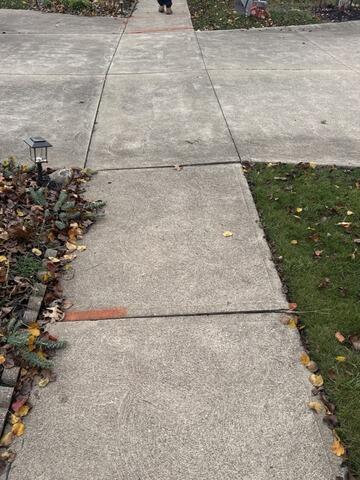
Find Local Help for Sunken Concrete and Trip Hazards
When you search for concrete mudjacking near me, ask local contractors to inspect the sunken slab, explain how they would lift it, and provide a written estimate and warranty terms. A raised sidewalk edge or tilted driveway can be a trip hazard, so it is worth getting the problem checked before it worsens. Comparing concrete mudjacking services near me is the best way to find a contractor who understands local soil conditions and can recommend the right lifting method for your property.
FoamWorks Concrete Leveling serves Northwest Ohio, Southeast Michigan, and Northeast Indiana. We use foam-injection leveling, rather than traditional mudjacking, to lift uneven concrete. We also offer crack repair, sealing, free estimates, and a lifetime warranty.
I’m Trey McNamee, owner of FoamWorks. If your search for concrete mudjacking near me has led you to compare local options, I bring over 20 years of building-products leadership experience to a family-owned team with more than 30 years of collective industry experience.
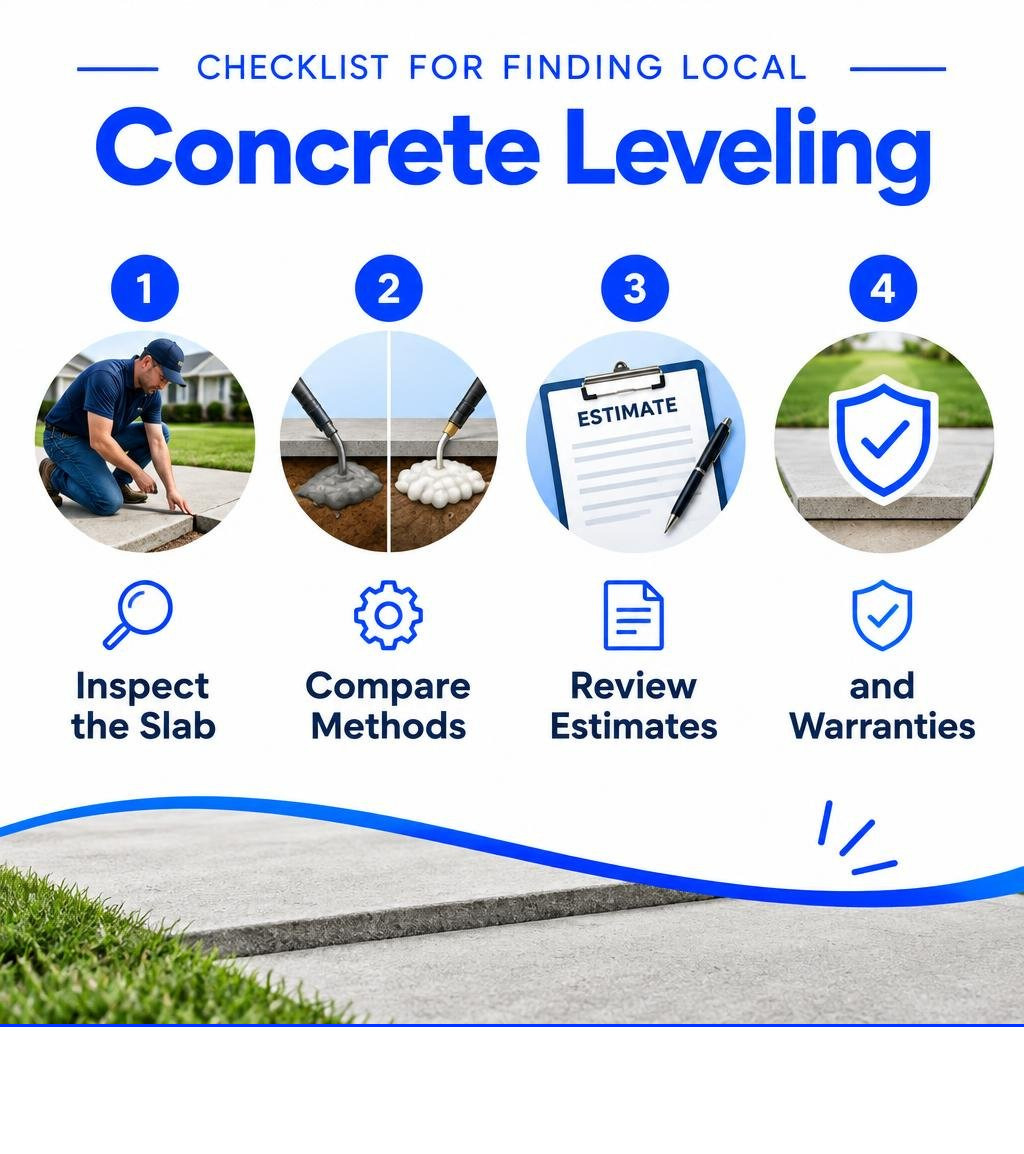
Concrete mudjacking near me terms at a glance:
What Is Mudjacking and How Does Concrete Lifting Work?
To understand how slab jacking works, it helps to look below the surface. Concrete slabs are heavy, rigid structures resting directly on soil. When that underlying soil erodes, settles, or washes away, empty pockets—known as voids—form underneath the slab. Without continuous support, the concrete eventually sinks under its own weight and the loads placed on top of it.
Traditional mudjacking relies on hydraulic pressure to force a thick, semi-fluid slurry under the settled slab. This slurry is typically a blend of topsoil, sand, water, and Portland cement. As the mixture fills the void, the building pressure lifts the slab back toward its original position.

The basic mechanics of slab stabilization follow a straightforward sequence:
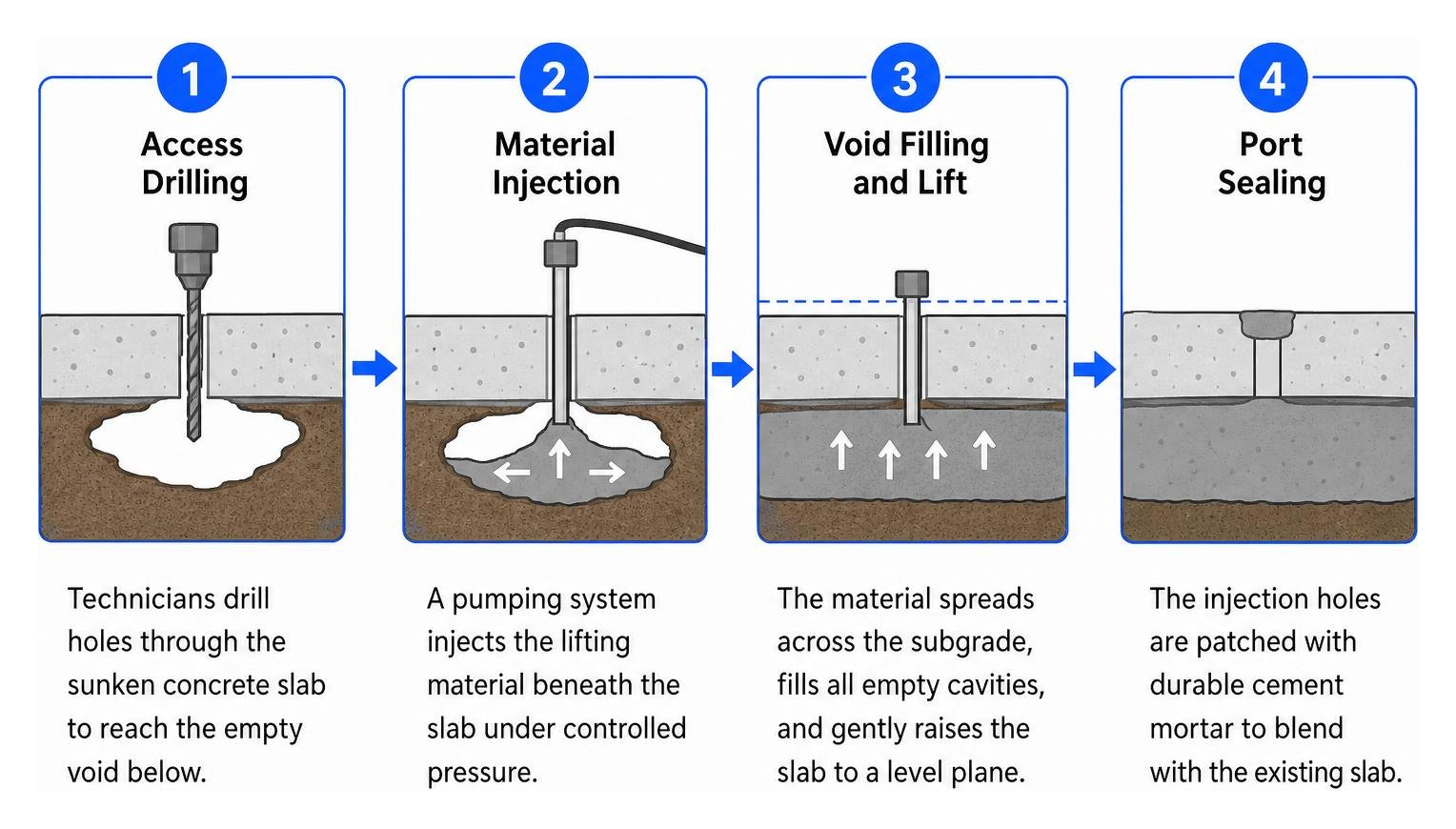
- Access Drilling: Technicians drill holes through the sunken concrete slab to reach the empty void below.
- Material Injection: A pumping system injects the lifting material beneath the slab under controlled pressure.
- Void Filling and Lift: The material spreads across the subgrade, fills all empty cavities, and gently raises the slab to a level plane.
- Port Sealing: The injection holes are patched with durable cement mortar to blend with the existing slab.
For decades, learning what is mudjacking and how concrete raising works was the standard path for homeowners facing settled walkways and sunken slabs. Today, modern advances like high-density expanding polymers have evolved the trade, providing lighter, cleaner, and longer-lasting alternatives to heavy mud slurries.
Common Applications: Driveways, Sidewalks, Patios, and Pool Decks
Concrete settlement can happen anywhere flatwork is poured over disturbed or natural ground. Understanding mudjacking for uneven concrete slabs helps pinpoint where lifting is most effective around your home:
- Driveways: Heavy vehicle traffic accelerates settlement where driveway slabs meet the garage floor or street apron. Discovering how concrete lifting and leveling can save sunken driveways prevents damaging vehicle undercarriages and eliminates pooling water near your foundation.
- Sidewalks and Walkways: Even a half-inch vertical lip creates a significant trip hazard and can violate local municipal safety codes or Americans with Disabilities Act (ADA) guidelines.
- Patios and Porches: When patio slabs tilt back toward your exterior walls, rainwater flows directly against your home’s foundation, risking basement leaks and structural dampness.
- Pool Decks: Settled pool surrounds create sharp edges that can injure bare feet and stress underlying pool plumbing lines.
Why Choose Concrete Mudjacking Near Me Over Full Replacement?
When faced with an uneven walkway or sunken patio, many property owners assume their only option is to break up the old concrete and pour a brand-new slab. However, you can often embrace the philosophy to raise concrete instead of replacing it.
Full tear-out and replacement comes with major headaches:
- Heavy Demolition: Jackhammers and skid steers tear up your lawn, damage flower beds, and create excessive noise and dust.
- Extended Downtime: Freshly poured concrete requires days to cure before you can walk on it, and up to a week or more before you can park vehicles on it.
- Color Mismatch: A single new white concrete slab will stand out awkwardly against older, weathered slabs around it.
- High Costs: Replacement forces you to pay for demolition labor, hauling fees, landfill disposal charges, and new material delivery.
At FoamWorks Concrete Leveling, we use polyurethane foam injection to repair sunken or uneven concrete for 30% to 50% less than full tear-out and replacement, helping homeowners save significantly on repair costs. Most repairs are completed in just a few hours, and the surface can be used almost immediately. Because there’s no need for heavy excavation, the process also reduces landscape damage, labor costs, debris removal, and disposal fees that come with replacing concrete. We provide free estimates to see how much you can save.
Mudjacking vs. Polyurethane Foam Injection: Which Is Right for You?
While traditional mudjacking was the industry standard for over half a century, polyurethane foam leveling has revolutionized modern slab repair. Understanding the differences between these two methods ensures you select the best long-term fix for your property.
A detailed look at mudjacking or polyurethane foam pros, cons, and true costs highlights several key performance factors:
- Injected Weight: Traditional mudjacking slurry weighs roughly 100 to 120 pounds per cubic foot. Adding this extreme weight on top of soil that has already proven weak can cause re-settlement down the road. High-density polyurethane foam weighs only 2 to 4 pounds per cubic foot, adding virtually zero structural load to weak subsoils.
- Hole Size and Aesthetics: Mudjacking requires drilling large holes—typically 1.5 to 2 inches in diameter (about the size of a soda can top)—across your slab. Polyurethane leveling requires tiny 5/8-inch ports (about the size of a dime or penny), leaving virtually invisible patches once completed.
- Moisture Resistance: Mudjacking slurry contains organic soil and cement, making it vulnerable to water washout, erosion, and underground freeze-thaw breakdown. Closed-cell polyurethane foam is completely waterproof, will not wash away, and acts as a moisture barrier beneath your concrete.
- Cure Speed: Mudjacking mud takes 24 to 48 hours to dry and achieve load-bearing strength. Polyurethane foam reacts and expands within seconds, reaching full structural cure in just 15 to 30 minutes.
This explains why polyurethane foam often outperforms mudjacking across residential and commercial applications.
| Feature / Metric | Traditional Mudjacking | Polyurethane Foam Injection (FoamWorks) |
|---|---|---|
| Material Composition | Topsoil, sand, water, Portland cement | High-density, closed-cell expanding polymer |
| Injected Weight | 100–120 lbs / cu. ft. | 2–4 lbs / cu. ft. |
| Drill Hole Diameter | 1.5 to 2.0 inches (Large) | 5/8 inch (Dime-sized) |
| Cure & Usability Time | 24 to 48 hours | 15 to 30 minutes |
| Water & Erosion Resistance | Susceptible to moisture washout | 100% waterproof and chemically inert |
| Subsoil Compaction | Minimal (relies on fluid pressure) | Expands dynamically into loose soil pockets |
| Typical Warranty | 1 to 2 years limited | Lifetime Warranty |
How to Select Concrete Mudjacking Services Near Me
Choosing the right local contractor ensures your concrete repair is safe, effective, and durable. When reviewing concrete repair and mudjacking solutions, verify that your chosen company meets the following criteria:
- Proper Licensing and Comprehensive Insurance: Always confirm that the contractor carries active general liability insurance and workers’ compensation coverage to protect your property and their crew.
- Knowledge of Regional Soil Conditions: Soil conditions in the Midwest—from the heavy clays along Lake Erie to sandy loam pockets in Northwest Ohio, Southeast Michigan, and Northeast Indiana—expand and contract dramatically across seasons. A local specialist understands how regional soil types behave.
- Verified Reputation: Check authentic homeowner reviews, before-and-after project photos, and industry ratings to verify quality craftsmanship and responsive communication.
- Written Estimates and Clear Warranties: A reputable contractor provides transparent, line-item pricing without hidden fees and backs their work with a strong guarantee.
What to Expect from Concrete Mudjacking Services Near Me
When you hire a professional lifting team, the service process follows clear, organized steps:
- Thorough Site Assessment: The crew evaluates your concrete slabs, checks drainage patterns, measures elevation drops, and identifies the root cause of settlement.
- Elevation Mapping: Technicians determine the precise injection points needed to raise the slab evenly without causing unnecessary tension cracks.
- Clean Injection: Using specialized equipment, technicians inject the material under the slab, carefully monitoring the rise with precision levels until the slab matches surrounding surfaces.
- Patching and Site Cleanup: Injection ports are cleaned and filled with color-matched patching compound, and all surrounding areas are swept and washed down.
Cost Factors for Concrete Mudjacking Near Me
When calculating your overall investment, reviewing mudjacking contractor costs and pricing factors will help you plan your budget. Several variables influence the final price:
- Square Footage and Slab Size: Larger slabs require more material and injection points to achieve an even lift.
- Depth of Underlying Voids: A slab that has dropped 3 inches requires substantially more lifting material than one that has settled only an inch.
- Site Accessibility: Tight backyards, steep grades, or obstacles that require extra hose length or specialized handling can adjust labor time.
- Joint Caulking and Crack Sealing: Sealing existing cracks and joints protects the repair from future water intrusion, adding long-term value to the project.
Because foam leveling requires no heavy excavation or landfill disposal, our polyurethane foam injections cost roughly 30% to 50% less than pouring new concrete, providing an economical way to restore your property.
Frequently Asked Questions About Concrete Mudjacking
How long does a concrete mudjacking repair last?
The lifespan of a slab lift depends heavily on the injection material and subsoil moisture management. Reviewing how long mudjacking lasts for sinking concrete slabs shows that traditional mud slurry typically lasts between 2 and 5 years before moisture, organic breakdown, or added weight causes the soil to settle again.
In contrast, high-density polyurethane foam does not degrade, rot, or wash out over time. When paired with proper crack sealing and downspout management, polyurethane foam lifting provides a permanent foundation that lasts for the remaining lifespan of the concrete itself.
What causes concrete slabs to sink and crack?
Concrete settlement is almost always caused by soil movement beneath the slab:
- Poor Soil Compaction: When homes and driveways are built, soil backfilled around foundations or utility trenches is often insufficiently compacted. Over time, gravity pulls the loose dirt down, creating empty voids.
- Erosion from Water Runoff: Misdirected gutter downspouts, broken sprinkler lines, or heavy rains wash away fine subbase materials, leaving the slab unsupported.
- Freeze-Thaw Cycles: Water expands by roughly 9% when it freezes. In northern climates, moisture trapped under concrete repeatedly freezes and expands in winter, then thaws and softens in spring, weakening the soil base.
- Drought and Soil Shrinkage: High-clay soils swell when saturated and shrink drastically during hot, dry summer stretches, pulling away from the underside of concrete slabs.
- Decomposing Organic Matter: Buried tree roots, wood scraps, or organic topsoil decay beneath the slab, creating subterranean cavities.
Are concrete lifting repairs covered by warranties?
Warranty coverage varies significantly between service providers and methods. Many traditional mudjacking contractors offer short warranties of 1 to 2 years due to the natural risk of soil re-settlement under heavy slurry.
At FoamWorks Concrete Leveling, we stand behind our polyurethane foam injection with a lifetime warranty. Because high-density foam does not lose its structural density or wash away, we provide homeowners with lasting peace of mind.
Conclusion
Leaving sunken concrete unaddressed invites serious safety risks, code violations, water intrusion against your home’s foundation, and declining curb appeal. Restoring smooth, level slabs protects your family, visitors, and property value without the messy disruption or high expense of full slab replacement.
FoamWorks Concrete Leveling is a family-owned concrete repair and leveling contractor serving Northwest Ohio, Southeast Michigan, and Northeast Indiana. With over 30 years of collective industry experience, we offer fast foam-injection leveling, crack repair, and joint sealing backed by 100% customer satisfaction and a lifetime warranty.
Check our full list of Service Areas across Ohio, Michigan, and Indiana, explore our professional concrete leveling services, and contact us today to schedule your Free Estimate.