

Choosing Between Mudjacking and Foam Leveling
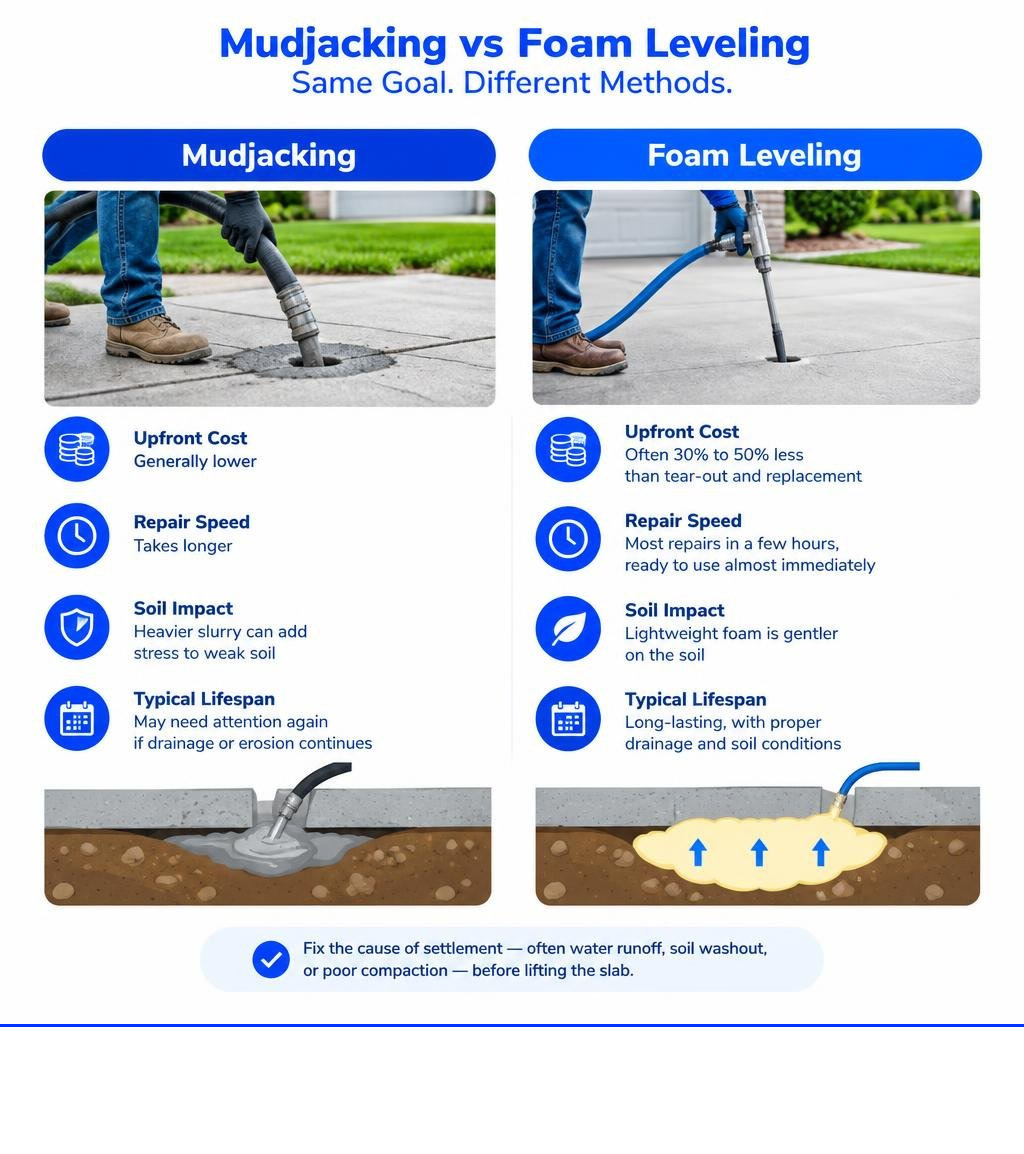
For most homeowners comparing mudjacking vs foam leveling, polyurethane foam is the better choice when you need fast use, small patch holes, and a lightweight repair that handles moisture well. Mudjacking usually costs less upfront, but its heavy cement-based slurry can add stress to weak soil and may be more likely to need attention again if drainage or erosion continues.
Both methods can raise sound concrete slabs without full replacement. The key is to fix the cause of settlement – often water runoff, soil washout, or poor compaction – before lifting the slab. FoamWorks uses polyurethane foam injection to restore uneven concrete for 30% to 50% less than tear-out and replacement in many cases, with most repairs completed in a few hours and ready to use almost immediately.
I’m Trey McNamee, owner of FoamWorks Concrete Leveling, with more than two decades of experience in marketing, strategy, and building-material product development, plus a team with 30+ years of concrete repair experience. In this guide to mudjacking vs foam leveling, I’ll break down the real tradeoffs in cost, lifespan, soil impact, and repair speed.
Similar topics to mudjacking vs foam leveling:
For a broader overview of slab lifting methods, see the slab jacking entry on Wikipedia.
Mudjacking vs Foam Leveling: How Each Concrete Lifting Method Works
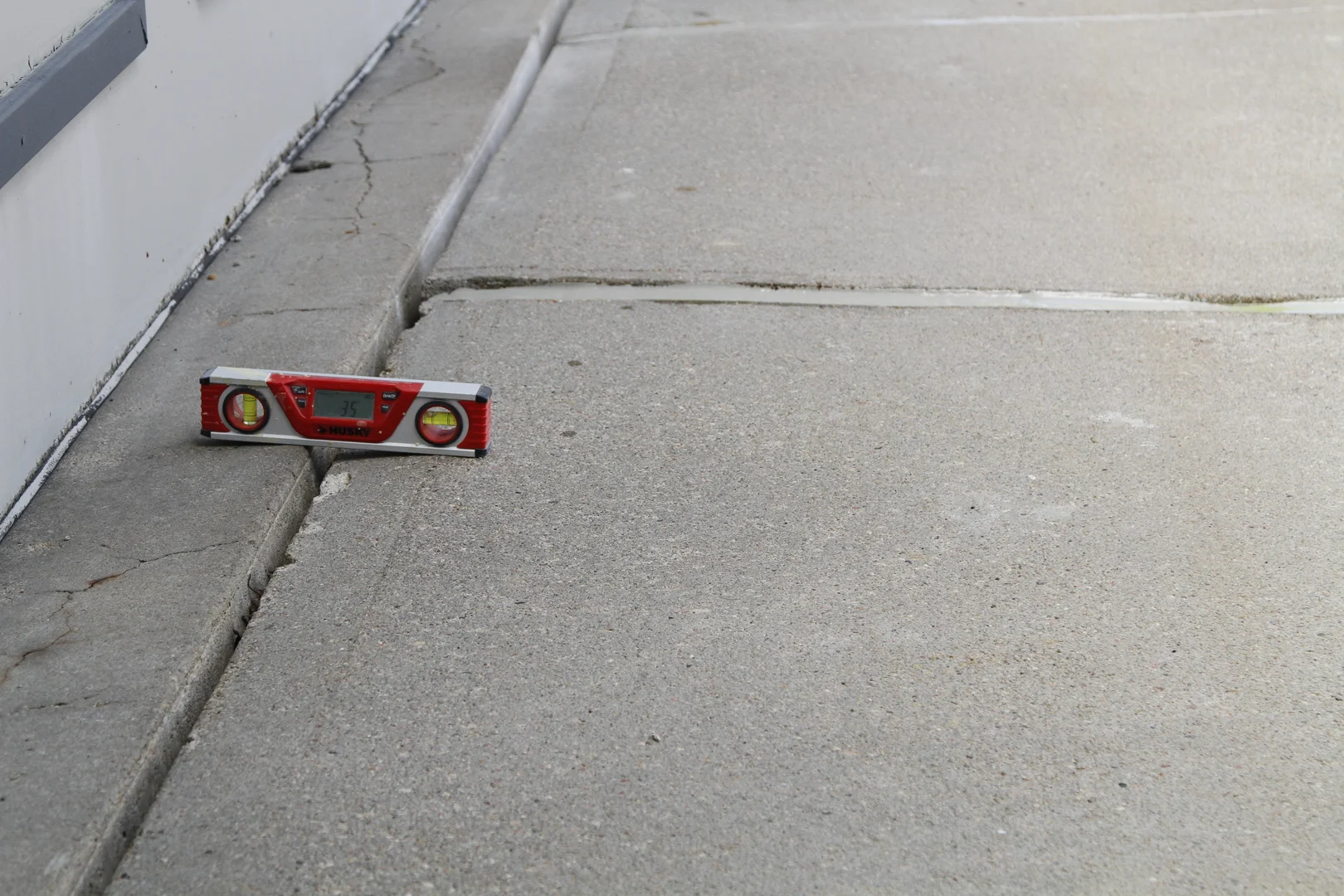
When concrete slabs sink, the underlying cause is almost always unstable soil. Voids form beneath the slab due to poor initial compaction, soil shrinkage during dry spells, or erosion caused by water runoff. Both mudjacking and polyurethane foam leveling are designed to solve this issue by filling these underground voids and raising the fallen slab back to its original grade. However, the mechanical and chemical principles behind each method are entirely different.
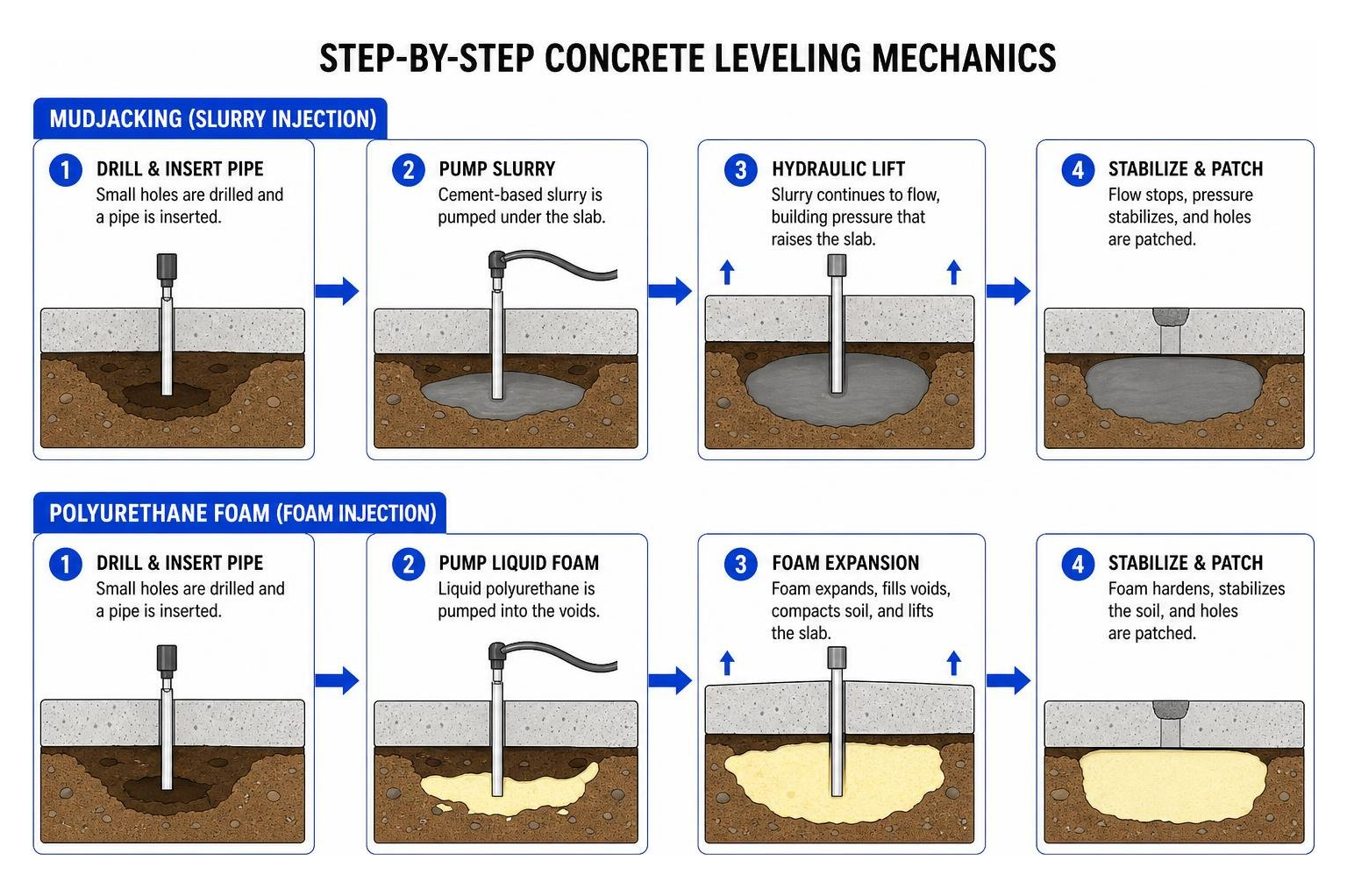
Mudjacking relies purely on mechanical hydraulic pressure to force a heavy, semi-liquid material underneath the slab until it physically pushes the concrete upward. Polyurethane foam injection, on the other hand, relies on a controlled chemical expansion. The liquid polymers enter the subgrade, expand throughout open voids, compact the surrounding soil, and gently lift the concrete slab with extreme precision.
Understanding the specific mechanisms of these two techniques makes it much easier to see why they perform so differently over time.
Mudjacking Mechanics and Slurry Injection
Traditional mudjacking, also known as slab jacking, has been used as a concrete repair method since the early 20th century. The process begins by drilling relatively large access holes—typically 1 to 2 inches in diameter—directly through the settled concrete slab.
Once the holes are drilled, a specialized hydraulic pump forces a dense slurry mixture beneath the surface. This slurry is usually composed of locally sourced soil, sand, limestone dust, water, and a small percentage of Portland cement to help it bind. Homeowners often ask how mudjacking raises sunken concrete, and the answer lies in brute hydraulic force. As the thick mud slurry fills the void, the pressure builds until the concrete slab is lifted.
Because the slurry is thick and heavy, it requires high pumping pressure to move. Once the slab reaches the desired height, the equipment is disconnected, and the large core holes are patched with a standard cement mortar. The repair must then sit undisturbed while the wet slurry slowly hardens over the course of several days.
Polyurethane Foam Injection Process
Polyurethane foam leveling represents a modern, engineered approach to concrete stabilization. Often referred to as polyjacking or polyurethane injection, this process uses high-density, closed-cell expanding polymers to achieve a cleaner, more controlled lift.
To start, technicians drill tiny injection ports—only 5/8 of an inch in diameter, roughly the size of a dime—through the slab. A specialized injection gun is connected to the port, delivering a two-part liquid polymer mixture directly into the subgrade. When the two components mix at the tip of the gun, a chemical reaction occurs immediately.
As the liquid begins to react, it expands within seconds into a rigid, closed-cell foam. This rapid expansion allows the foam to travel into micro-fissures and deep voids that dense mud slurries cannot reach. As it expands, the foam compacts loose, compromised soil beneath the slab before exerting upward force to lift the concrete. The process gives technicians surgical control over the lift, allowing for leveling precision within an eighth of an inch.
Technical Comparison: Weight, Cure Time, and Precision
Evaluating concrete repair methods requires looking closely at material engineering metrics. The physical properties of the lifting medium determine how the subgrade reacts, how quickly you can walk or drive on the surface, and how clean the finished slab looks.
Mudjacking vs Foam Leveling: Soil Weight and Structural Stress
The single biggest engineering difference between these two systems is the weight of the cured material. Traditional mudjacking slurry weighs roughly 100 to 120 pounds per cubic foot. In contrast, high-density closed-cell polyurethane foam weighs only 2 to 4 pounds per cubic foot.
Why does this massive weight difference matter so much? Slabs usually sink because the subgrade beneath them is weak, poorly compacted, or prone to settling. When you pump hundreds or thousands of pounds of heavy cement slurry under a sunken slab, you are adding substantial overburden load onto soil that has already proven it cannot support the existing concrete. Over time, this heavy burden can cause the subgrade to compress further, leading to secondary settlement.
Polyurethane foam adds virtually zero structural weight to the underlying soil. Instead of burdening the subgrade, the expanding foam densifies the surrounding dirt, creating a lightweight, structural base that stabilizes the slab without accelerating future settlement.
Cure Times and Return-to-Service Speed
Cure time is a major operational factor for both homeowners and commercial property managers. Mudjacking involves pumping gallons of water and wet aggregate under your concrete. For the slab to hold substantial weight, that water must evaporate and the cement slurry must cure.
- Mudjacking Cure Time: Typically requires 24 to 48 hours before passenger vehicles or heavy loads can be placed on the surface. Walking on the concrete too soon can disrupt the wet slurry and cause the slab to drop.
- Polyurethane Foam Cure Time: Polyurethane undergoes an exothermic chemical reaction that reaches 90% of its ultimate structural strength within 15 minutes.
With foam leveling, you can walk on the surface immediately, and driveways can handle full vehicle traffic in about 15 to 30 minutes after the repair is complete. For busy residential driveways or commercial loading docks, eliminating downtime prevents costly disruptions.
Injection Hole Sizes and Aesthetic Impact
To get material under a slab, access holes must be drilled. The size and quantity of these holes directly determine the aesthetic outcome of the project.
Mudjacking pumps a thick, aggregate-filled slurry, which requires large 1- to 2-inch core holes. These holes look like soda cans drilled across your concrete. Even when patched with new cement, the large, round plugs stand out clearly against aged concrete, creating a polka-dot effect across your walkway or patio.
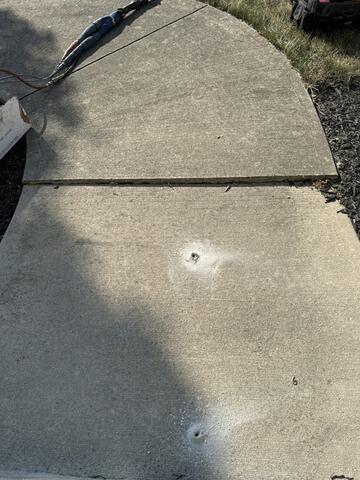
Foam injection uses a liquid polymer that flows easily through tiny 5/8-inch ports. Once the lift is complete, these small holes are filled with custom-color-matched aggregate mortar. Because the holes are so small, the patches blend seamlessly into the concrete surface. You can view our concrete leveling before and after results to see how subtle these injection points look once cured.
Upfront Costs vs Long-Term Value: Total Cost of Ownership
When deciding on a concrete repair method, looking only at the initial quote can be misleading. A lower initial price tag may end up costing significantly more if the repair fails and must be redone a few years down the road.
| Feature / Metric | Traditional Mudjacking | Polyurethane Foam Leveling |
|---|---|---|
| Average Cost per Square Foot | $3 – $6 | $5 – $10+ |
| Material Weight | 100–120 lbs / cu. ft. | 2–4 lbs / cu. ft. |
| Cure Time to Full Traffic | 24–48 hours | 15–30 minutes |
| Injection Hole Diameter | 1.0 – 2.0 inches | 5/8 inch (0.625 in.) |
| Typical Lifespan | 5 – 10 years | 10 – 25+ years |
| Moisture / Washout Resistance | Vulnerable to water erosion | 100% Waterproof (Closed-cell) |
| Precision Control | Moderate | Up to 1/8 inch |
| Added Stress on Subgrade | High (Heavy overburden) | Negligible (Lightweight) |
While traditional mudjacking usually costs $3 to $6 per square foot compared to $5 to $10+ per square foot for polyurethane foam, the 20-year lifecycle cost tells a very different story. Repumping settled mudjacking slurry every 5 to 7 years quickly surpasses the one-time investment in a permanent polyurethane repair.
Mudjacking vs Foam Leveling: Lifespan and Failure Risks
The expected lifespan of a concrete repair depends on how the material holds up to environmental stressors underground. Traditional mudjacking repairs generally last between 5 and 10 years. Because the slurry contains natural soil, organic matter, and moisture, it can shrink as it dries, leaving minor voids that allow slight re-settlement. Furthermore, if water gets beneath the slab again, the cement slurry can break down and wash away.
Polyurethane foam repairs regularly last 10 to 25+ years, and often endure for the remaining life of the concrete itself. High-density polyurethane is a fully inert, closed-cell polymer that will not shrink, rot, or degrade underground. Because it does not break down, contractors like FoamWorks can offer a dependable lifetime warranty on foam-injection lifting.
Moisture Resistance and Soil Erosion Factors
Water is the number one enemy of concrete slabs. Improper gutter drainage, high water tables, and freeze-thaw cycles all contribute to soil erosion.
Mudjacking slurry is not waterproof. Over time, persistent water flow beneath a patio, sidewalk, or driveway can erode the cured mudjacking mixture just as easily as it eroded the native soil. In areas with harsh winter conditions, water absorbed by the slurry can freeze and expand, breaking apart the base support.
In contrast, closed-cell polyurethane foam acts as a hydrophobic barrier. It repels water completely, will not absorb subsurface moisture, and cannot be washed away by subterranean water flow. When exploring the primary causes of concrete settlement, water management is always front and center, and choosing a waterproof repair material gives you the best protection against future washout.
When to Choose Each Concrete Repair Method
Both lifting techniques have their place in modern construction, but site conditions and project goals dictate which option makes the most practical sense.
Best Scenarios for Polyurethane Foam Leveling
Polyurethane foam is the premier choice for almost all residential and light commercial applications, especially where longevity, speed, and clean aesthetics are paramount:
- Residential Driveways & Garages: When you need your vehicle back in the garage the same afternoon, foam’s 15-minute cure time is unbeatable. For extensive cracking or sunken slabs, residential driveway repairs using foam prevent structural joint failures.
- Pool Decks & Patios: Pool decks require extreme leveling precision to ensure proper drainage away from coping and home foundations. Foam provides tight, micro-adjustable lift without creating large, ugly patch holes around your swimming area.
- Sidewalks & Walkways: Eliminating public trip hazards quickly without closing down pedestrian pathways for days makes foam ideal for residential walkways and commercial storefronts.
- Areas with Weak or Clay Soils: Lightweight foam eliminates the risk of overloading soft subsoils, preventing the recurring settlement common with heavy cement mixtures.
When Traditional Mudjacking Makes Sense
While foam has become the modern standard, traditional mudjacking can still be considered under specific, limited circumstances:
- Tight Upfront Budgets on Large Slabs: If initial out-of-pocket cost is the absolute priority and long-term durability is secondary, mudjacking offers a lower initial price per square foot.
- Temporary Commercial Real Estate Repairs: If a property is scheduled for redevelopment or major reconstruction within a few years, a lower-cost mudjacking fix may provide sufficient short-term stabilization.
- Massive Deep-Fill Applications (Hybrid Method): On rare occasions where massive underground sinkholes or voids require yards of bulk fill, contractors may use an economical aggregate grout to fill the bulk cavity before finishing the final lift with polyurethane foam.
What to Ask Your Contractor Before Deciding
Before hiring a contractor to lift your sunken concrete, make sure to ask these essential vetting questions:
- What specific material are you using? Ensure they use high-density, closed-cell polyurethane foam engineered specifically for subgrade concrete lifting, not low-density packaging or open-cell insulation foam.
- What is the diameter of the injection holes? Confirm they use 5/8-inch holes rather than large 1.5-inch to 2-inch core holes.
- How will the injection holes be patched? Ask if they use custom color-matched cement aggregate to blend the repair with your existing slab.
- What is the warranty coverage? Does the company back their work with a comprehensive warranty against re-settlement?
- Do you evaluate underlying drainage? A reputable contractor will help identify downspout or runoff issues that caused the settlement in the first place.
Frequently Asked Questions About Concrete Leveling Methods
Can polyurethane foam wash out or degrade underground?
No. High-density polyurethane foam used in concrete raising is an inert, closed-cell polymer. It does not dissolve in water, will not leach chemicals into the surrounding soil, and cannot be broken down by moisture or soil microbes. Once cured, it remains structurally stable indefinitely.
Is mudjacking cheaper than foam leveling upfront?
Yes, mudjacking typically has a lower initial installation cost ($3 to $6 per sq. ft.) compared to polyurethane foam ($5 to $10+ per sq. ft.). However, because mudjacking slurry can wash out and adds heavy load to fragile subsoil, recurring repairs often make it more expensive over the lifespan of the slab.
Can broken or badly cracked concrete slabs still be leveled?
Slabs with minor to moderate cracking can easily be raised, leveled, and stabilized using polyurethane foam. The foam fills voids under all fragments and locks them in place. However, if a slab is severely shattered into small chunks or crumbling from surface degradation, lifting will not restore structural integrity. In those situations, complete replacement of the concrete slab is the only viable option.
Conclusion
When comparing mudjacking and polyurethane foam leveling, polyurethane foam consistently emerges as the superior long-term investment for residential and commercial concrete repair. Its lightweight profile protects fragile subsoils, its waterproof composition prevents washout, and its rapid 15-minute cure time allows you to use your concrete immediately.
At FoamWorks Concrete Leveling, our family-owned team brings over 30 years of concrete repair experience to every job. We use advanced polyurethane foam injection to restore sunken driveways, sidewalks, patios, and pool decks for 30% to 50% less than the cost of concrete tear-out and replacement. With small dime-sized holes, zero landscape damage, and lifetime warranty protection, we deliver results that last.
Ready to eliminate trip hazards and restore your uneven concrete? Contact FoamWorks Concrete Leveling today to schedule your free inspection and explore our professional concrete leveling services.