
What Is Mudjacking and How Does Concrete Slab Raising Work?

On average, mudjacking lasts between 5 and 10 years, depending on subgrade soil stability, water drainage, and regular maintenance. When concrete slabs sink, it is rarely the fault of the slab itself. Instead, the ground underneath has given way due to soil compaction, poor drainage, or underground voids. Concrete leveling works to correct this by filling those voids and hydraulically raising the concrete back into its original position.
Traditional mudjacking uses a mixture of crushed limestone, water, and portland cement to form a heavy slurry. The process involves several distinct steps:
- Drilling Access Ports: The crew drills holes—typically 1.5 to 2 inches in diameter—through the sunken concrete slab.
- Injecting the Slurry: Using a hydraulic pump, the thick limestone-and-cement mixture is pumped under pressure into the drilled ports.
- Lifting the Slab: As the mixture fills underground voids, the hydraulic pressure pushes the concrete upward until it reaches a level position.
- Patching the Holes: Once the slab is aligned with the surrounding surfaces, the crew cleans off excess material and fills the injection holes with concrete patch material.
To better understand the mechanics behind this traditional approach, our breakdown on what is mudjacking and how concrete raising works explains how hydraulic pressure moves heavy concrete slabs.

How Long Does Mudjacking Last? Average Lifespan and Durability Expectations
On average, traditional mudjacking lasts between 5 and 10 years. In optimal conditions—where the subgrade soil is dense, water runoff is properly managed, and the slab experiences minimal weight loads—a mudjacked slab can remain stable even longer.
However, several long-term durability factors influence this window:
- Slurry Degradation: Mudjacking slurry consists of natural materials that can break down over time when exposed to moisture and temperature fluctuations.
- Subsoil Compaction: The slurry itself is dense and heavy. Adding that extra weight on top of soil that has already settled can cause further subsoil compaction.
- Baseline Longevity: When reviewing independent mudjacking lifespan considerations, performance ranges commonly sit between 8 and 10 years, provided regular surface maintenance is maintained.
To see how leveled slabs hold up in real-world residential settings, explore our concrete lifting examples showing projects across driveways, walkways, and patios.
Key Factors That Determine How Long Mudjacking Lasts
The actual lifespan of your concrete repair depends on environmental and structural conditions surrounding the slab:
- Subgrade Stability: If the soil underneath was not compacted properly before the slab was poured, it will continue to shift and settle beneath the weight of both the slab and the slurry.
- Soil Erosion & Drainage: Water flowing beneath the slab can wash away both the underlying dirt and the injected mudjacking material, leaving new voids behind.
- Freeze-Thaw Cycles: In Midwest climates across Ohio, Michigan, and Indiana, winter freeze-thaw cycles cause trapped moisture under slabs to expand and contract, which can crack the slurry foundation.
- Heavy Vehicular Loads: Driveways and garage floors that support heavy vehicles like trucks, trailers, and RVs apply ongoing downward stress that can shorten the lifespan of the repair.
- Pest and Rodent Burrowing: Animals such as chipmunks, moles, and groundhogs often dig burrows along slab perimeters, removing the support base.
Mudjacking vs. Polyurethane Foam: How Long Does Mudjacking Last Compared to Poly Foam?
While mudjacking has been used for decades, polyurethane foam injection—often referred to as PolyLevel—has become a modern standard for raising settled slabs. The difference in longevity comes down to material science, weight, and moisture resistance.
Polyurethane foam uses an expanding polymer that enters beneath the slab as a liquid, fills tiny voids, and expands into a rigid, waterproof foam within seconds.
Here is how the two methods compare:
- Weight Differences: Mudjacking slurry weighs roughly 100 to 140 pounds per cubic foot, adding substantial load onto vulnerable subsoils. Polyurethane foam weighs only 2 to 4 pounds per cubic foot while delivering high load-bearing strength.
- Hole Size and Aesthetics: Mudjacking requires large holes (1.5 to 2 inches) that leave visible patches across the slab. Polylevel injection uses penny-sized 5/8-inch holes that blend smoothly into the existing concrete.
- Water Resistance: Mudjacking slurry can erode if water pools beneath the slab. Polyurethane foam is hydrophobic, meaning it repels water and will not wash away or break down from underground moisture.
| Feature | Mudjacking Slurry | Polyurethane Foam Injection |
|---|---|---|
| Expected Lifespan | 5 to 10 years | 10 to 20+ years (Lifetime Warranty available) |
| Material Weight | 100–140 lbs per cu. ft. | 2–4 lbs per cu. ft. |
| Drill Hole Diameter | 1.5 to 2.0 inches | 5/8 inch (penny-sized) |
| Cure & Usable Time | 24 to 48 hours | 15 to 30 minutes |
| Water Resistance | Prone to erosion over time | Completely waterproof / Hydrophobic |
| Soil Impact | Adds heavy load to weak soil | Expands without overburdening subsoils |
How Homeowners Can Extend the Life of Mudjacked Concrete

Regardless of the leveling method you select, proactive maintenance prevents the moisture intrusion and soil loss that caused the slab to sink initially.
Here are the key maintenance steps every homeowner should follow:
- Caulk Expansion Joints and Cracks: Use high-grade polyurethane sealant on all joints and surface fissures. Sealing the joint where a driveway meets the garage floor prevents water from corroding the connecting rebar and destabilizing the base.
- Backfill Slab Perimeters: Add topsoil around the exposed edges of patios, sidewalks, and driveways, tamping it down firmly. This eliminates water runoff channels and stops critters from digging under the slab.
- Extend Downspouts and Gutters: Ensure roof downspouts discharge rainwater at least 4 to 6 feet away from all concrete slabs to prevent subgrade washout.
- Schedule Timely Repairs: Small cracks let water reach the base material. Taking care of routine concrete repair early stops moisture from creating new voids beneath the slab.
Cost Breakdown: Mudjacking vs. Poly Foam vs. Slab Replacement
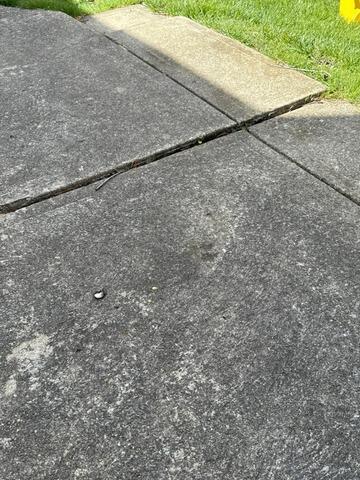
When comparing repair options, lifting concrete costs substantially less than full demolition and repouring.
Nationally, the average cost for a mudjacking project is $1,034, with most residential jobs falling in the $550 to $1,500 range (roughly $3 to $6 per square foot). Polyurethane foam injection typically runs between $5 and $25 per square foot depending on the depth of the voids and material volume required.
Both methods offer significant savings when compared to replacing concrete slabs entirely:
- Full Replacement Costs: Ripping out and pouring new concrete typically costs between $10 and $20+ per square foot once you factor in demolition labor, hauling fees, municipal permits, and landscaping repairs.
- Leveling Savings: FoamWorks Concrete Leveling uses polyurethane foam injection to repair sunken or uneven concrete for 30% to 50% less than full tear-out and replacement, helping homeowners save significantly on repair costs. Most repairs are completed in just a few hours, and the surface can be used almost immediately. Because there’s no need for heavy excavation, the process also reduces landscape damage, labor costs, debris removal, and disposal fees that come with replacing concrete. We provide free estimates to see how much you can save.
To evaluate why raising concrete provides strong return on investment, read our guide on how homeowners don’t replace it, raise it: modern solutions for concrete sinking repair.
Frequently Asked Questions About Concrete Leveling Lifespans
Can mudjacked concrete sink again after repair?
Yes, mudjacked concrete can resink if the underlying cause of settlement is not addressed. Because mudjacking adds heavy limestone slurry on top of subsoils that may already be poorly compacted, the combined weight can cause the ground to compress further. Additionally, unsealed joints that allow water beneath the slab can wash the slurry away over time. For more answers to common leveling questions, check out our lift level FAQ.
How long does mudjacking slurry take to cure before use?
Mudjacking slurry requires 24 to 48 hours to cure fully before it can support heavy vehicular traffic, such as parking cars on a driveway. Light foot traffic is often permitted after several hours, but driving on the slab prematurely can displace the wet mixture underneath and cause the slab to drop out of alignment.
Is mudjacking worth it compared to total concrete replacement?
For slabs that are structurally sound without extensive crumbling or web-like cracking, leveling is almost always worth it. Mudjacking saves between 25% and 50% compared to tear-out and replacement costs, while foam injection provides an even longer-lasting repair without damaging your yard. Viewing real-world before and after concrete leveling results shows how sunken slabs can be restored cleanly in a single afternoon.
Conclusion
Choosing between traditional mudjacking, polyurethane foam leveling, and total slab replacement comes down to your long-term goals for your property. While mudjacking offers a budget-friendly way to raise concrete for 5 to 10 years, modern polyurethane foam provides a lightweight, waterproof alternative designed to last decades without overburdening weak soils.
FoamWorks Concrete Leveling is a family-owned concrete repair and leveling contractor serving Northwest Ohio, Southeast Michigan, and Northeast Indiana. We offer fast, foam-injection leveling, crack repair, and sealing backed by a lifetime warranty, 30+ years of experience, and a commitment to 100% customer satisfaction.
If you are ready to eliminate trip hazards, restore curb appeal, and protect your home’s value, contact us today for a free estimate on our concrete leveling services.