
Polyurethane Foam vs Mudjacking: Core Material and Application Differences
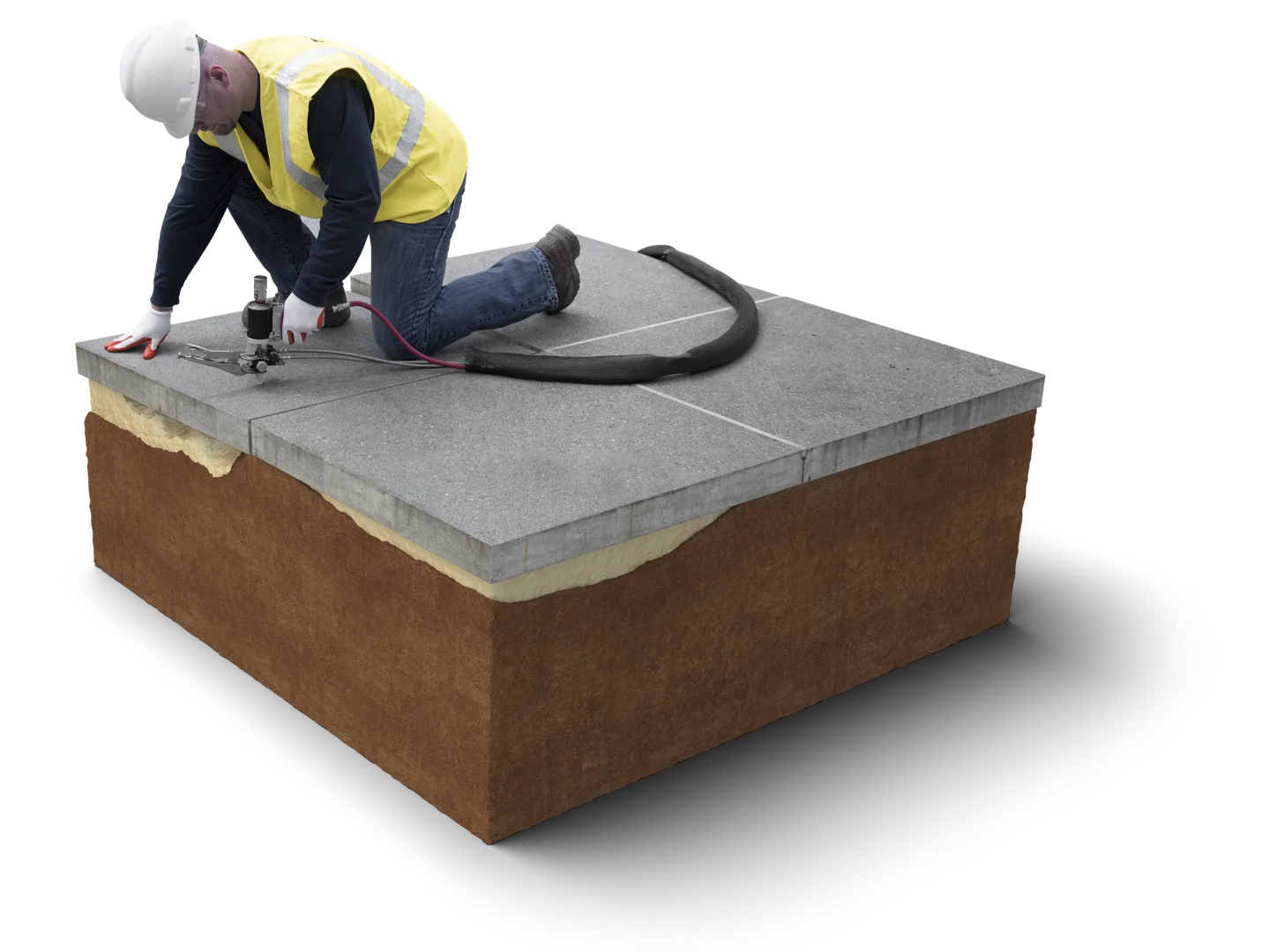
When evaluating polyurethane foam vs mudjacking for heavy concrete slabs, polyurethane foam outperforms traditional mudjacking due to its lightweight profile (2 to 8 PCF), rapid 15-minute cure time, hydrophobic moisture resistance, and minimal 5/8-inch drill holes that prevent secondary soil settlement. Mudjacking injects a heavy cementitious slurry weighing over 100 PCF through large 2-inch holes, adding excessive dead weight to vulnerable subgrades and leaving the repair vulnerable to water washout.
Understanding the fundamental mechanics behind concrete restoration requires evaluating how each material behaves once injected below an uneven slab. Mudjacking involves pumping a wet, semi-liquid hydraulic grout composed of water, crushed limestone, aggregate, and Portland cement directly into subterranean voids. Polyurethane foam injection relies on a two-part chemical compound (an isocyanate and a polyol resin blend) that expands underneath the slab, transitioning rapidly from an expanding liquid to an ultra-dense, closed-cell rigid polymer structure.
| Specification / Feature | Polyurethane Foam Injection | Traditional Mudjacking |
|---|---|---|
| Primary Material Composition | High-density, closed-cell expanding polymer | Slurry of topsoil, sand, water, and cement |
| Material Density | 2 to 8 lbs. per cubic foot (PCF) | 100 to 140 lbs. per cubic foot (PCF) |
| Drill Hole Diameter | 5/8 inch (dime-sized) | 1.5 to 2.0 inches (pop-can base size) |
| Initial Set & Cure Time | Cures walk-firm in 15 mins; 100% capacity in 30 mins | Sets in 24 hours; full cure in 48 to 72 hours |
| Leveling Precision | Accurate within 1/8 inch (controlled expansion) | Accurate within ±0.5 inch (hydraulic surge) |
| Moisture Absorption | Hydrophobic (impermeable to groundwater) | Porous (absorbs water, susceptible to washout) |
| Typical Lifespan | 10 to 25+ years | 5 to 10 years |
To understand the core mechanics of polyurethane expansion, you can explore how polyurethane foam lifting works beneath settling slabs. While mudjacking relies strictly on mechanical pump pressure to push dense material into soil cavities, polyurethane utilizes a low-pressure injection combined with high-expansion force. The expanding foam naturally seeks the paths of least resistance, penetrating small micro-voids before generating upward lift to align structural slabs.

Drill Hole Dimensions, Surface Aesthetics, and Cure Time
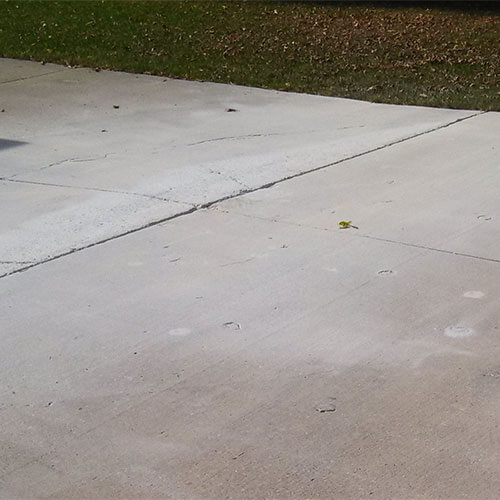
Surface damage is one of the clearest visual differences between these methods. Mudjacking uses large drill bits to bore 1.5-inch to 2-inch holes across the concrete surface. Pumping thick aggregate slurry through smaller openings is impossible because it quickly causes pipe blockages. These wide ports leave prominent circular scars that stand out against seasoned concrete, even after patching with standard mortar.
Polyurethane injection uses 5/8-inch ports—roughly the diameter of a coin. These small ports allow precise installation without weakening the concrete slab’s structural integrity. Once we finish the lift, we remove the injection ports and seal each hole flush with a color-matched cement compound, making the repair sites difficult to spot.
Cure times show a similar contrast. Mudjacking introduces gallons of water into the subgrade, requiring 24 to 72 hours of cure time before the surface can support heavy loads. Polyurethane expands and hardens through an exothermic chemical reaction without added water, reaching 90% compressive strength in roughly 15 minutes. Homeowners can walk across their slabs immediately, and driveways are ready for vehicle traffic in under half an hour.
Polyurethane Foam vs Mudjacking on Expansive Clay and Shifting Soils
Soil conditions throughout the Midwest, including regions like Waterville, OH and Oak Harbor, OH, frequently contain high concentrations of expansive clay soils. These clays expand significantly when wet and shrink dramatically during dry summer months.
When traditional mudjacking slurry is pumped onto active clay, its immense mass creates extra downward stress. If the clay dries and shrinks, the combined weight of the concrete slab and the 100+ PCF slurry accelerates secondary settlement. In contrast, high-density structural foam delivers a powerful hydraulic lift while adding almost no extra dead weight to sensitive soils. The polymer spreads across the void profile, compacts loose surrounding soils, and forms a stable, lightweight foundation that helps limit future movement.
Soil Loading and Environmental Durability Under Heavy Slabs
Heavy slabs—including thick garage aprons, commercial warehouse floors, and multi-car driveways—require exceptional structural support beneath the surface. Using modern concrete raising solutions ensures that lifting interventions stabilize the subgrade rather than creating points of mechanical failure.
Material Weight: 2–8 PCF Foam vs 100+ PCF Slurry
Soil failure often happens because the subgrade cannot support the heavy loads placed on top of it. Pouring hundreds of pounds of cementitious grout underneath an already sinking slab increases the total stress on the subbase.
A 100-square-foot concrete slab lifted two inches requires roughly 16.6 cubic feet of fill material:
- Mudjacking Slurry: Adds 1,660 to 2,300+ lbs of added weight beneath the slab.
- Polyurethane Foam: Adds 33 to 132 lbs of total material.
Pumping over a ton of heavy grout into an area that is already sinking often leads to future settlement. High-density polymers support high compressive loads while adding minimal dead weight, which explains why high-density foam repair is surging for structural stabilization.
Moisture Resistance, Washout, and Freeze-Thaw Resilience
Water intrusion is a leading cause of subgrade erosion. Mudjacking mixes consist of sand, clay, and Portland cement, making the cured material porous. When subterranean water flows beneath the slab from roof runoff or seasonal rain, it gradually breaks down the slurry.
In colder regions, water seeps into this porous grout and undergoes seasonal freeze-thaw cycles. When groundwater freezes, it expands by roughly 9%, fracturing the brittle mudjacking base.
Closed-cell structural foam is naturally hydrophobic, meaning it repels water and prevents absorption. It will not break down, wash away, or deteriorate in saturated subgrades. Once cured, it creates an impermeable barrier that keeps water away from the bottom of the concrete slab, resisting freeze-thaw cycles and helping prevent subterranean voids.
To see how standard slurry behaves under varying environmental stresses, review our guide to understanding traditional mudjacking.
Polyurethane Foam vs Mudjacking: Cost, Lifespan, and ROI Analysis
Homeowners and facility managers must evaluate both upfront expenses and long-term value when choosing a concrete repair method. While mudjacking often features a lower initial estimate, its shorter lifespan can make it more expensive over time.
Upfront Pricing vs 10-to-25-Year Service Life
Mudjacking generally costs $3 to $6 per square foot, making it an appealing option for initial budgets. Polyurethane foam injection typically ranges from $5 to $10+ per square foot. However, considering how long mudjacking lasts changes the overall project economics.
Mudjacking often requires a re-lift within 5 to 7 years on unstable soils due to slurry erosion and soil compaction. Paying for multiple mudjacking repairs, along with repeat mobilization and patching fees, quickly exceeds the one-time investment of a polyurethane lift, which reliably lasts 10 to 25+ years.
For property owners planning to sell within 5 to 10 years, polyurethane foam delivers strong return on investment. Clean, dime-sized injection ports and precise, level slabs protect curb appeal and pass structural inspections, avoiding last-minute buyer credit negotiations.
At FoamWorks Concrete Leveling, our foam injection services repair sunken or uneven concrete for 30% to 50% less than full tear-out and replacement. Most projects are completed in just a few hours with minimal downtime. By avoiding heavy excavation, we also eliminate landscape damage, debris disposal fees, and labor-intensive tear-outs. We provide free estimates throughout our service regions, including Lima, OH.
For a complete look at mechanical pumping methods, read the traditional mudjacking process explained.
When Traditional Mudjacking Remains a Viable Option
While polyurethane foam is generally the preferred choice for residential walkways, driveways, and heavy slabs, traditional mudjacking can still be appropriate in specific situations:
- Massive Subterranean Caverns: When massive washouts create exceptionally deep voids on stable, non-clay soil, the volume of material needed can make polyurethane cost-prohibitive. In these cases, bulk grouting can fill the main void affordably.
- Low-Value Agricultural & Industrial Slabs: For non-critical pole barn floors or remote pads where appearance, large drill holes, and extended cure times are not concerns.
- Temporary Stabilization: If a slab or structure is scheduled for full replacement within 1 to 3 years, mudjacking provides a functional, low-cost short-term lift.
Learn more about legacy methods and bulk slurry applications on our mudjacking repair services page.
Site Conditions, Drainage Correction, and Contractor Vetting
A successful concrete repair depends on both the lifting method and effective moisture management. No lifting material can fix unmanaged surface water or poorly compacted backfill.
Addressing Root Causes and Soil Settlement Factors
Concrete slabs sink due to changes in the subgrade below them. Common causes include:
- Misdirected Downspouts: Gutters discharging near slab edges saturate the soil, washing away fines and undermining support.
- Soil Consolidation: Improperly compacted backfill near foundation walls gradually settles over time.
- Plumbing and Utility Leaks: Underground pipe breaks can rapidly erode structural subbases.
Pairing polyurethane lifting with comprehensive professional concrete repair ensures long-term stability. Homeowners should extend downspouts at least 4 to 6 feet away from concrete slabs, seal surface cracks to block moisture, and correct adjacent landscaping slopes. Combining effective drainage with professional concrete leveling services keeps your slabs level and properly supported.
Questions to Ask and Contractor Red Flags to Avoid
To protect your investment, ask prospective concrete leveling contractors these key questions during the estimate process:
- What is the density and closed-cell rating of the foam you use? (Structural residential and commercial slabs require high-density, closed-cell formulations).
- How do you monitor the lift in real time? (Contractors should utilize mechanical laser levels or sensitive optical instruments to avoid over-lifting and slab cracking).
- What does your warranty cover? (Look for comprehensive warranties that cover material performance and workmanship).
Red Flags to Watch For:
- Contractors who claim leveling will permanently resolve underlying soil subsidence without addressing gutter and drainage problems.
- Estimates that do not specify the lifting material, hole sizing, or cure times.
- Bids relying on low-density open-cell foams that absorb groundwater and degrade quickly over time.
For more answers to common questions about concrete raising, visit our leveling frequently asked questions page.
Frequently Asked Questions
How soon can heavy vehicles drive on slabs lifted with polyurethane foam?
Slabs lifted with structural polyurethane foam can support foot traffic in 15 minutes and vehicle traffic in under 30 minutes. The rapid chemical cure reaches exceptional compressive strength almost immediately, eliminating the multi-day downtime required by traditional concrete replacement or mudjacking.
Will lifting concrete with polyurethane foam prevent future soil sinking?
Polyurethane foam stabilizes and compacts the loose subgrade directly below the concrete slab while filling empty voids. However, it cannot stop deep, underlying soil shifts caused by severe drought, extensive soil washing, or poor drainage. Managing downspouts, regrading soil, and sealing surface joints are essential steps to keep the slab supported over time.
Why are injection holes for polyurethane foam so much smaller than mudjacking holes?
Polyurethane is injected as a low-viscosity liquid through high-pressure mechanical hoses, allowing it to flow easily through 5/8-inch ports. Mudjacking pushes a thick mixture of aggregate, sand, and cement, which requires large 1.5-inch to 2-inch ports to avoid clogging the equipment.
Conclusion
Choosing between polyurethane foam injection and traditional mudjacking comes down to weight, durability, and long-term value. While mudjacking offers a lower initial price, its heavy weight, large drill holes, susceptibility to water washout, and frequent need for re-lifting make it less suitable for long-term repairs on heavy slabs and active soils.
Polyurethane foam delivers a reliable, lightweight lift that cures in minutes, repels water, and preserves your concrete’s appearance. FoamWorks Concrete Leveling provides professional slab restoration backed by a lifetime warranty, 30+ years of industry experience, and free written estimates throughout Northwest Ohio, Southeast Michigan, and Northeast Indiana.
Contact our team today to schedule an on-site assessment for advanced polylevel injection and restore your concrete surfaces with confidence.