

Understanding Polyurethane Foam Injection Foundation Repair
When homeowners explore modern alternatives to messy structural excavations, high-density polymer technology consistently takes center stage. Geotechnical polyurethane foam is a specialized material engineered specifically to handle the immense weight of residential and commercial structures. Unlike standard insulating foams, structural polyurethanes feature a dense closed-cell structure designed to deliver high compressive strength while resisting water infiltration.
The foundational concept behind this technique relies on controlled hydraulic lift expansion. When injected beneath a concrete surface, two liquid components blend together in a precise chemical reaction. As they mix, they expand rapidly, traveling into empty subterranean pockets, compacting loose soil grains, and creating an upward hydraulic force that raises concrete back to its original grade. To learn more about how this chemistry works, check out our guide on Rise and Shine What Is Polyurethane Concrete Leveling.
How Polyurethane Foam Lifts and Stabilizes Slabs
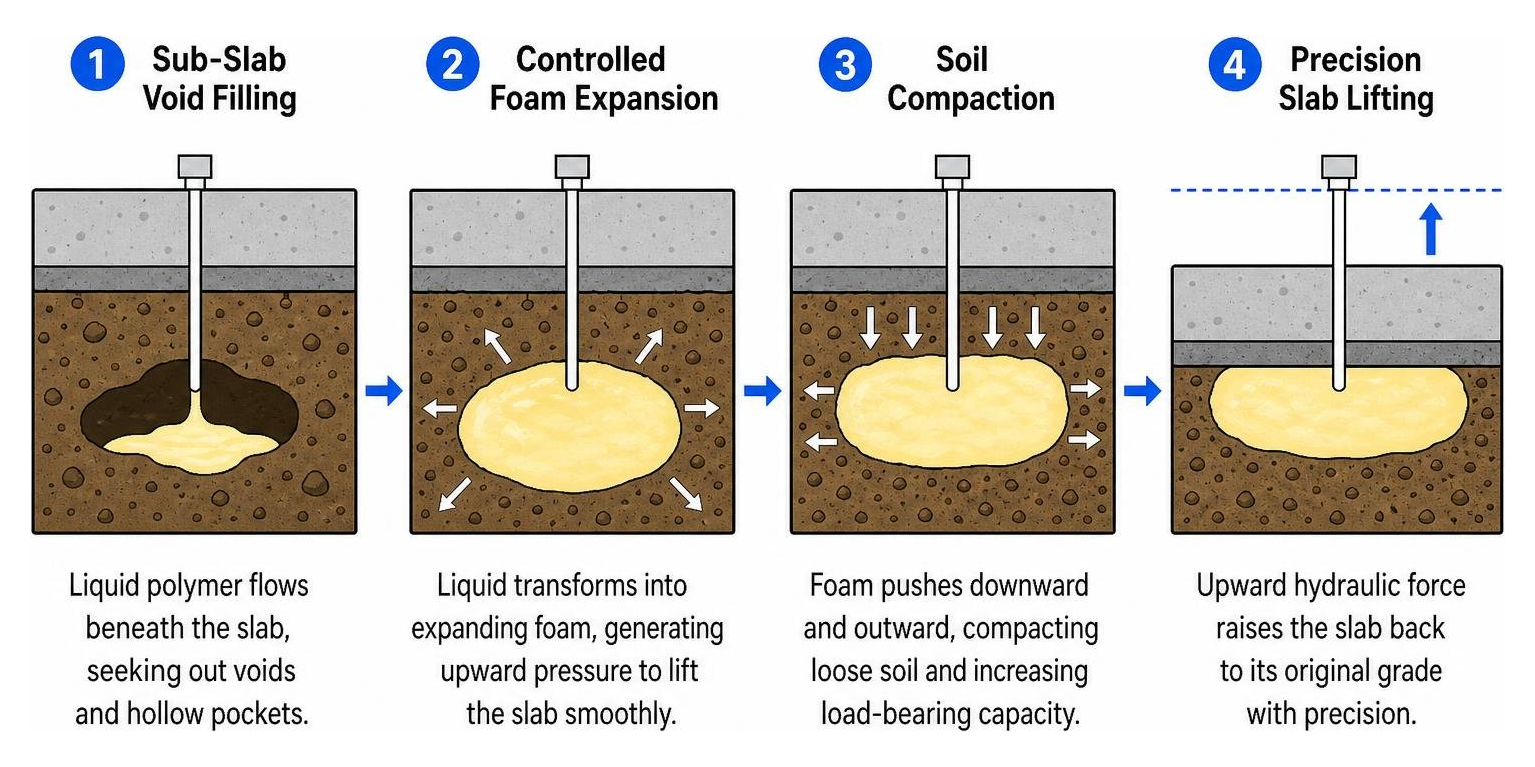
The lifting mechanism functions through a multi-stage process beneath the slab:
- Sub-Slab Void Filling: As the liquid polymer enters the space below the concrete, it flows into the path of least resistance, seeking out hidden cavities and hollow pockets caused by washouts or settling.
- Controlled Expansion: Within seconds, the liquid transforms into an expanding foam, generating sufficient lifting pressure to raise heavy slabs smoothly without cracking the masonry.
- Soil Compaction: Before the foam moves the slab upward, it pushes downward and outward, consolidating weak sub-base soils and increasing their overall load-bearing capacity.
- Non-Biodegradable Support: Once cured, the rigid foam remains completely inert. It does not wash away, degrade, or break down when exposed to groundwater, moisture, or soil minerals.
Foam Injection vs. Traditional Leveling Methods
For decades, mudjacking was the standard method for raising sunken concrete. However, pumping a heavy concrete slurry beneath an already failing soil base creates several long-term risks. Mudjacking adds substantial weight—often over 100 pounds per cubic foot—to compromised soil, which can cause secondary settlement over time.
In comparison, expanding polyurethane weighs only 2 to 4 pounds per cubic foot while delivering the load-bearing capability required to support residential foundations and slabs. Additionally, modern high-density foam injection utilizes discreet 5/8-inch drill ports, whereas mudjacking requires large, unsightly 2- to 3-inch holes. Homeowners looking to avoid tearing out their surfaces can discover the benefits of Dont Replace It Raise It Modern Solutions for Concrete Sinking Repair.
| Feature / Metric | Polyurethane Foam Injection | Traditional Mudjacking | Full Concrete Replacement |
|---|---|---|---|
| Drill Hole Size | Small (5/8 inch) | Large (2 to 3 inches) | N/A (Total demolition) |
| Material Weight | 2–4 lbs / cu. ft. | 100–120 lbs / cu. ft. | 140–150 lbs / cu. ft. |
| Cure & Usability Time | 15–30 minutes | 24–48 hours | 28 days (full cure) |
| Moisture Resistance | Hydrophobic (Impermeable) | Vulnerable to washout | Susceptible to cracking |
| Landscape Impact | Minimal (small hose run) | Moderate (heavy trucks) | Severe (heavy excavators) |
| Typical Cost Savings | 30% to 50% vs. replacement | 40% to 60% vs. replacement | Baseline maximum expense |
Key Indicators and Soil Causes Behind Foundation Settlement
Concrete slabs settle when the earth supporting them moves, erodes, or compresses. Subterranean soil washout caused by broken plumbing lines, improper downspout drainage, poor original sub-base compaction, or severe drought consolidation will compromise the structural foundation of your home.
Warning Signs That Require Foam Foundation Repair Near Me
Recognizing early indicators of foundation movement allows you to address the problem before cosmetic issues become costly structural failures. Look for these warning signs:
- Interior Drywall Cracks: Diagonal stress fractures radiating from the corners of interior doors and window frames.
- Sticking Doors and Windows: Frames shifting out of square, causing doors to rub against jambs or refuse to latch.
- Sloping Interior Floors: Unlevel flooring where dropped objects roll toward a particular wall or corner.
- Floor-to-Wall Gaps: Baseboards separating from flooring materials, or interior partition walls pulling away from ceilings.
For a deeper dive into diagnosing foundation movements, read Everything You Need to Know About Foundation Leveling Near Me.
The Role of Clay Soils and Seasonal Moisture Changes
Across our service regions in the Midwest, expansive clay soils are the primary cause of foundation movement. Clay soils undergo a dramatic shrink-swell cycle driven by seasonal weather changes:
During wet spring seasons, clay absorbs moisture and expands, exerting upward hydrostatic pressure on slabs. Conversely, during dry summer stretches, the clay loses moisture, shrinks, and pulls away from the underside of the concrete. This shrinkage creates large subterranean voids. Without continuous support beneath the slab, the concrete drops under its own weight, leading to noticeable settlement and surface cracking.
The Step-by-Step Polyurethane Foam Injection Process
Restoring sunken slabs using advanced Concrete Leveling requires specialized equipment and precise execution. Here is our step-by-step process.
Site Inspection and Void Assessment
Before any drilling begins, our team conducts a thorough evaluation of the property. We assess the floor elevations using precision laser leveling tools to measure the exact settlement deficit across the slab. Technicians map sub-slab voids, inspect surrounding soil stability, and plan strategic injection points to ensure balanced lifting without placing uneven stress on the concrete.
Precision Drilling and High-Density Foam Injection
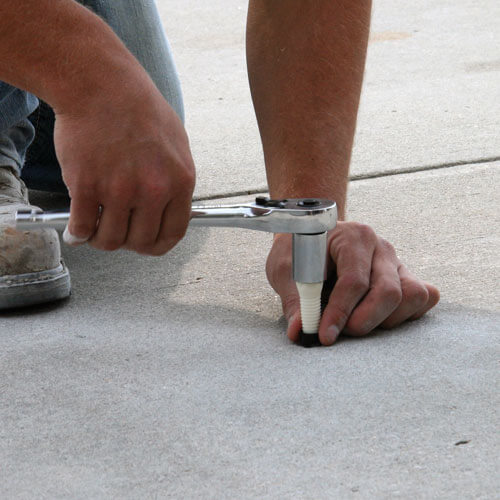
Once the plan is established, the crew drills small 5/8-inch access holes (about the diameter of a dime) in the targeted areas. A specialized mechanical injection port is inserted into each hole.
Using high-pressure hydraulic equipment, our technicians inject a dual-component polyurethane mixture beneath the slab. The liquids blend at the tip of the injection gun and react instantly beneath the surface. As the expanding foam fills voids and consolidates the subgrade, our crew tracks the slab’s movement in real time with laser sensors to achieve an accurate, level finish.
Rapid Curing and Port Patching
Polyurethane foam reaches 90% of its full compressive strength within 15 minutes of injection. After leveling the slab, we remove the injection ports and patch each 5/8-inch hole with a color-matched cementitious mortar. Because the process avoids heavy excavation and large equipment, there is zero property disruption, and the area is ready for normal foot or vehicle traffic almost immediately.
Cost Factors and Long-Term Value of Foam Foundation Leveling
Every property is unique, and repair costs depend on several key variables:
- Elevation Deficit: The total distance the slab has dropped dictates how much lift is required.
- Sub-Slab Void Volume: The size of subterranean pockets determines the total volume of polymer material needed.
- Site Accessibility: Ease of access for running lightweight hoses to interior rooms or tight backyard spaces.
To understand how these variables influence project investments, see our guide on Proven Solutions and Cost Factors in Residential Foundation Repair.
Decades-Long Durability in Challenging Climates
High-density polyurethane foam offers exceptional durability in regions that experience severe seasonal weather. Its closed-cell structure makes it naturally hydrophobic, meaning it will not absorb moisture, rot, or degrade in standing water.
This moisture barrier helps protect the sub-base from future water erosion while resisting repeated freeze-thaw cycles that often break down traditional cement-based mudjacking mixtures. Geotechnical research and technical evaluations from organizations such as the American Society of Civil Engineers also highlight how high-density polymers perform reliably across diverse soil profiles.
Foam Injection vs. Full Concrete Replacement ROI
Opting for polyurethane leveling over traditional concrete replacement provides clear financial and practical advantages:
- Demolition Elimination: Avoids the high labor costs and noise of jackhammering intact concrete.
- Landscaping Preservation: Eliminates the need for heavy excavators, skid steers, and dump trucks that can damage lawns and gardens.
- Resale Value Protection: Resolves inspection issues and safety hazards quickly, protecting the home’s market value.
At FoamWorks Concrete Leveling, we complete most repairs in just a few hours for 30% to 50% less than full tear-out and replacement, backed by our lifetime warranty.
Finding the Best Foam Foundation Repair Near Me: What to Look For
Choosing the right contractor is essential for securing a durable, lasting repair. Always prioritize experienced specialists who use commercial-grade geotechnical foams, provide clear warranty terms, and carry comprehensive liability and workers’ compensation coverage. Explore our complete range of services under Foundation Repair.
Questions to Ask When Booking Foam Foundation Repair Near Me
Before hiring a contractor, ask the following questions to verify their qualifications:
- What density and compressive strength of polyurethane foam will you use on my slab?
- Do you monitor the lift with real-time laser elevation tools?
- What size drill holes do you make, and how do you patch them once finished?
- Is your repair warranty transferable if I decide to sell my property?
- Are your technicians fully licensed, insured, and experienced in geotechnical foam lifting?
When Foam Injection Is the Right Solution (and When It Isn’t)
While polyurethane foam is an exceptional solution for many common settlement issues, it is important to know its practical limits:
- Ideal Applications: Sunken interior concrete slabs, garage floors, settling slab-on-grade floors, porches, sidewalks, patios, and pool decks.
- When Other Methods Are Required: Deep foundation failures involving bowed basement walls, shifting perimeter footings resting dozens of feet deep, or major structural framing collapses. In these situations, steel push piers, helical anchors, or carbon-fiber wall reinforcement may be necessary before leveling the surface slab.
Frequently Asked Questions About Foam Foundation Repair
How long does polyurethane foam foundation repair last?
When installed by experienced professionals using industrial-grade materials, polyurethane foam leveling lasts for decades. The material is chemically inert, non-biodegradable, and impervious to moisture and root penetration, providing permanent support beneath your concrete.
Can foam injection fix every type of foundation problem?
No. Foam injection is designed to fill voids, compact subgrade soils, and raise settled concrete slabs. It cannot straighten bowed basement walls or replace deep structural underpinning when load-bearing perimeter footings have failed. In complex cases, contractors may use a combination of steel piers for footings and polyurethane foam for interior slab leveling.
How fast can I use the repaired area after injection?
Polyurethane foam cures within 15 to 30 minutes. Once our team finishes leveling the slab, patches the 5/8-inch injection holes, and packs up our equipment, the surface is immediately open for normal residential use, including parking vehicles in garages or walking across interior floors.
Conclusion
Uneven slabs, sticking doors, and cracked drywall do not have to lead to expensive, disruptive demolition projects. Polyurethane foam injection provides a clean, cost-effective, and long-lasting way to lift settled concrete back into position in just a single afternoon.
If you are dealing with sunken concrete or uneven floors, explore our specialized interior slab leveling solutions to restore your home’s structural stability. Contact FoamWorks Concrete Leveling today to schedule your Free Estimate and discover how easy foundation leveling can be.