
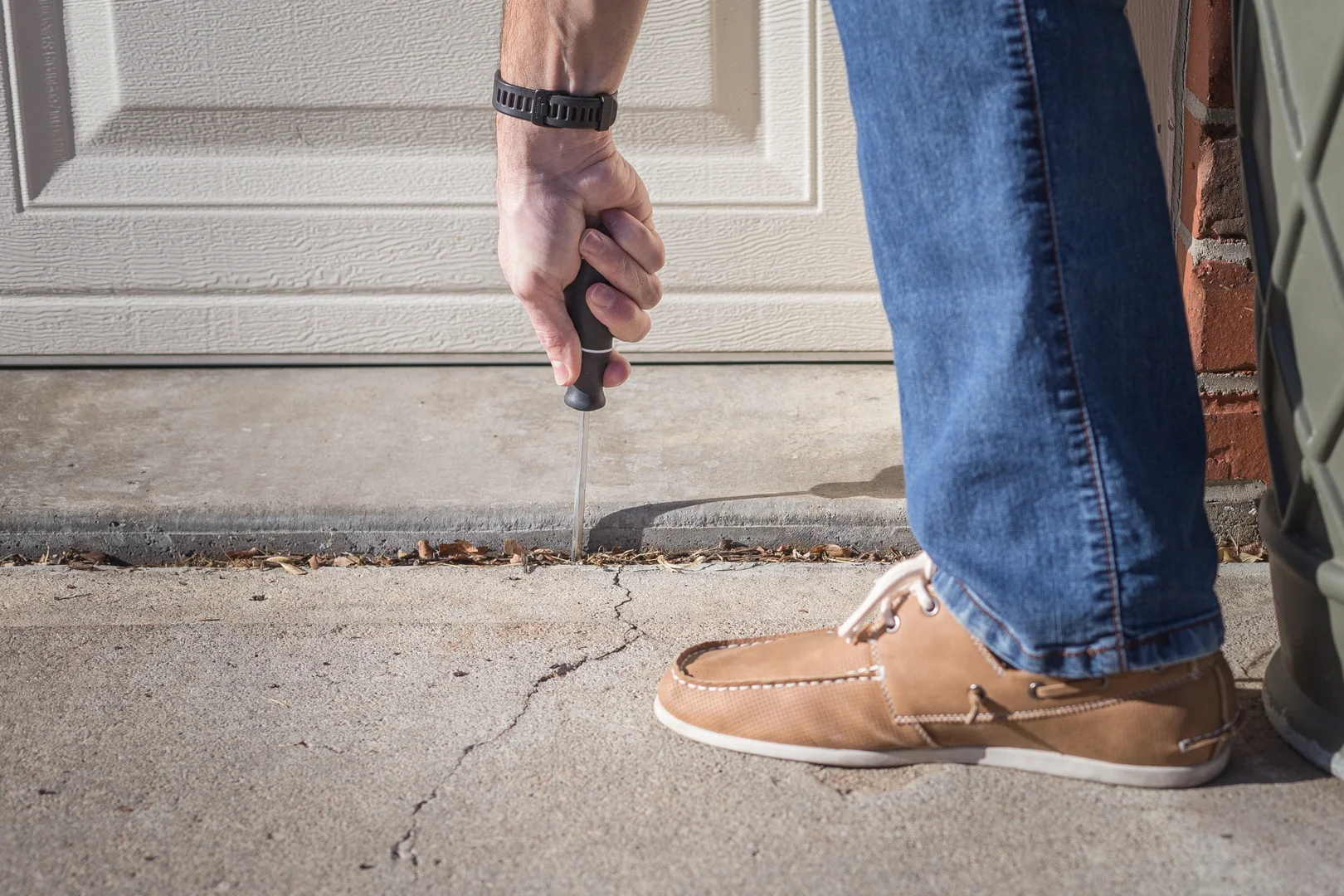
Start With a Clear Plan for Slab Foundation Repair Near Me
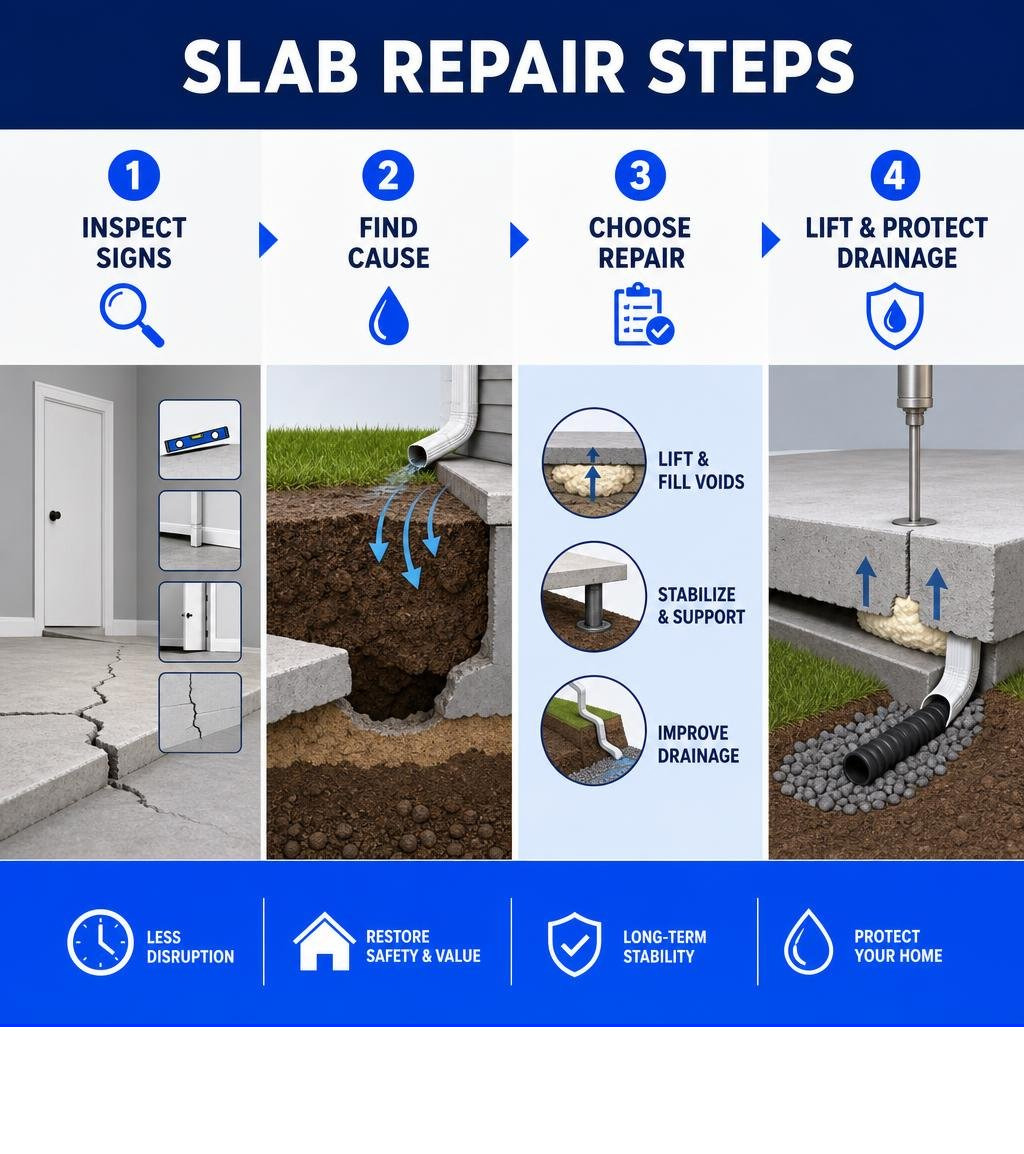
If you have a sinking or cracked concrete slab, start by checking for uneven floors, gaps at baseboards, sticking doors, and cracks near walls or exterior masonry. Then get a professional inspection to identify the cause – often poor drainage, soil movement, washout, or a plumbing leak – before choosing a repair method.
For many settled concrete slabs, polyurethane foam injection can fill voids beneath the slab and carefully lift it with small access holes. It is often less disruptive than tear-out and replacement, with most FoamWorks repairs completed in a few hours and surfaces ready for use soon after. Depending on the slab and damage, this approach may cost 30% to 50% less than replacement.
The key is not to treat every crack as a full foundation failure. Some cracks are cosmetic; others point to active movement that needs a structural engineer, drainage correction, piering, or more extensive work. This guide will help you spot the difference and compare your practical options.
I am Trey McNamee, owner of FoamWorks Concrete Leveling, serving homeowners across Northwest Ohio, Southeast Michigan, and Northeast Indiana. With more than two decades of experience in building-material strategy and product development, plus FoamWorks’ hands-on concrete leveling background, I help homeowners make smarter decisions about slab foundation repair near me.
Basic slab foundation repair near me glossary:
Diagnosing Slab Settlement: Signs, Causes, and Inspection
When a concrete slab begins to drop, it rarely happens in secret. Your home constantly communicates its structural health through subtle shifts in framing, interior finishes, and exterior masonry. Catching these early warnings protects your property value and prevents minor settling from escalating into severe structural damage.
Step 1: Identifying the Warning Signs Before Searching for Slab Foundation Repair Near Me
Before booking an inspection, take a walk through your home and look for visible indicators of settlement. When a slab sinks, the rigid framing sitting on top loses its underlying support, leading to several common issues:
- Interior drywall fractures: Look for diagonal cracks branching off the upper corners of door frames and window openings.
- Sticking doors and windows: As the slab shifts out of square, door jambs warp, preventing doors from latching or swinging smoothly.
- Separating baseboards and floor gaps: A clear indicator is daylight or a visible gap appearing between the bottom of your trim moulding and the floor covering.
- Sloping or bouncing floors: Subtle changes in elevation can cause furniture to lean, or balls to roll across rooms unprompted.
- Exterior masonry stair-step cracks: In brick or stone facades, settling causes exterior mortar joints to separate in a distinctive zigzag pattern.
Recognizing these unmistakable signs your concrete slab is settling allows you to act quickly before secondary finishes like tiles and plumbing connections break under stress.
Step 2: Uncovering Root Causes and Involving a Structural Engineer
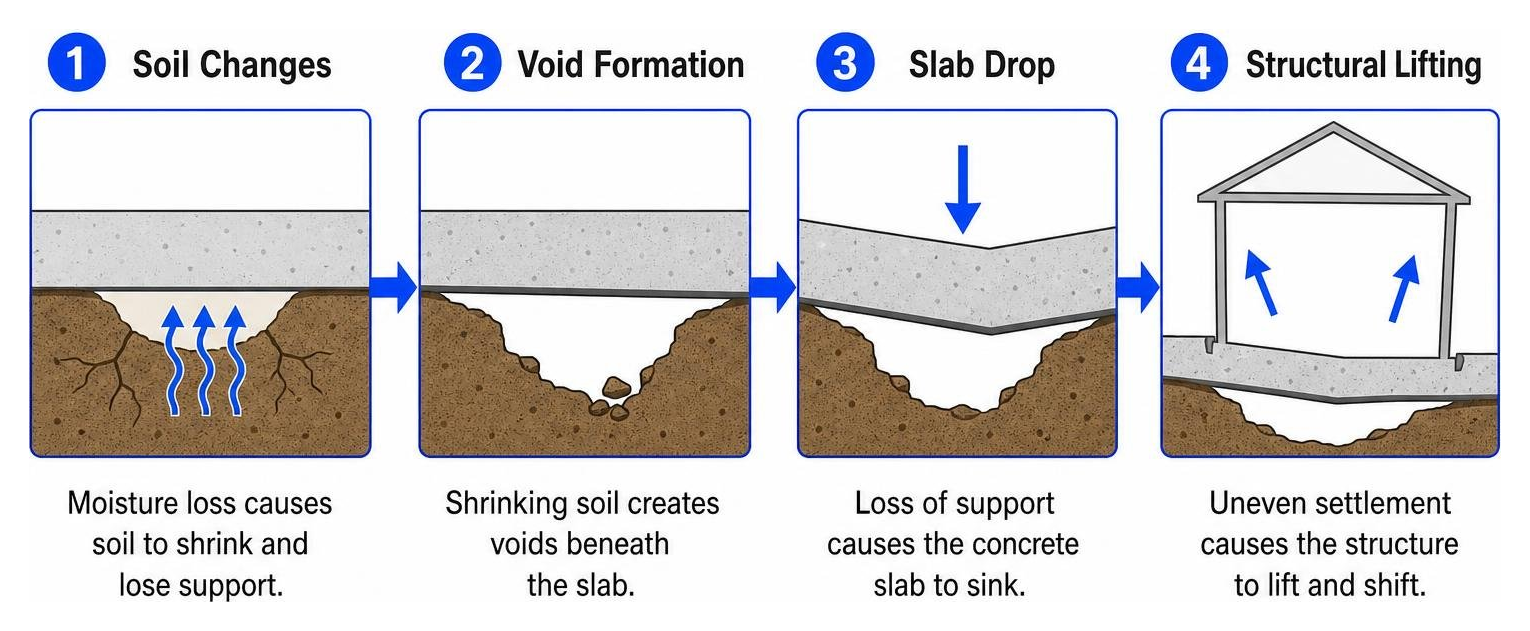
Settlement does not happen because concrete is fragile; it happens because the earth beneath it has changed. Understanding the primary causes of concrete failure ensures that any repair addresses both the symptom and the environment:
- Seasonal moisture cycles: Soils expand when saturated during heavy spring rains and shrink significantly during summer dry spells, creating underlying voids.
- Improper soil compaction: During original home construction, backfill soil that is poorly compacted gradually settles under the structural load.
- Plumbing leaks: Undetected sub-slab leaks can erode subgrade material, washing away critical base gravel.
- Poor gutter and downspout drainage: Water dumping directly against foundation walls softens the perimeter soil, reducing its weight-bearing capacity.
If you notice widespread structural deflection, severe exterior wall shearing, or complex multi-directional foundation movement, hiring an independent structural engineer before calling contractors provides an unbiased assessment of your home’s framing and foundation health.
Evaluating Methods for Slab Foundation Repair Near Me
Homeowners dealing with a sunken concrete slab generally have three distinct repair avenues: polyurethane foam injection, traditional mudjacking, or total concrete replacement. Choosing the right approach depends on the structural integrity of the concrete and your budget.
| Feature / Method | High-Density Polyurethane Foam | Traditional Mudjacking (Slurry) | Full Concrete Replacement |
|---|---|---|---|
| Drill Hole Size | Small (5/8″ dime-sized port) | Large (1.5″ to 2″ diameter) | Full demolition |
| Material Weight | Ultra-lightweight (3–5 lbs/cu.ft.) | Heavy (100–120 lbs/cu.ft.) | Heavy new pour |
| Cure & Usability Time | 15–30 minutes (instant use) | 24–48 hours minimum | 7–28 days full cure |
| Moisture Resistance | Hydrophobic; won’t wash out | Susceptible to water erosion | Water resistant once cured |
| Cost Comparison | 30% to 50% less than replacement | Moderate upfront cost | Highest overall cost |
| Landscape Impact | Zero heavy machinery damage | Heavy pump trucks and hoses | Full excavation & yard damage |
High-Density Polyurethane Foam Injection vs. Traditional Slurry Methods
For decades, traditional mudjacking was the primary method to raise sunken concrete. However, pumping heavy limestone and cement slurry under a settled slab often introduces massive dead weight to soil that was already struggling to support the original slab.
Learning how polyurethane foam lifting works demonstrates why modern methods have evolved. We inject an expanding closed-cell polymer through dime-sized holes. As the liquid reacts, it expands into microscopic voids, compacts loose soil, and gently lifts the slab with incredible precision.
Comparing this against traditional concrete raising methods highlights distinct operational advantages. Polyurethane materials are completely hydrophobic, meaning they will not wash out or degrade if exposed to moisture, explaining why high-density foam repair is surging among homeowners seeking long-term structural reliability.
Concrete Raising vs. Full Slab Replacement
Tearing out an interior slab is a noisy, dusty, and costly nightmare. It requires jackhammering concrete inside your living space, hauling heavy debris through your yard, and waiting weeks for new concrete to cure before installing flooring.
Unless a concrete slab is shattered into hundreds of unrecoverable fragments, choosing raising sunken slabs vs complete replacement preserves your existing structure while permanently filling underlying voids. By lifting and stabilizing the concrete you already have, you avoid high disposal fees, messy yard excavation, and prolonged construction downtime.
Cost Breakdown, Insurance Coverage, and Project Timelines in 2026
Understanding the financial and scheduling expectations for your repair makes the restoration process straightforward and stress-free.
2026 Repair Cost Estimates and Budgeting
When planning your budget, evaluating residential foundation repair cost factors helps you avoid unexpected surprises. Minor crack injection and sealing typically starts between $500 and $1,500. Major structural leveling or deep void filling across large residential slabs generally runs between $2,000 and $8,000 depending on total square footage, degree of drop, and soil stabilization requirements.
Because our high-density foam process requires minimal labor, no excavation equipment, and no dumpster fees, we repair sunken concrete for 30% to 50% less than full tear-out and replacement. This allows you to restore foundation integrity without overspending.
Insurance Coverage and Project Durations
Standard homeowners insurance policies typically exclude normal earth movement, soil settling, and general wear. However, there are notable exceptions:
- Plumbing leak endorsements: If a cracked water supply line or sudden drain failure washed out the soil under your slab, your policy may cover the resulting damage.
- Sudden peril coverage: Immediate damage caused by specific covered perils (such as sudden water main breaks) might qualify for claim support. Always check your policy documentation.
In terms of project timelines, traditional full slab replacement takes 5 to 14 days when including demolition, prep, pour, and cure times. In contrast, our polyurethane foam lifting process is typically completed in just a few hours, returning the slab to full service immediately.
Step-by-Step Guide to Hiring the Right Foundation Contractor
Finding a reputable specialist ensures your foundation repair performs as promised for decades to come.
How to Vet Contractors for Slab Foundation Repair Near Me
Take time to interview multiple specialists and ask specific structural questions:
- What specific material do you inject beneath the slab? (Look for closed-cell structural polyurethane that will not degrade in wet conditions.)
- How large are the access holes required? (Modern foam requires small 5/8-inch holes, whereas older mudjacking requires large 2-inch cores.)
- Do you offer a transferable lifetime warranty? (A company confident in its craftsmanship should back its leveling work for the life of the structure.)
- Are you fully licensed, insured, and locally experienced? (Verify that the crew understands regional frost depths and local soil behavior.)
- Is the quote itemized and transparent? (Ensure there are no hidden fees for injection ports, clean-up, or post-lift leveling verification.)
Frequently Asked Questions About Slab Foundation Repair
Can a sunken slab foundation be repaired without full replacement?
Yes. As long as the slab remains structurally intact without severe widespread crumbling, raising interior concrete slabs using high-density polyurethane foam lifts the surface, fills voids, and stabilizes subgrade soils without requiring messy demolition.
Is slab foundation repair covered by homeowners insurance?
General settlement resulting from soil compaction or drought is typically excluded from standard policies. However, if settling was triggered by an accidental interior plumbing leak covered under your policy endorsements, your insurance carrier may cover repairs.
How long does polyurethane slab leveling last?
High-density, closed-cell polyurethane foam is chemically inert, meaning it will not biodegrade, dissolve, or break down when exposed to sub-slab moisture or soil chemicals. Once cured, it provides permanent, lightweight structural support beneath your concrete slab for the life of the home.
Conclusion
A settling concrete slab does not have to mean catastrophic repair bills or disruptive interior demolition. By catching settlement symptoms early, addressing underlying moisture issues, and selecting high-density polyurethane foam injection, you can permanently stabilize your home’s foundation in a single afternoon.
At FoamWorks Concrete Leveling, we bring over 30 years of industry experience, transparent free estimates, and lifetime warranty protection to every project across Northwest Ohio, Southeast Michigan, and Northeast Indiana. Explore our proven interior slab leveling solutions to restore your home’s safety, value, and stability today.