
Find the Right Foundation Leveling Solution Near You

If you are searching for foundation leveling near me, start by confirming whether the problem is a sunken concrete slab or a structural foundation issue. Look for new cracks, sloping floors, sticking doors, or gaps at trim. Then schedule a professional inspection with elevation readings before choosing a repair method.
For settled concrete slabs, patios, walkways, garage floors, and some interior slabs, polyurethane foam injection can fill voids and carefully raise the concrete without full replacement. The work often takes only a few hours, causes little landscape disruption, and leaves the surface ready for use soon after.
Not every crack means your home needs major underpinning. But movement can worsen when water, poor drainage, weak soil, or Midwest freeze-thaw cycles continue to affect the soil below the concrete. A clear diagnosis helps you avoid paying for more repair than the problem requires.
I am Trey McNamee, owner of FoamWorks Concrete Leveling, serving homeowners across Northwest Ohio, Southeast Michigan, and Northeast Indiana. With more than two decades of experience in marketing, strategy, and product development in building materials, I help make foundation leveling near me easier to understand and less intimidating.
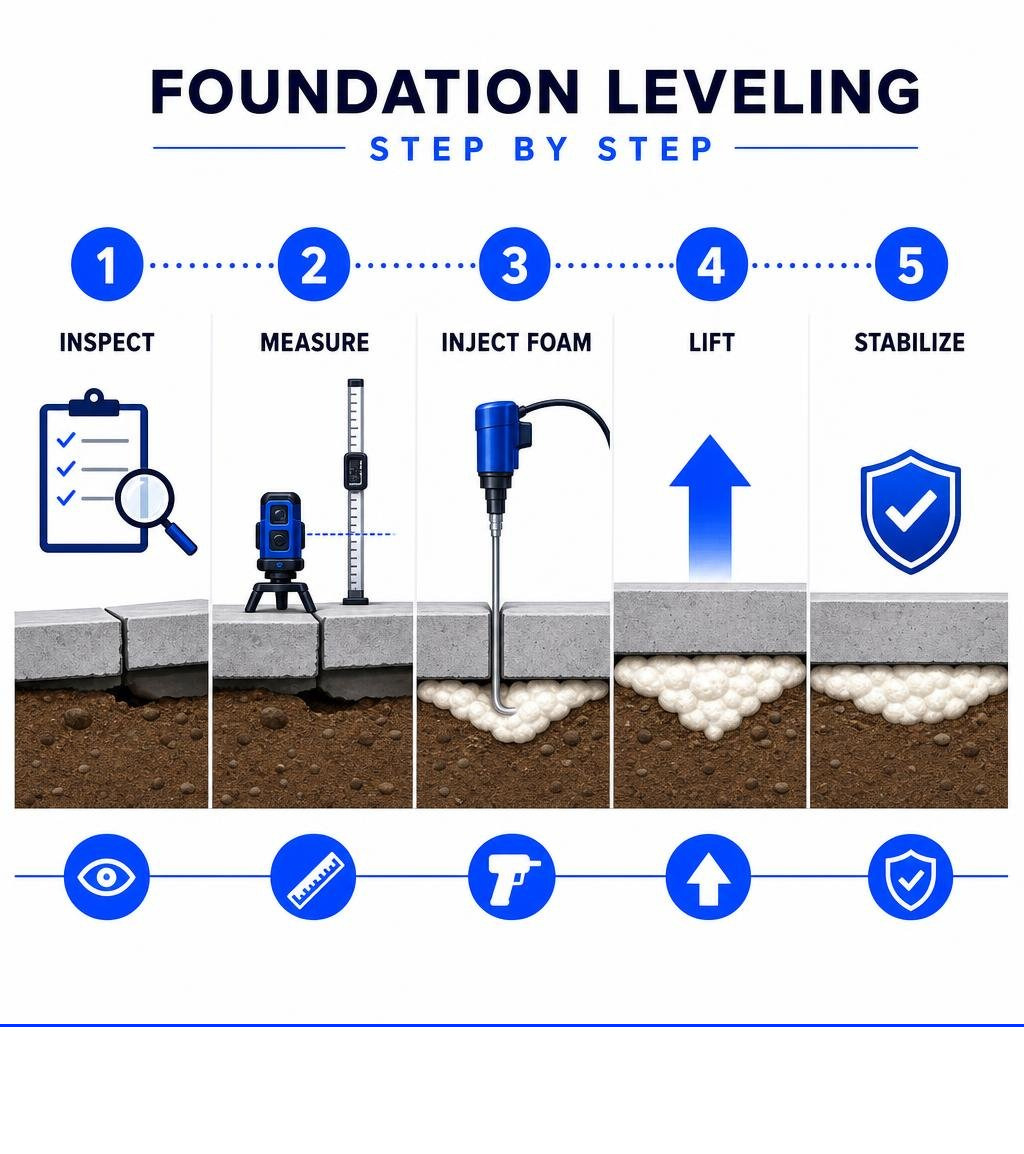
Essential foundation leveling near me terms:
Understanding Foundation Leveling vs. Foundation Repair
Homeowners often hear the terms “foundation repair” and “foundation leveling” used interchangeably, but they refer to different scopes of work. Understanding the distinction can save you thousands of dollars and ensure your home receives the right treatment.
Foundation repair is an umbrella term encompassing any project that restores structural stability to a building’s base. This can include repairing bowing basement walls, installing carbon fiber reinforcement straps, waterproofing leaking masonry, or underpinning footings with deep steel piers.
Foundation leveling—often referred to as slab lifting or house leveling—is a targeted subset of foundation repair. Its purpose is to physically lift sections of a foundation slab, floor, or footing that have dropped below their original elevation due to differential settlement.
When soil moves beneath a structure, the load-bearing capacity becomes uneven. One section of the concrete drops while the rest stays in place. Foundation leveling addresses this elevation loss directly, re-establishing support and relieving the stress on framing, drywall, and plumbing.
What Is Foundation Leveling and How Does It Work?
Foundation leveling restores sunken concrete to its proper height. Over time, the ground beneath a residential structure can wash out, compact, or dry out, leaving subterranean voids. Deprived of solid ground support, heavy concrete slabs sink under their own weight.
To correct this, professional contractors map the home’s elevation profile using specialized zip levels or laser leveling tools. These instruments measure fractional height discrepancies across rooms, identifying the low points.
Once the settling pattern is mapped, technicians inject high-density polyurethane foam or install mechanical supports to lift the slab back into alignment. As the slab rises, voids fill beneath the surface, re-establishing contact with stable sub-base soil.
How to Tell If You Need Foundation Leveling Near Me
Settlement rarely happens all at once; it sneaks up on you. You might notice a door sticking in its frame or a slight gap opening beneath a baseboard. Knowing the warning signs allows you to catch movement early before structural framing sustains permanent damage.
Look for these common indicators:
- Sticking doors and windows: When door frames pull out of square, doors rub against jambs or refuse to latch.
- Drywall and plaster cracks: Diagonal cracks originating from the top corners of interior doorways and window frames point toward uneven settling.
- Sloping, uneven floors: If a toy or a marble placed on a flat floor rolls toward a corner on its own, your floor elevation has drifted.
- Exterior masonry fractures: Check exterior brick or block walls for stair-step cracks that follow mortar joints.
- Gaps along moldings and ceilings: Crown moldings or baseboards pulling away from walls indicate that the floor or wall structure is dropping.
If you observe these symptoms across multiple rooms, look into the key signs your concrete slab is settling to confirm whether you need professional intervention.
Common Causes of Uneven and Settling Foundations
Concrete needs a solid, uniform foundation of soil to remain flat and stable. When the earth underneath moves or washes away, the slab above follows. Several factors contribute to this movement, including soil composition, weather, and poor drainage.
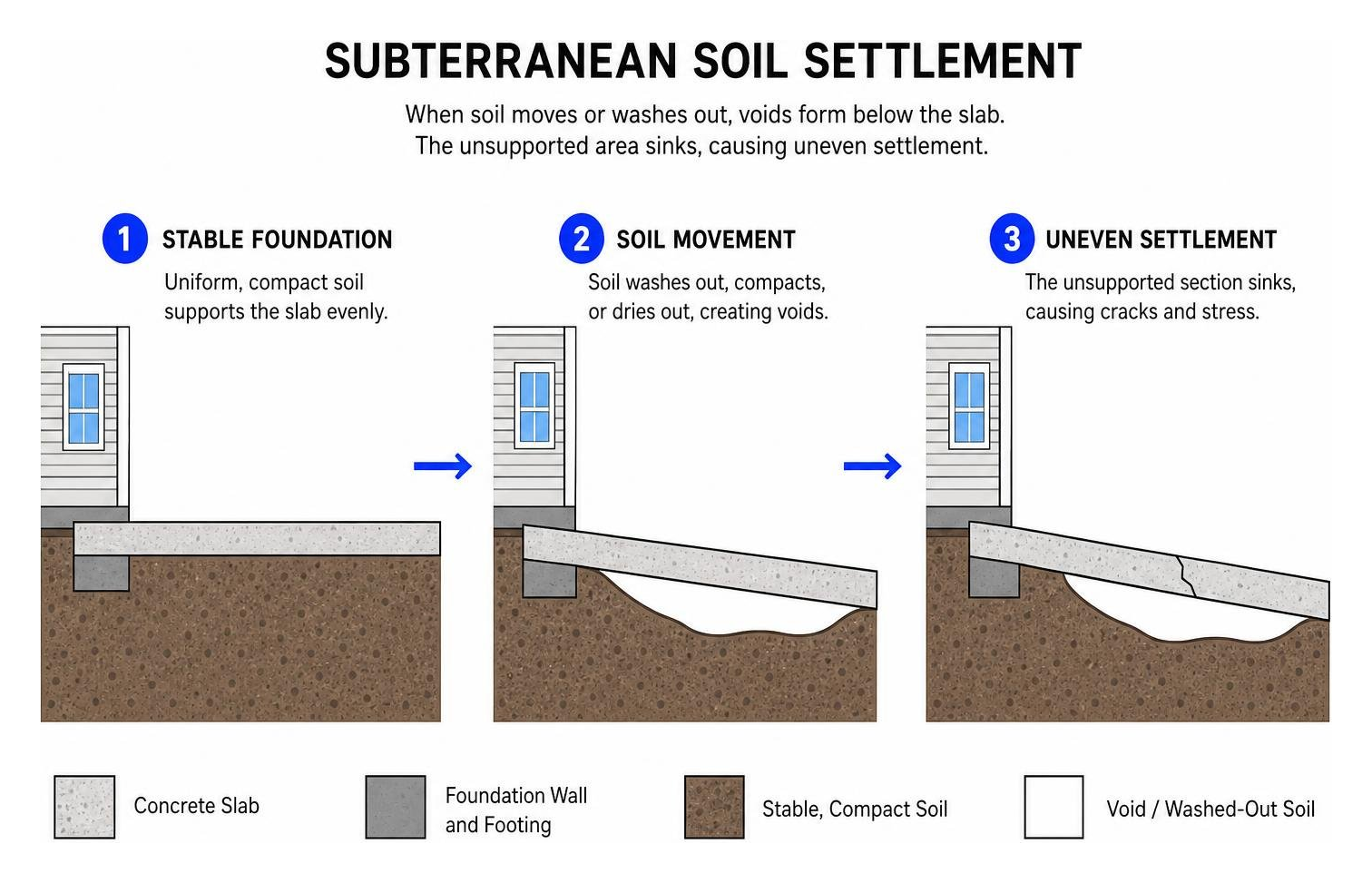
Understanding why concrete driveways sink and interior slabs drop helps you protect your home after repairs are made.
Expansive Soils, Moisture, and Freeze-Thaw Cycles
Clay-heavy soils undergo significant volumetric expansion and contraction in response to changing moisture levels. During wet seasons, clay absorbs water and expands, creating upward pressure. When dry conditions or droughts arrive, the clay loses moisture, shrinks, and pulls away from the foundation footings.
In regions with cold winters, the freeze-thaw cycle accelerates this problem:
- Ground saturation introduces water into the upper soil layers during late autumn.
- Freezing temperatures cause water in the soil to expand, pushing concrete slabs upward.
- Spring thaws melt the frozen ground, leaving loose, over-saturated soil that collapses under the slab’s weight.
- Repeated seasonal cycles create pockets beneath footings, leading to persistent foundation sinking.
Nearby mature trees can also accelerate settlement. A single large tree can pull over 100 gallons of moisture out of the ground every day during warm months, causing localized soil shrinkage right next to your foundation walls.
Poor Drainage and Soil Compaction Issues
Water management around your home plays a primary role in foundation health. When gutters dump roof runoff near exterior walls or surface grading directs rainwater toward your home, the underlying soil weakens.
Excess water erodes the fine aggregate beneath concrete footings, carving out voids. Unchecked hydrostatic pressure from saturated earth can also push inward on basement walls, leading to cracking and inward bowing.
Poor initial compaction during home construction is another common culprit. If backfilled earth was not properly compacted around the foundation during the original build, the soil naturally consolidates and settles under the weight of the structure over the following decades.
Comparing the Most Effective Foundation Leveling Methods
Selecting the right leveling method depends on whether the movement is located in deep structural footings, a basement floor, or an interior slab-on-grade foundation.
| Method | Best Use Case | Typical Lift Time | Disruption Level | Relative Cost |
|---|---|---|---|---|
| Polyurethane Foam Injection | Concrete slabs, garage floors, interior slabs, driveways | 2 to 4 hours | Minimal (dime-sized holes, no landscape damage) | Low to Moderate (30–50% less than replacement) |
| Traditional Mudjacking | Exterior flatwork, large void fills | 1 to 2 days | Moderate (1.5–2″ drill holes, heavy equipment) | Moderate |
| Hydraulic Push/Helical Piers | Deep footing settlement, exterior multi-story structural failure | 2 to 5 days | High (trench excavation around foundation perimeter) | High ($1,000–$3,000 per pier) |
For flat concrete surfaces and interior slabs, exploring dedicated concrete leveling services helps you determine whether non-invasive foam injection or deep piering matches your project’s engineering requirements.
High-Density Polyurethane Foam Injection
High-density polyurethane foam injection—often called polyjacking—is a modern, efficient method for raising sunken concrete slabs.
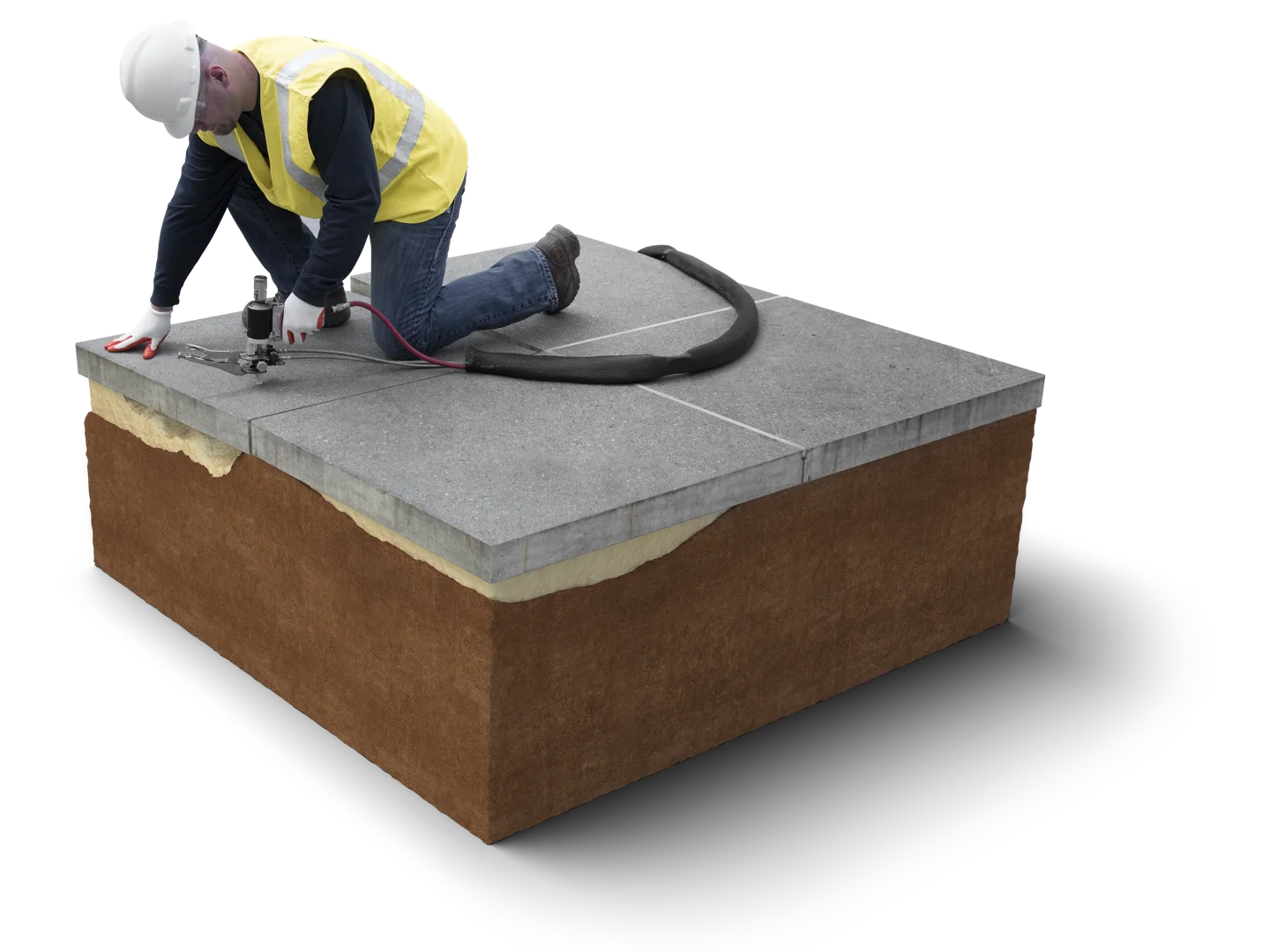
Technicians drill small holes (about 5/8 inch, roughly the size of a dime) into the settled concrete. They then inject a two-part expanding polymer through specialized ports.
As the liquid components combine beneath the slab, they expand into a high-density structural foam. This expanding foam fills empty voids, consolidates loose sub-base soil, and lifts the slab back to its original grade with millimeter accuracy.
Polyurethane foam offers several practical advantages:
- Lightweight material: The foam weighs only 2 to 4 pounds per cubic foot (compared to mudjacking slurry, which weighs around 100–120 pounds per cubic foot), meaning it will not overload weak sub-base soils.
- Impervious to water: The cured foam does not wash away, degrade, or erode when exposed to subterranean groundwater.
- Fast curing times: The foam cures within 15 to 30 minutes, allowing you to walk, park, or place furniture on the surface almost immediately.
Learning more about polyurethane concrete leveling can show you how this process restores structural slabs with minimal disruption.
Interior Slab Leveling and Void Filling
Sunken interior slabs create unique challenges. Settling concrete floors inside living spaces, basements, and attached garages can damage finished flooring, crack interior drywall, and disrupt plumbing lines running through the sub-floor.
Restoring these areas requires a non-invasive approach. Using precision injection ports installed directly through carpet seams, tile grout lines, or mechanical closets, technicians inject structural expanding foam beneath the slab.
The expanding material lifts the sunken floor back into alignment without tearing up flooring or bringing heavy machinery inside your home. For homes experiencing interior floor movement, our interior slab leveling services provide targeted structural support while preserving your interior finishes.
Concrete Crack Repair and Foundation Sealing
Lifting a sunken slab back to level is only the first step. You also need to protect it from moisture to prevent future settlement.

Once concrete slabs are raised, surface cracks and expansion joints should be sealed with high-grade, flexible commercial sealants. Sealing these entry points stops surface water from penetrating the slab, eroding sub-base aggregate, and freezing during cold winter months.
Using targeted concrete sinking repair solutions pairs structural lifting with protective sealing to keep your foundation stable for the long haul.
How Much Does Foundation Leveling Cost in 2026?
Foundation leveling costs vary based on the extent of settlement, the size of the structure, and the repair method used.
| Repair Category | 2026 Estimated Average Cost | Key Cost Drivers |
|---|---|---|
| Polyurethane Concrete Slab Leveling | $1,200 – $4,500 | Square footage, volume of foam required, site access |
| Single Corner Structural Piering | $3,000 – $5,000 | Depth to load-bearing strata, number of piers |
| Whole-Home Pier Underpinning | $10,000 – $30,000+ | House perimeter, footing depth, structural load |
| Crawl Space Structural Shimming/Jacks | $4,000 – $16,000 | Moisture damage, beam replacement, post count |
FoamWorks Concrete Leveling uses polyurethane foam injection to repair sunken or uneven concrete for 30% to 50% less than full tear-out and replacement, helping homeowners save significantly on repair costs. Most repairs are completed in just a few hours, and the surface can be used almost immediately. Because there is no need for heavy excavation, the process also reduces landscape damage, labor costs, debris removal, and disposal fees that come with replacing concrete. We provide free estimates to see how much you can save.
Regional Cost Breakdown and Price Factors
Several project-specific factors influence your final foundation leveling investment:
- Settlement severity and void size: Deep voids under concrete require more injection material, increasing total project cost.
- Accessibility: Hard-to-reach crawl spaces or interior rooms may require specialized equipment and extra labor.
- Foundation type: Raising a flat slab-on-grade patio or garage floor costs less than underpinning load-bearing perimeter footings with deep steel piers.
- Preventative drainage work: Adding downspout extensions, surface grading, or joint sealants adds a modest upfront cost while protecting against future movement.
Does Homeowners Insurance Cover Foundation Leveling?
Standard homeowners insurance policies generally exclude coverage for foundation leveling caused by gradual soil settlement, natural shrinkage, or freeze-thaw cycles. Insurers classify normal soil shifting as a regular home maintenance responsibility.
However, your policy may provide coverage if the foundation settlement is directly caused by a sudden, covered peril—such as an accidental indoor plumbing pipe burst that washes away sub-slab soil within hours.
Check your policy details and schedule a professional evaluation to document the underlying cause before submitting a claim.
How to Choose the Best Contractor for Foundation Leveling Near Me
Choosing the right contractor ensures the job is done safely, cleanly, and effectively. Foundation leveling involves structural dynamics, so working with experienced professionals is essential.
Look for these key qualifications when evaluating contractors:
- Transparent evaluation methods: Trustworthy contractors use precision laser leveling tools or zip levels to show you exact elevation deviations rather than relying on guesswork.
- Dedicated experience: Choose companies with specialized experience in concrete lifting, soil mechanics, and sub-slab stabilization.
- Written, transferable warranties: High-quality contractors back their leveling work with long-term warranties that transfer to future homeowners if you sell.
- Proper licensing and insurance: Confirm the company carries full commercial general liability and workers’ compensation coverage.
To evaluate your home’s settlement issues, you can easily schedule a free estimate with our team.
Step-by-Step Guide to Raising and Stabilizing Sinking Slabs
Understanding the repair process helps you know what to expect on project day:
- Elevation Mapping: Technicians inspect the slab and map high and low points across the floor using laser elevation tools.
- Port Drilling: Small, 5/8-inch holes are strategically drilled through the concrete in the settled areas.
- Foam Injection: High-density polyurethane foam is injected beneath the slab. As it expands, it fills subterranean voids and consolidates weak sub-base soil.
- Controlled Structural Lift: Technicians monitor laser readings in real-time as the expanding foam raises the concrete back to grade.
- Port Patching and Sealing: Injection ports are cleaned and sealed with color-matched concrete mortar, leaving the repair barely noticeable.
- Joint Protection: Expansion joints and major cracks are sealed with industrial polymer sealant to prevent future water intrusion.
Evaluating Quotes, Warranties, and Experience for Foundation Leveling Near Me
When reviewing quotes, make sure each bid includes the complete scope of work: hole drilling, injection materials, patching, joint sealing, and cleanup.
Check third-party review platforms such as Google and the Better Business Bureau to verify how the contractor treats customers and handles warranty follow-ups.
At FoamWorks Concrete Leveling, we bring over 30 years of industry experience and offer a lifetime warranty on our leveling and crack repair solutions. We serve homeowners across our complete service area across Northwest Ohio, Southeast Michigan, and Northeast Indiana, including:
- Michigan: Monroe, Flat Rock, Adrian, Detroit, Livonia, Plymouth, Ann Arbor, Saline, Ypsilanti, Jackson, and Hillsdale.
- Ohio: Toledo, Maumee, Perrysburg, Sylvania, Bowling Green, Sandusky, Norwalk, Fremont, Mansfield, Findlay, Defiance, Lima, Celina, and Sidney.
- Indiana: Fort Wayne, Auburn, Angola, New Haven, and surrounding communities.
Frequently Asked Questions About Foundation Leveling
How long does a foundation leveling project usually take?
Most residential concrete slab leveling projects using polyurethane foam injection take between 2 and 4 hours to complete. Even extensive residential interior floor lifting is typically finished within a single day.
Because polyurethane foam cures within minutes, the leveled surface can handle foot traffic and heavy vehicles almost immediately after our crew wraps up.
Is foundation leveling a permanent fix for settling homes?
Yes, high-density polyurethane foam leveling is designed as a permanent solution. The cured foam does not rot, wash away, or break down over time.
However, ongoing soil erosion or unaddressed drainage problems can cause adjacent, untreated areas of soil to settle later on. Pairing slab lifting with proper gutter drainage, downspout extensions, and joint sealing gives you durable, long-term stability.
If you plan to patch cosmetic drywall cracks or repaint interior rooms, wait 4 to 6 weeks after the lift to allow the home’s framing to fully relax into its restored position.
Can you live in your house during the leveling process?
Yes. Unlike full foundation replacement or messy excavation, polyurethane foam slab leveling is non-invasive and quiet.
Equipment remains outside on the truck while lightweight supply hoses are run directly to the repair area. You can comfortably remain inside your home during the entire leveling process with zero structural interruption.
Conclusion
Foundation settlement can feel overwhelming, but catching movement early prevents cosmetic issues from turning into major structural damage. Getting a clear diagnosis helps you choose the right repair method—restoring your floors, protecting your home’s value, and keeping repair costs manageable.
For sunken garage floors, driveways, patios, and interior concrete slabs, high-density polyurethane injection provides an efficient, cost-effective alternative to expensive tear-out and replacement.
If you are noticing sticky doors, uneven floors, or shifting concrete slabs, reach out to FoamWorks Concrete Leveling today to explore our interior slab leveling and concrete stabilization services. We are here to help you restore and protect your home with lasting confidence.