
Signs You Need Concrete Leveling Before Damage Gets Worse
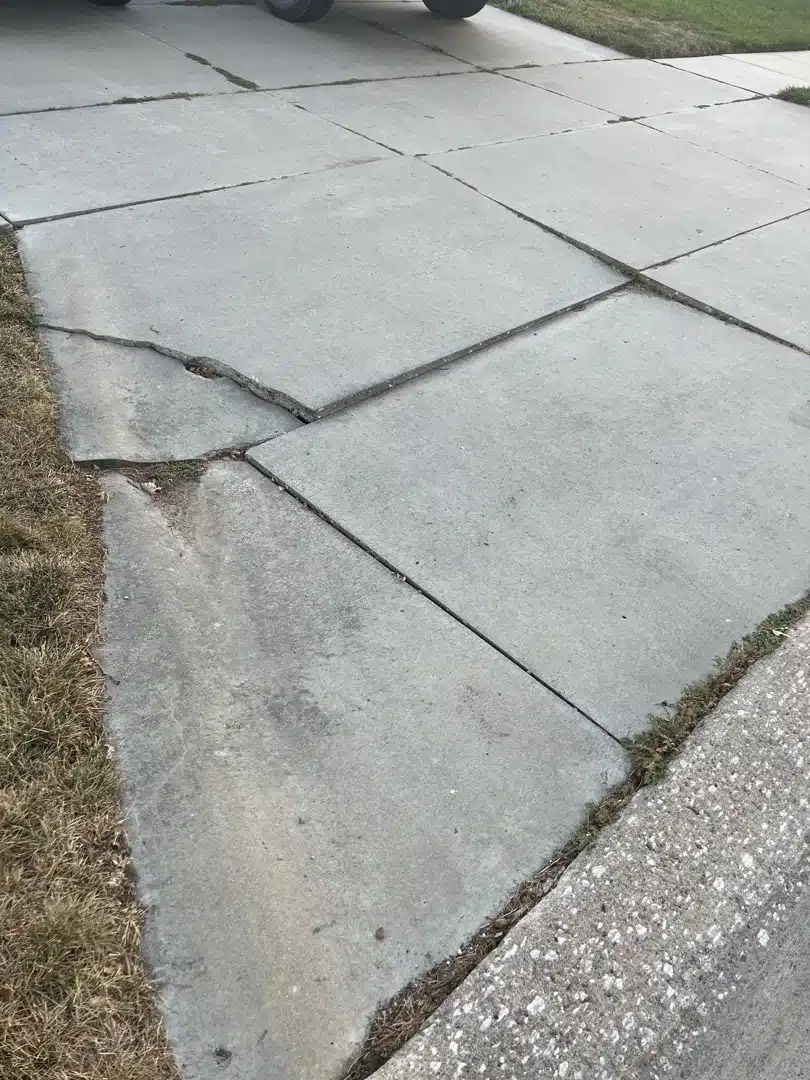
The clearest signs you need concrete leveling are slabs that have sunk or shifted, cracks with one side higher than the other, water pooling on a driveway or patio, and steps that no longer meet the walkway evenly. Gaps between a porch and the house can also point to movement. Check these spots early: raised edges can cause trips, while poor drainage can send water toward your home.
I’m Trey McNamee, owner of FoamWorks Concrete Leveling, and I help homeowners recognize the signs you need concrete leveling. My background includes more than two decades in building-materials marketing and product strategy at Owens Corning, alongside a team with over 30 years of collective industry experience.
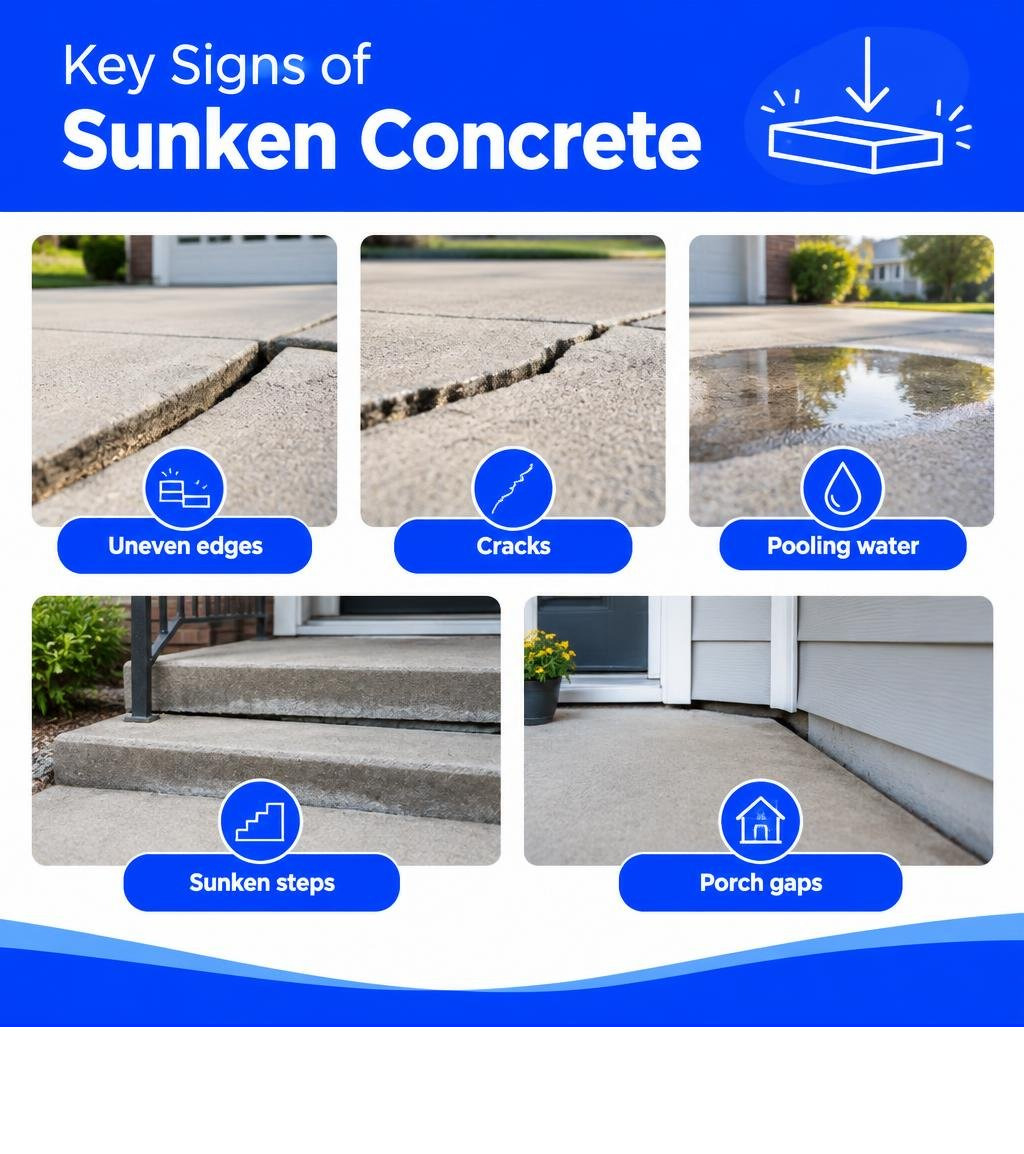
Signs you need concrete leveling terms to remember:
How Moisture and Soil Movement Affect Concrete
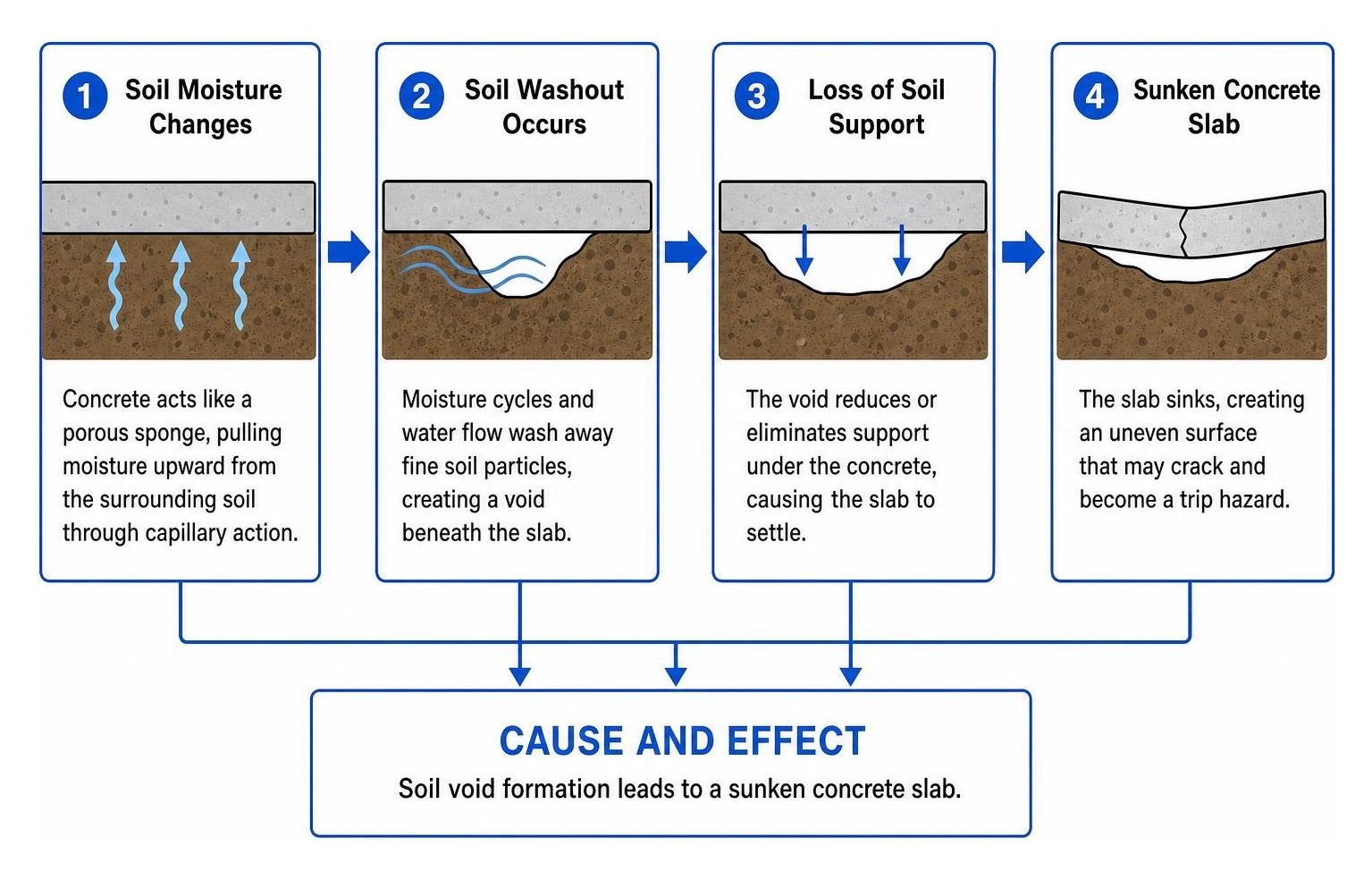
Moisture moving through the soil can wash away fine material beneath a slab or cause the supporting soil to shift, leaving areas of concrete without consistent support.
When drainage sends water toward concrete, saturated soil can compact or wash out, making the slab more likely to settle, crack, or slope in the wrong direction.
Addressing early signs of settlement can help limit ongoing soil movement beneath concrete.
7 Critical Signs You Need Concrete Leveling Around Your Property
Uneven concrete rarely repairs itself. Soil beneath our slabs constantly shifts due to moisture cycles, freeze-thaw expansion, and soil washout. Catching these problems early can help limit further slab movement and concrete damage.
Below are the most common indicators that your concrete requires professional lifting and stabilization.
1. Visible Cracks and Slab Displacement: Early Signs You Need Concrete Leveling
Concrete naturally develops minor, hairline shrinkage cracks as it cures. However, when a crack exhibits vertical displacement—meaning one side of the fracture sits noticeably higher than the other—it reveals that the underlying subbase has washed out or compressed.
These uneven breaks act as fault lines across your driveway, sidewalk, or patio. As rainwater and snowmelt seep into the fracture, they wash away additional base material and expand during winter freeze cycles, accelerating slab movement. Spotting these unmistakable signs your concrete slab is settling helps prevent further settlement. Addressing the issue early stops when concrete cracks become a recipe for disaster, saving you from complete slab collapse.
2. Sinking Driveway Slabs and Water Pooling
Driveways bear significant structural loads from parked vehicles and everyday traffic. If the soil underneath was poorly compacted during initial construction, heavy vehicles compress the base, causing entire sections to drop.
When driveway panels sink, they disrupt natural drainage slopes. Instead of shedding stormwater toward the street or swales, water begins ponding directly on the concrete or, worse, pitching back toward your foundation walls. Persistent standing water erodes the edges of the driveway, degrades the concrete surface through freeze-thaw spalling, and threatens nearby basement walls. Understanding why concrete driveways sink highlights why lifting and leveling sunken driveways is vital for restoring proper water runoff.
3. Sunken Entry Steps and Porch Separation
Exterior front steps and entry porches are frequently poured on soil backfilled right against the home’s foundation. Because backfill soil settles significantly over the years, heavy concrete steps often tilt forward or pull away from the entryway.
Key warning signs include:
- Visible gaps between the top step and the porch or front threshold.
- Steps pulling away from the exterior brick or siding.
- Uneven tread heights that cause family members and guests to trip.
- Porch slabs sloping backward, collecting water against the front door sill.
Settled steps create severe personal safety hazards and can allow water to collect near the entryway. Proactively raising sinking concrete steps stabilizes the entryway and protects your entry landing.
4. Sloping Pool Decks and Raised Coping Joints
Pool surrounds endure extreme moisture fluctuations from pool splashes, heavy rain, and nearby groundwater. Over time, the soil around the perimeter of the pool shell consolidates, causing pool deck slabs to sink and tilt.
When pool concrete settles, it creates sharp, raised edges along coping joints and expansion seams. Barefoot swimmers can stub toes or trip, and sunken slabs allow water to flow back toward the pool walls rather than into surrounding yard drains. Prompt attention helps keep the deck surface safer and directs water away from the surrounding area. Promptly fixing sunken pool decks eliminates dangerous trip hazards and helps protect the surrounding concrete from further movement.
5. Baseboard Gaps, Spongy Floors, and Moisture: Interior Signs You Need Concrete Leveling
Concrete settlement is not limited to outdoor driveways and patios; indoor slabs-on-grade can also sink when underlying soils compress or wash away.

When an interior concrete slab drops even a fraction of an inch, it leaves clear physical clues:
- Baseboard Gaps: Gaps appear between the bottom of your baseboard trim and the top of the finished floor.
- Spongy or Bouncing Floors: Finished floors may flex noticeably underfoot when the slab beneath them has settled.
- Gaps Along Finished Flooring: A settled slab can leave visible gaps where finished flooring meets baseboards or nearby surfaces.
6. Uneven Sidewalk Panels and Pathway Tripping Ledges
Sidewalk slabs that shift out of alignment create sudden vertical ledges along control joints. These abrupt offsets catch shoes, stroller wheels, and bicycles.
Tree root growth, burrowing pests, and localized soil washout from downspout runoff commonly destabilize one side of a sidewalk panel while leaving the adjacent panel stationary. Raised sidewalk joints can create a trip hazard, a concern also addressed in the Federal Highway Administration’s sidewalk design guidance.
7. Gaps Between Concrete Slabs and Foundation Walls
Driveways, garage aprons, and patio slabs should sit flush and stable against your home’s foundation. When soil shifts, these exterior slabs can drop downward, leaving a distinct gap along the foundation wall.
This separation invites rainwater from roof overhangs and gutters to funnel directly along the outside of your basement walls or foundation footings. Over time, this concentrated water volume saturates the foundation backfill, increases hydrostatic pressure against basement walls, and accelerates foundation cracking.
The Real Cost of Waiting: Safety Hazards and Structural Damage
Putting off concrete repairs can quickly turn a minor inconvenience into a significant financial burden. The risks of ignoring sunken concrete include:
- Trip Hazard Liability: As a property owner, you are legally responsible for maintaining reasonably safe pathways. Uneven walkway joints or sunken steps can cause severe trip-and-fall injuries for delivery drivers, guests, or neighbors, leading to costly insurance claims or personal liability lawsuits.
- Accelerated Concrete Destruction: A slab resting on a hollow void lacks structural support. When heavy loads—like vehicles or heavy patio furniture—pass over the unsupported section, the concrete snaps along the fault line. Once a slab shatters into multiple small pieces, it becomes much harder to restore a stable, usable surface.
- Drainage Concerns: Slabs that pitch water toward the home can keep moisture against the structure and worsen soil movement around the concrete.
- Diminished Property Value: Uneven concrete, cracked walkways, and sunken driveways hurt curb appeal and trigger red flags during home inspections, often forcing sellers to offer substantial concessions to buyers.
Professional Foam Injection for Concrete Leveling
When concrete begins to sink, modern polyurethane foam injection offers a clean, minimally invasive way to lift and stabilize the slab.
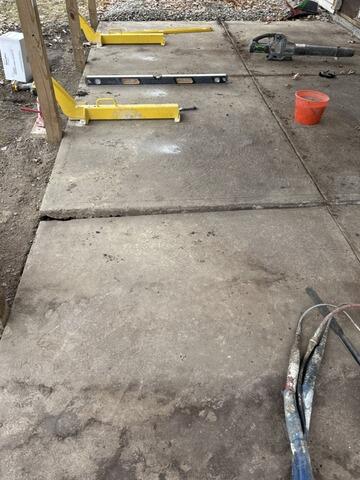
How Polyurethane Foam Leveling Works
- Precision Drilling: Small injection ports (roughly 3/8-inch, about the diameter of a dime) are drilled strategically through the sunken concrete slab.
- High-Density Foam Injection: Specialized, dual-component polyurethane liquid is injected beneath the slab. As the components mix, they expand into dense foam, filling hidden subbase voids and compressing loose soil.
- Controlled Slab Lifting: As the expanding foam cures, it generates immense upward force, gently and precisely lifting the slab back into alignment with surrounding panels.
- Port Sealing: The injection ports are cleaned and patched with color-matched cement compound, leaving virtually no trace of the repair.
FoamWorks Concrete Leveling uses polyurethane foam injection to lift and stabilize sunken or uneven concrete with minimal disruption. Most repairs are completed in just a few hours, and the surface can be used almost immediately. Because there’s no need for heavy excavation, the process also reduces landscape damage, labor costs, debris removal, and disposal fees. We provide free estimates to see how much you can save.
Exploring these modern solutions for concrete sinking repair and knowing when to call the pros for cracked concrete helps you preserve your property’s original masonry cleanly and efficiently.
Frequently Asked Questions About Concrete Leveling
What affects the cost of concrete leveling?
Concrete leveling costs vary based on the slab size, the amount of settlement, site access, and the condition of the supporting soil. FoamWorks provides free estimates so homeowners can receive a recommendation and pricing based on the specific concrete issue.
How quickly can a concrete surface be used after foam injection leveling?
Unlike fresh concrete pours that require days of curing time, high-density polyurethane foam expands and reaches 90% of its final compressive strength within minutes. Most leveling projects are completed in 2 to 4 hours, and the surface is ready for normal foot and vehicle traffic in just 15 minutes after injection.
Conclusion: Protect Your Property Value with Timely Concrete Leveling
Recognizing the early warning signs of sunken concrete—from hairline crack displacements and pooling driveway water to bouncy subfloors and separated steps—empowers you to address soil settlement before structural damage escalates.
At FoamWorks Concrete Leveling, we bring over 30 years of industry experience to homeowners across Northwest Ohio, Southeast Michigan, and Northeast Indiana. Our family-owned team uses advanced polyurethane foam injection to permanently raise, level, and stabilize your concrete slabs with minimal disruption to your daily life.
Do not let uneven concrete jeopardize your home’s safety or value. Contact us today for a free estimate and discover our expert concrete leveling solutions backed by our lifetime warranty and 100% customer satisfaction guarantee.