

Is Foam Concrete Leveling Safe? What Homeowners Should Know
Yes, foam concrete leveling is generally safe when a trained crew uses the right polyurethane foam and controls how much the slab rises. The chemicals need careful handling before they cure, and injecting too much foam can crack or unevenly lift concrete. A safe repair also depends on the slab’s condition and what caused it to sink.
I’m Trey McNamee, owner of FoamWorks Concrete Leveling, and my background includes building-materials product development. When homeowners ask, “is foam concrete leveling safe?”, I draw on that experience and our team’s more than 30 years of combined industry experience to explain what makes a repair safe.
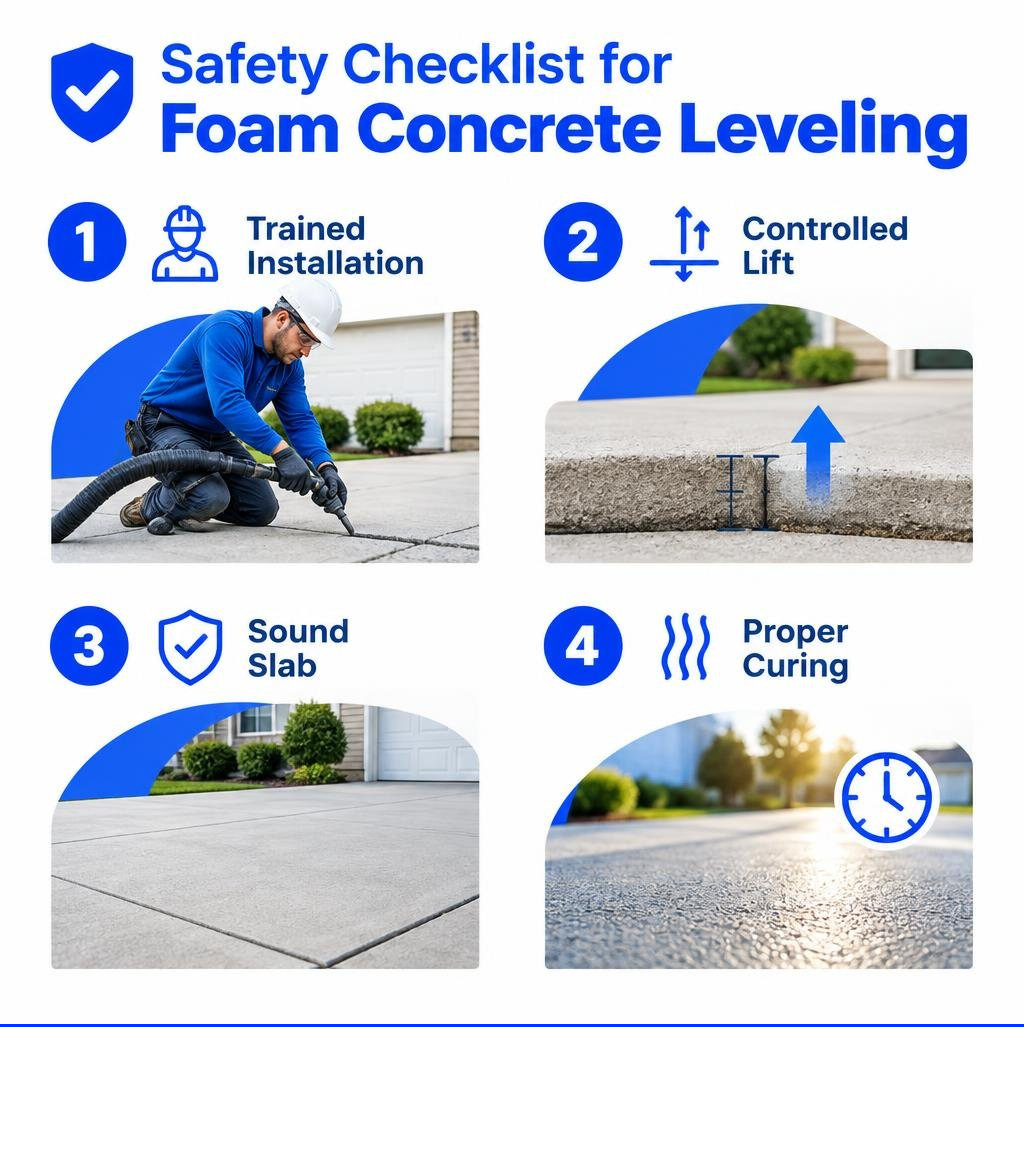
Is foam concrete leveling safe terms to remember:
- how does polyurethane foam lifting work
- what is polyurethane concrete leveling
- how long does foam concrete leveling last
Uneven concrete is more than just an eyesore. Sinking steps, tilted pool decks, and sagging driveways create real trip hazards. According to the Americans with Disabilities Act (ADA), any vertical transition greater than 1/4 inch is classified as an unsafe trip hazard. Rather than tearing out settled slabs, modern high-density polyurethane injection provides an effective way to restore grade, fill underlying voids, and establish structural stability.
Is Foam Concrete Leveling Safe for Your Home and Environment?
When evaluating any home repair method, safety extends beyond structural performance to include environmental health, soil chemistry, and long-term chemical stability. Polyurethane foam injection uses a dual-component liquid system that reacts, expands, and rapidly hardens beneath the surface.
Once cured, the closed-cell high-density polymer becomes completely inert. It does not react with native soils, nor does it break down into harmful byproducts over time. Because the chemical reaction occurs within seconds beneath the slab, there is zero risk of chemical leaching into local groundwater aquifers or surrounding waterways.
Assessing Is Foam Concrete Leveling Safe Around Pets, Plants, and Soil
A common concern among property owners in Northwest Ohio, Southeast Michigan, and Northeast Indiana is whether the injected material poses any danger to household pets, landscaping, or delicate garden root systems.
- Non-toxic chemistry: Fully cured structural polyurethane is chemically non-reactive. It emits no volatile organic compounds (VOCs) into the surrounding soil once hardened.
- Root system preservation: Unlike heavy excavation equipment that tears up topsoil and severs mature tree roots, the injection process requires only minimal access holes, keeping nearby plant life intact.
- Pet-safe application: Because the foam is injected deep beneath the concrete slab and reaches full cure in minutes, pets face no risk of contact with wet chemical compounds.
By compacting loose sub-base materials without introducing toxic substances, structural foam helps maintain long-term ground stability while respecting local environmental standards.
Moisture Resistance: Hydrophobic vs Hydrophilic Foam Formulations
Sub-surface moisture levels play a critical role in foundation stability. Across our service areas—from Ann Arbor and Detroit down to Toledo, Lima, and Fort Wayne—seasonal precipitation and high water tables demand materials that perform reliably in saturated conditions.
Understanding the difference between hydrophobic and hydrophilic formulations is key to understanding how polyurethane foam lifting works to fix sinking concrete.
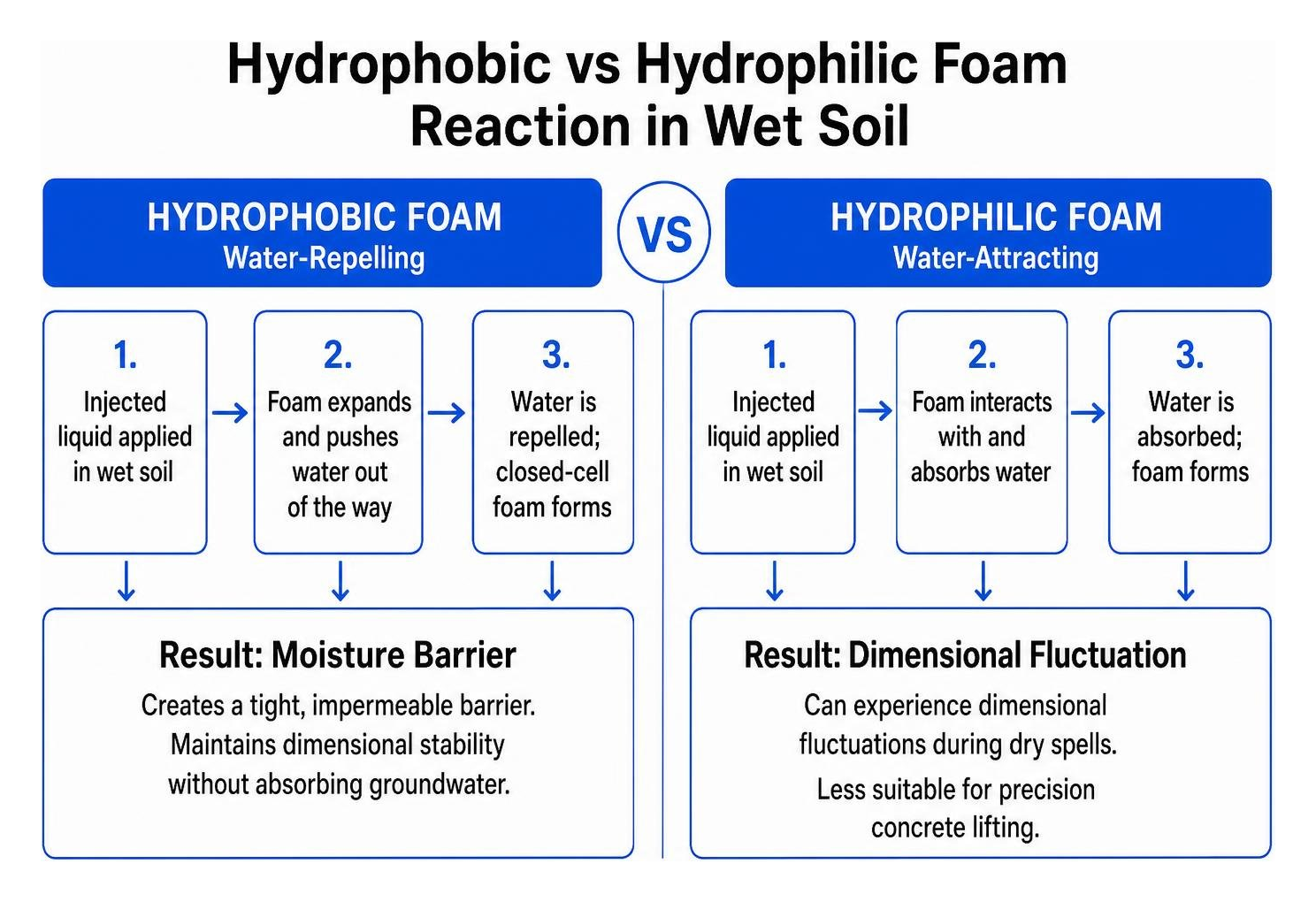
- Hydrophobic foams: These closed-cell systems naturally repel standing water. As the liquid expands beneath the slab, it pushes water out of the way, creating a tight, impermeable moisture barrier that maintains dimensional stability without absorbing groundwater.
- Hydrophilic foams: These formulations interact with and absorb water. While useful for specific water-stopping joint applications, they can experience dimensional fluctuations during dry spells, making them less suitable for precision concrete lifting.
For lasting structural safety, using closed-cell hydrophobic polyurethane ensures that sub-base washout and seasonal moisture do not compromise the repair.
How Foam Injection Supports Structural Safety
Concrete lifting safety depends on stabilizing the soil beneath a settled slab without placing unnecessary stress on the surrounding area. Polyurethane foam is injected through small access holes to fill voids, consolidate loose soil, and lift the concrete in a controlled manner. NCFI’s concrete leveling overview describes this foam-injection approach for settled slabs when installed by trained technicians.
Polyurethane foam expands between 12 and 18 times its liquid volume while remaining exceptionally light, typically weighing only 2 to 4 pounds per cubic foot. This lightweight profile provides high compressive strength without adding substantial mass to weak sub-soils, helping support a controlled lift and stable finished grade.
| Foam-Leveling Safety Factor | What to Look For |
|---|---|
| Material weight | A lightweight material that supports the slab without adding substantial mass to weak sub-soils |
| Access holes | Small, carefully placed holes that allow controlled injection beneath the slab |
| Cure time | A material that cures quickly so repaired areas can return to service with minimal disruption |
| Moisture resistance | Closed-cell hydrophobic foam that resists water absorption beneath exterior concrete |
| Sub-base support | Injection that fills voids and helps consolidate loose supporting material |
Controlled Expansion vs Over-Lifting Risks
Lifting heavy concrete requires careful control. Structural polyurethane uses a two-part reaction that generates upward force as it expands into subterranean voids.
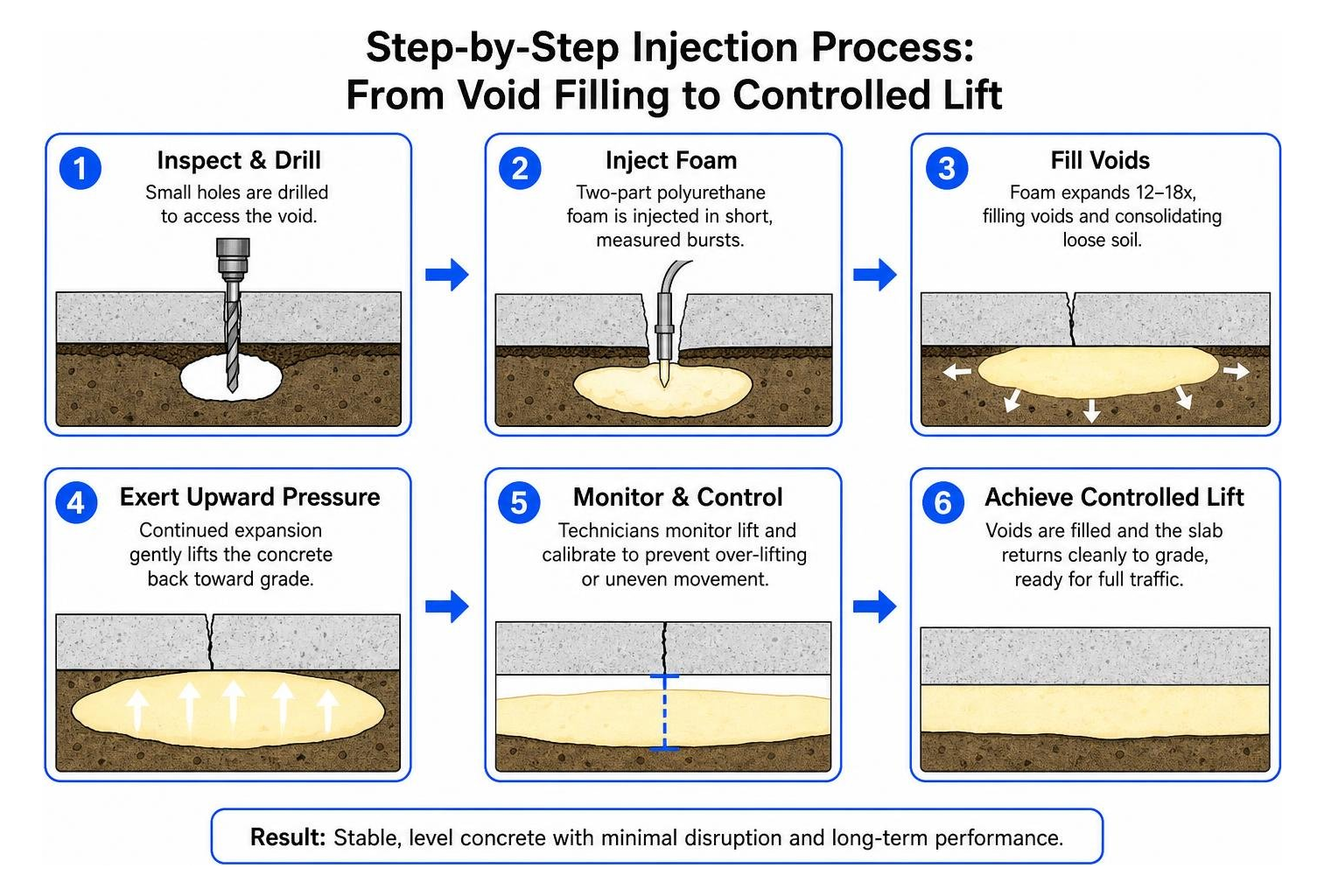
To prevent slab fractures or uneven movement, technicians calibrate their equipment to deliver short, measured bursts of material. The expanding polymer follows the path of least resistance, filling hidden voids and consolidating loose soil before exerting upward pressure on the concrete. Precise monitoring ensures the slab returns cleanly to grade without stress cracking or over-lifting adjacent structures.
Rapid Cure Times and Immediate Weight-Bearing Capacity
Long cure times create disruption and extended safety risks on residential and commercial properties. Polyurethane foam cures quickly through an exothermic polymer reaction, achieving structural stability within minutes of placement.
Most residential driveways, garage floors, and walkways can handle full foot and vehicular traffic just 20 minutes after injection. This rapid turnaround allows homeowners to eliminate trip hazards and regain full use of their property the same day with minimal disruption.
When Foam Leveling Is Safe and When Additional Concrete Repair Is Necessary
While foam injection works well for many settled slabs, assessing whether foam leveling is the right approach requires an honest look at the condition of the concrete.
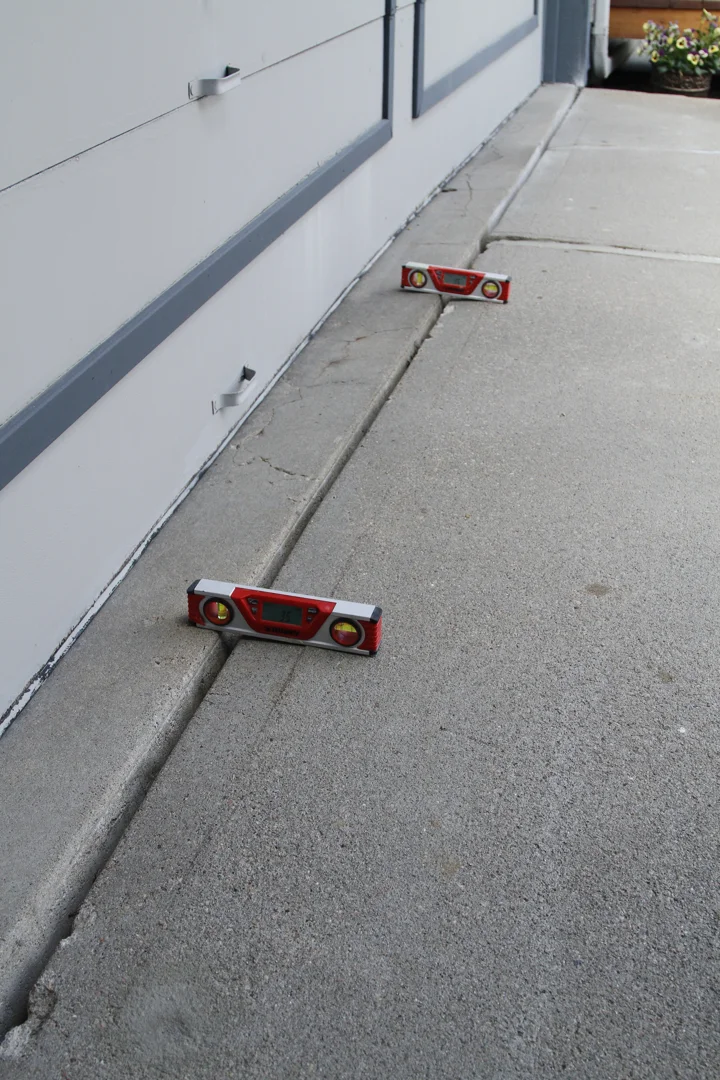
Foam leveling is effective when the concrete remains structurally sound but has settled due to:
- Soil erosion and sub-surface washout
- Poor initial sub-grade compaction
- Seasonal soil shrinkage or freeze-thaw settlement
- Void creation from plumbing or drainage washouts
However, if a slab is extensively cracked, crumbling, or suffering from widespread surface scaling and structural failure, lifting cannot restore the integrity of broken concrete. In those situations, a professional assessment can determine whether foam leveling is appropriate for the slab’s condition.
Long-Term Slab Stability and Longevity Factors
A common question regarding safety is how well the repair holds up over decades of harsh seasonal weather. In northern climates, seasonal freeze-thaw cycles present a major challenge for outdoor concrete.
Because closed-cell polyurethane foam resists water absorption, it does not hold moisture that can freeze, expand, and degrade the supporting base. It remains structurally sound beneath the slab, shielding the repaired concrete from subterranean erosion and pest burrowing. To better understand how these physical properties translate into decades of reliable service, read about the real longevity behind polyurethane slab lifting.
Frequently Asked Questions About Foam Concrete Leveling Safety
How long does polyurethane foam last once injected beneath concrete?
Because cured polyurethane is an inert, non-biodegradable polymer, it does not rot, decompose, or break down when buried underground away from direct ultraviolet (UV) sunlight. It maintains its compressive strength indefinitely, providing continuous support as long as the surrounding soil structure remains stable. For more answers regarding the process, check out our concrete leveling lift and level FAQ.
Can lifting foam crack or damage surrounding structures during expansion?
When installed by experienced technicians using calibrated multi-component proportioners, the risk of structural damage is very low. The material expands along the path of least resistance, filling underground voids before generating lifting force. Because injection is delivered in controlled bursts, upward movement is carefully managed at every step.
Does polyurethane foam concrete leveling produce harmful fumes?
During the brief injection and expansion phase, the two chemical components react within a closed space beneath the concrete slab. Once the foam cures—which takes only a matter of seconds to minutes—it becomes an inert solid that releases no harmful fumes or residual off-gassing into your home or the surrounding air.
Conclusion: Making an Informed, Safe Choice for Concrete Repair
When performed by skilled professionals using high-density, closed-cell materials, polyurethane foam concrete leveling is a safe, reliable, and non-destructive way to eliminate trip hazards and stabilize sunken slabs. It preserves your existing concrete, protects the surrounding landscape, and delivers long-lasting structural support with minimal downtime.
At FoamWorks Concrete Leveling, we bring over 30 years of combined industry experience to every project across Northwest Ohio, Southeast Michigan, and Northeast Indiana. We are a family-owned contractor dedicated to quality workmanship, offering free estimates, a lifetime warranty, and a commitment to 100% customer satisfaction.
If you are dealing with uneven sidewalks, driveways, patios, or interior slabs, contact us today to learn more about our professional concrete leveling solutions and discover how our precision injection process can restore your concrete safely and cleanly.