
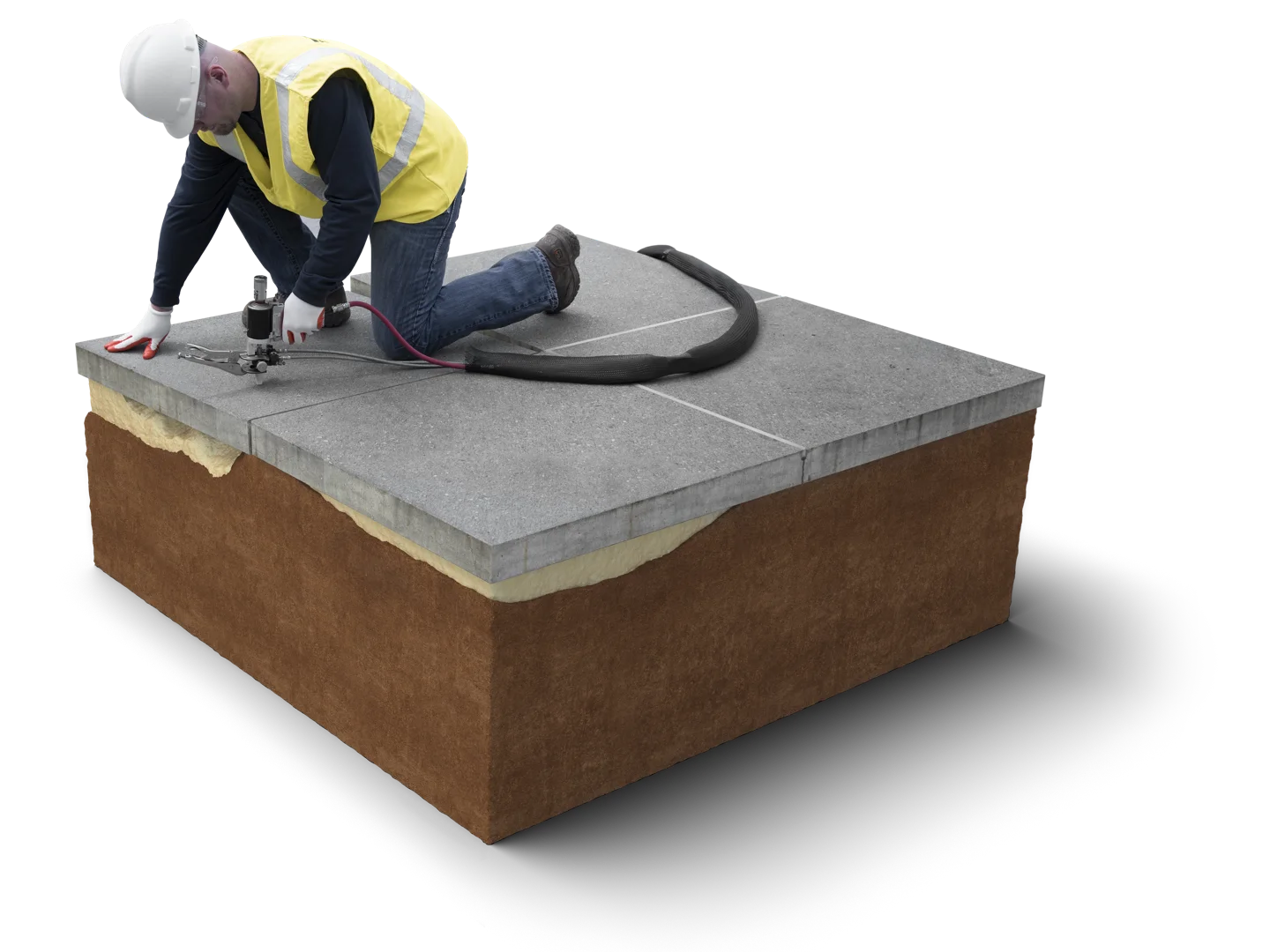
How Long Does Foam Concrete Leveling Last?
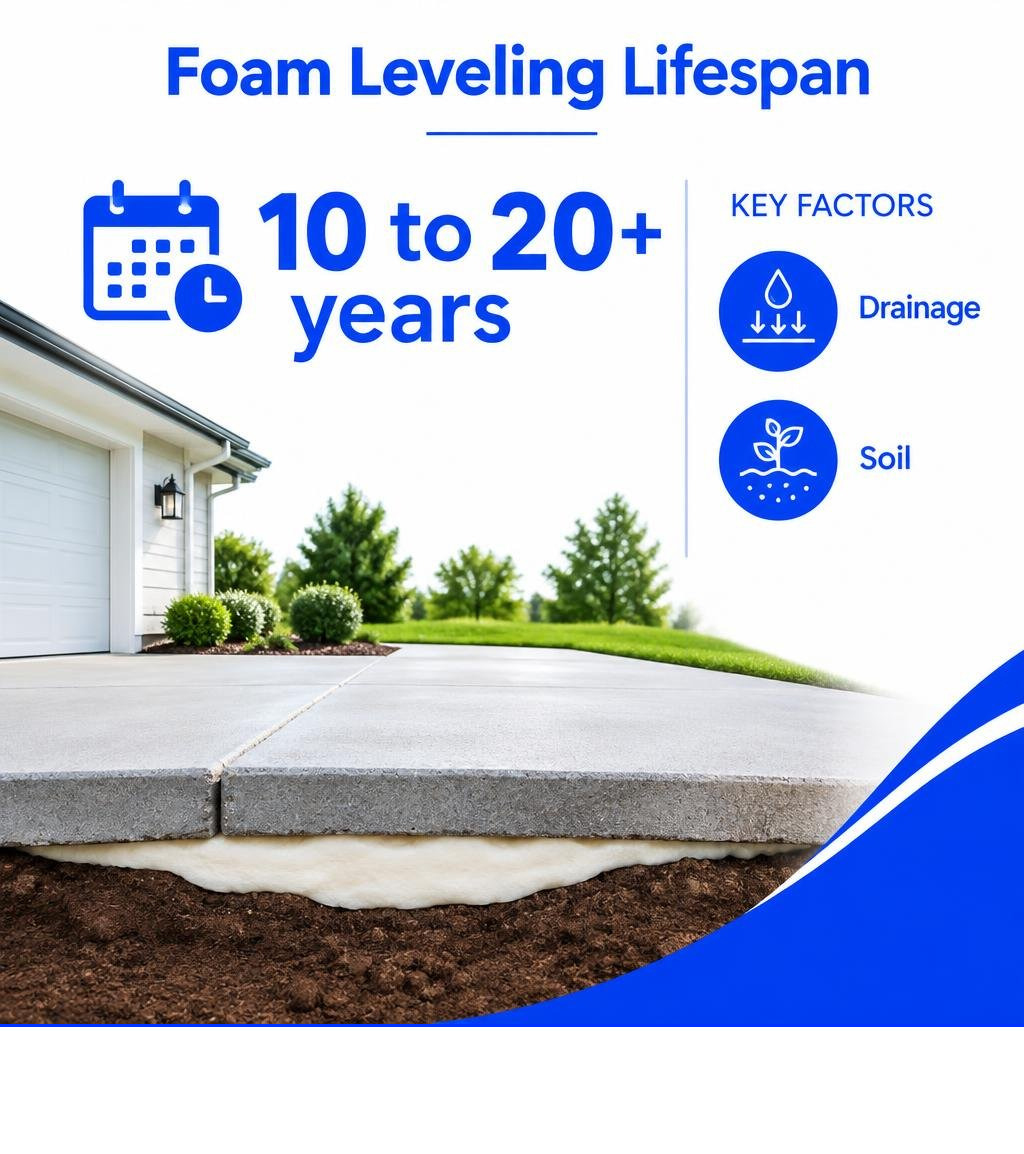
Foam concrete leveling commonly lasts 10 to 20 years or longer. In favorable soil and drainage conditions, a professionally lifted slab may remain stable for the rest of its useful life. The foam itself is designed to resist water and breakdown; the bigger risk is continued soil movement, erosion, poor drainage, or a badly damaged slab.
To help the repair last, address the cause of settlement before or during leveling:
- Route downspouts and surface water away from the concrete.
- Seal open cracks and joints to limit water entry below the slab.
- Choose a contractor who locates voids and uses the right foam density for the slab and its load.
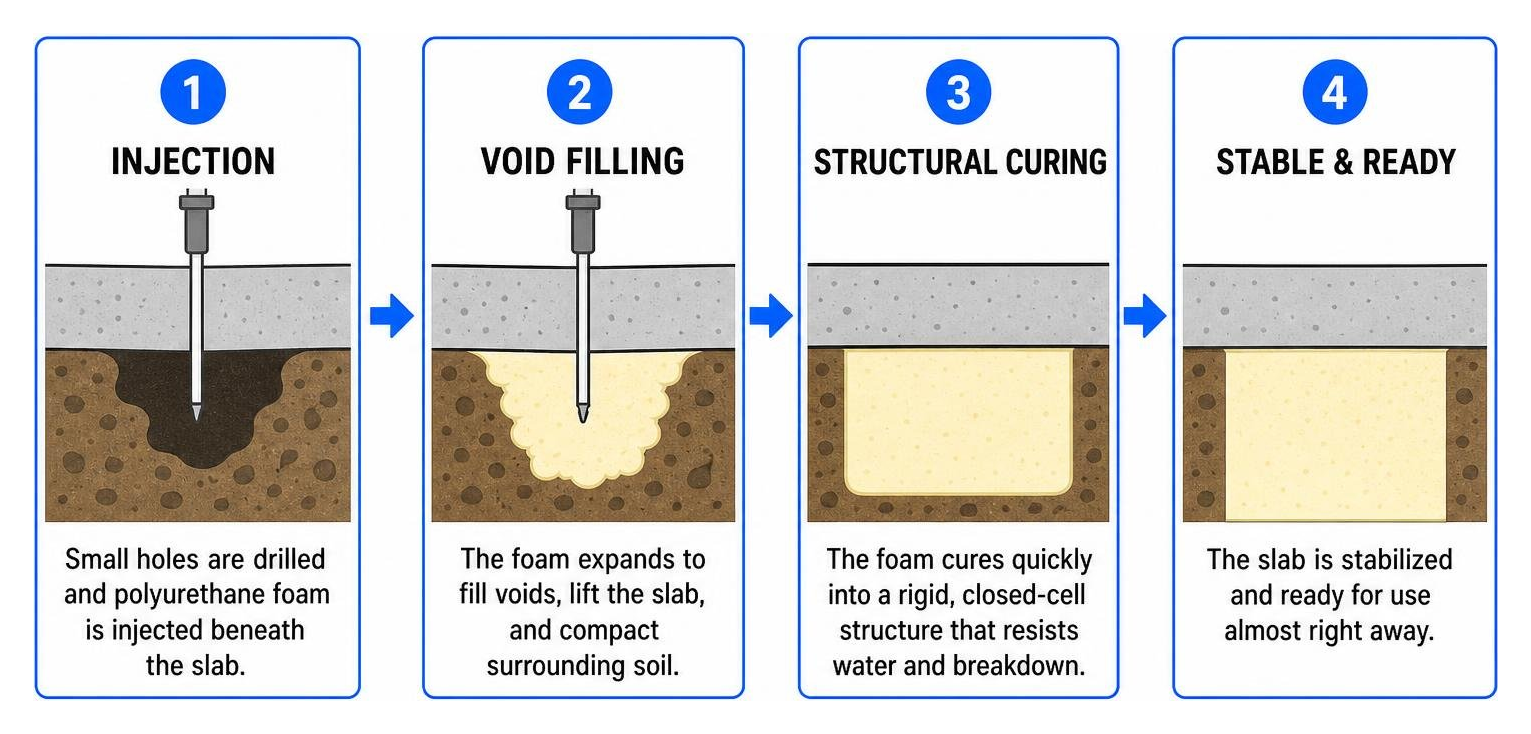
Polyurethane foam lifting raises sunken driveways, sidewalks, patios, and interior slabs without the heavy material used in mudjacking. It cures quickly, adds very little weight to weak soil, and most repaired surfaces can be used almost right away.
I am Trey McNamee, owner of FoamWorks Concrete Leveling, with more than 20 years of experience in marketing, strategy, and product development in building materials. I will walk through how long does foam concrete leveling last, what can shorten that lifespan, and when lifting is a better choice than replacement.
Simple how long does foam concrete leveling last word guide:
How Long Does Foam Concrete Leveling Last on Average?
When property owners evaluate sinking driveways, uneven sidewalks, or dipping patio slabs, longevity is almost always the top consideration. On average, high-density polyurethane foam concrete leveling lasts between 10 and 20+ years. In many instances, the foam underlayment will comfortably outlast the concrete slab resting above it.
This longevity stems directly from polymer chemistry. Unlike organic materials or cementitious mixtures that degrade over time, high-density structural polyurethane is an inert closed-cell polymer. Once injected beneath a slab, it expands, fills hidden subterranean pockets, compacts surrounding base soils, and solidifies into a rock-solid, rigid structure.
According to structural polyurethane foam durability research, the cured material does not break down in the presence of soil microbes, does not rot, and does not leach chemicals into the surrounding ground. While DIY expansion foam kits may only hold up for 3 to 5 years due to low compressive strength and improper equipment calibration, professional foam injection delivers an engineered sub-base designed for multi-decade performance.
How Long Does Foam Concrete Leveling Last Compared to Other Concrete Leveling Methods?
To understand the longevity of polyurethane foam, it helps to compare it to the other two primary methods of managing uneven concrete: traditional mudjacking and full slab tear-out and replacement.
Mudjacking pumps a heavy slurry of topsoil, sand, water, and Portland cement beneath the concrete. While mudjacking has been used for decades, it has a significant structural drawback: it is exceptionally heavy. Adding 100 to 140 pounds per cubic foot of heavy slurry on top of already unstable or compromised soil often leads to secondary settlement within 2 to 5 years (and rarely more than 8 to 10 years in ideal conditions). Furthermore, water washing underneath the slab can easily erode the mudjacking slurry away.
Full slab replacement, on the other hand, gives you a brand-new concrete surface expected to last 20 to 40 years. However, new concrete poured over improperly compacted, settling subsoil will frequently sink again within a few seasons, all while costing significantly more money and taking days to cure.
| Feature / Metric | Polyurethane Foam Leveling | Traditional Mudjacking | Full Slab Replacement |
|---|---|---|---|
| Average Lifespan | 10 to 20+ Years (often lifetime of slab) | 2 to 5 Years (up to 8–10 in dry soils) | 20 to 40 Years (if base is stable) |
| Material Weight | 2 to 4 lbs per cu. ft. | 100 to 140 lbs per cu. ft. | Heavy (adds massive load to subsoil) |
| Washout Resistance | 100% Waterproof (Hydrophobic) | Highly susceptible to water erosion | Dependent on base drainage |
| Injection Hole Size | 5/8″ (Penny-sized) | 1″ to 2″ (Can-sized cores) | N/A (Full excavation) |
| Cure Time | 15 to 30 Minutes | 24 to 48 Hours | 28 Days (Full structural cure) |
| Relative Cost | 30% to 50% less than replacement | Low initial cost; recurring re-lifts | High (labor, equipment, disposal) |
By opting for lightweight polyurethane foam injection, you avoid overburdening delicate subgrades while benefiting from an impermeable material that will not wash away during seasonal downpours.
Is Polyurethane Foam Concrete Raising a Permanent Solution?
In the strictest scientific sense, the polyurethane material itself is virtually permanent. Closed-cell high-density polymers do not biodegrade, dissolve in moisture, or break down when buried beneath concrete. Once injected, the foam forms a permanent, resilient cushion that supports thousands of pounds of structural weight per square foot.
However, when property owners ask if the repair is permanent, the answer depends entirely on the soil beneath the foam. Foam levels the slab and strengthens the immediate sub-base, but it cannot stop a deep hillside from shifting, nor can it prevent subterranean soil washed away by an ignored broken sewer line 10 feet underground.
Understanding how polyurethane foam lifting works to fix sinking concrete helps clarify this distinction: the foam permanently stabilizes and fills the voids directly beneath the slab, but ongoing surface drainage maintenance is essential to keep the surrounding earth stable over the next two decades.
Key Factors Affecting the Durability of Foam Leveling
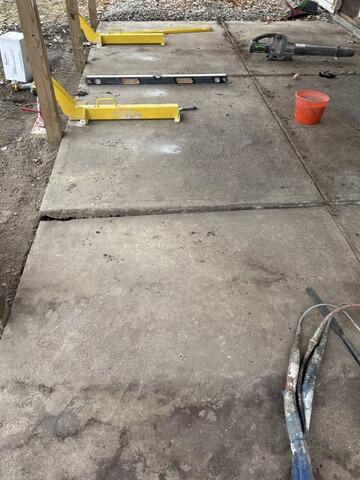
While the polyurethane material is built to last indefinitely underground, several environmental and mechanical variables dictate how long your lifted slab will remain perfectly level. Recognizing the early signs your concrete slab is settling helps you address subsoil movement before the slab undergoes severe structural cracking.
Soil Stability, Climate, and Moisture Exposure
The ground beneath residential concrete is constantly subjected to environmental stress. In regions prone to heavy moisture fluctuations, distinct regional soil dynamics dictate slab movement:
- Expansive Clay Soils: Clay absorbs water and swells during rainy periods, then shrinks and pulls away during dry spells. This repeated movement creates hollow pockets beneath unsealed slabs.
- Freeze-Thaw Cycles: Water that penetrates beneath concrete freezes in winter, expanding and forcing the concrete upward (frost heave), only to let it settle unevenly during spring thaws.
- Sub-Base Washout: Uncontrolled roof runoff dumping directly near foundation walls or driveways carries fine sediment away, leaving hollow voids.
Polyurethane foam acts as a dense, hydrophobic barrier that actively resists water pooling and prevents erosion under the injection area. By eliminating open spaces where moisture accumulates, foam significantly reduces the damaging effects of freeze-thaw cycles. However, addressing the underlying causes of concrete damage—such as fixing broken downspouts and grading turf away from the slab—ensures the ground supporting the foam stays solid.
Installation Quality and Weight Load Capacities
The skill and equipment of your installation team play an enormous role in determining longevity. Professional polyurethane injection requires precise calculation:
- Void Mapping: Accurately identifying where subterranean cavities exist before injecting material.
- Port Placement: Drilling strategically spaced 5/8-inch ports across the slab to guarantee an even lift without inducing shear stress or new hairline cracks.
- Density Selection: Utilizing commercial structural polyfoam (typically 2 to 4 lbs per cubic foot density) tailored to the specific load requirements of the structure.
- Controlled Expansion: Monitoring lift rates with laser levels to achieve accurate alignment with adjoining slabs.
Whether we are performing precision work on a residential patio or high-capacity interior slab leveling for heavy structural floors, using calibrated two-part expanding foam ensures the repair handles heavy vehicular traffic and steady everyday loads without compressing or sinking.
How to Maximize the Lifespan of Lifted Concrete Slabs
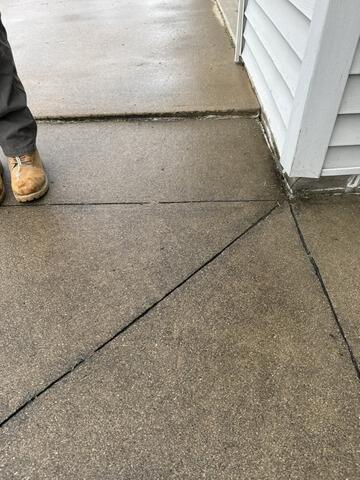
Once your concrete has been raised and brought back to a safe, uniform plane, taking a few simple preventative steps will help you achieve the maximum possible lifespan from your repair. Implementing modern concrete raising solutions alongside basic preventative maintenance ensures your concrete remains stable for decades.
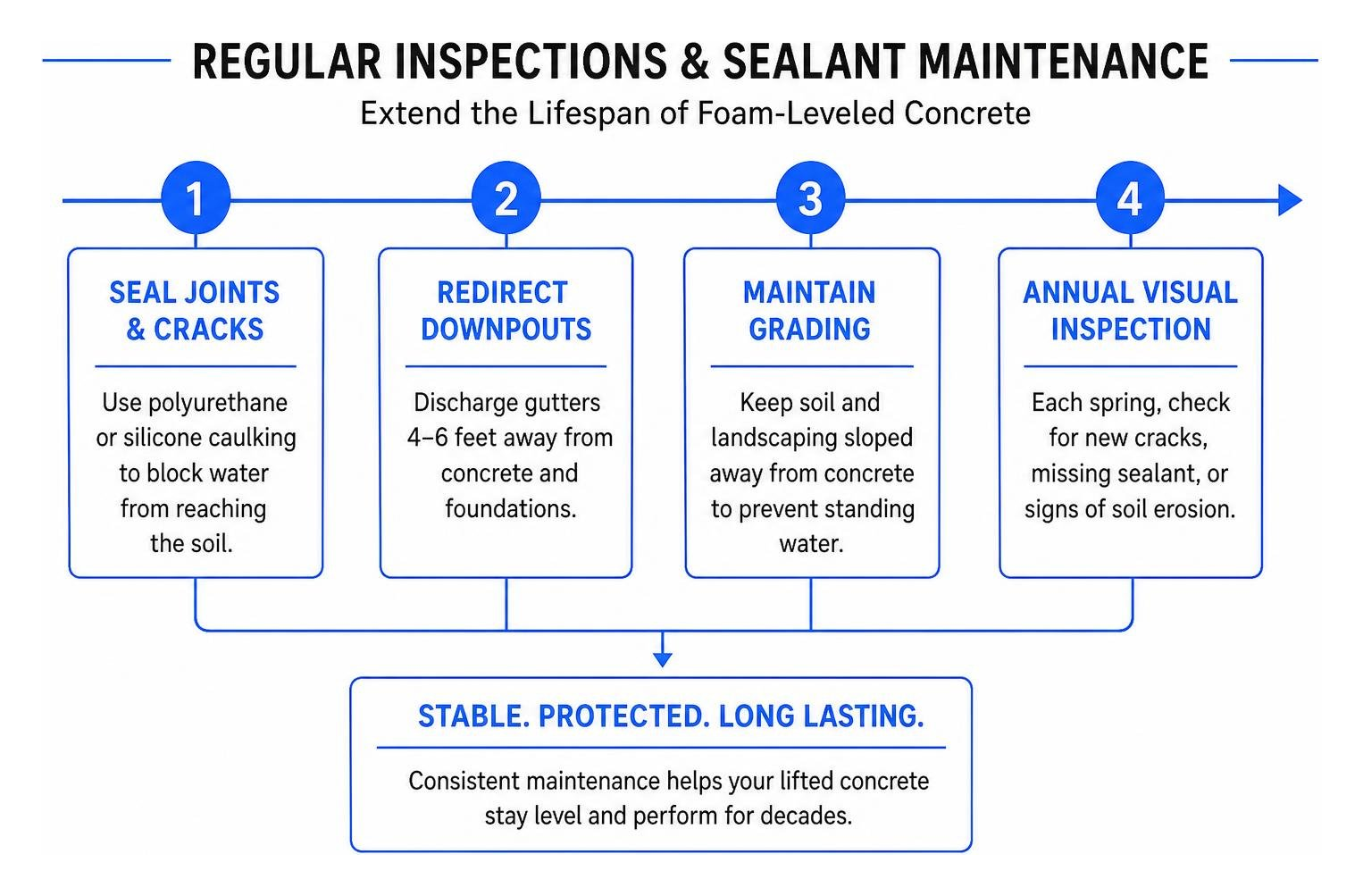
- Seal Control Joints and Cracks: Use high-grade commercial polyurethane or silicone joint caulking across all open joints and surface cracks. This seals the surface against water intrusion, keeping moisture from reaching the underlying soil.
- Redirect Downspouts and Gutters: Ensure gutter downspouts discharge at least 4 to 6 feet away from concrete pads, driveways, and foundations.
- Maintain Landscape Grading: Make sure soil and garden beds slope gently away from exterior concrete flatwork to prevent standing water from seeping underneath the edges.
- Perform Annual Visual Inspections: Walk your concrete once a year in the spring. Look for newly opened cracks, missing joint sealants, or signs of soil erosion along the perimeter of the slab.
When Foam Concrete Leveling Is Not Recommended
While polyurethane foam injection is an exceptional, long-lasting fix for most sunken flatwork, it is not a cure-all for every damaged concrete slab. There are specific scenarios where lifting is not recommended:
- Severely Fragmented Slabs (Alligator Cracking): If a slab is broken into dozens of small, disconnected chunks (often called spiderweb or alligator cracking), there is insufficient structural integrity left to lift the slab as a cohesive unit. In this scenario, removal and re-pouring is necessary.
- Deep Structural Foundation Failure: If an entire home foundation or multi-story commercial footer is experiencing deep structural settlement, it may require structural steel push piers or helical underpinning rather than flatwork slab lifting.
- Severe Surface Spalling and Deterioration: If the surface layer of the concrete has completely flaked off, crumbled, or turned to aggregate powder due to age or chemical damage, raising it will not restore the destroyed surface finish.
Understanding why concrete driveways sink helps determine whether simple foam stabilization will solve the root problem or if complete replacement is truly unavoidable.
Frequently Asked Questions About Concrete Foam Leveling
How quickly can concrete be used after foam leveling?
One of the biggest advantages of polyurethane foam leveling is its rapid cure time. Unlike traditional concrete pours that demand 28 days of curing time (and several days before you can even park a vehicle), polyurethane foam reaches roughly 90% of its full structural compressive strength within 15 to 30 minutes of injection.
You can walk across the leveled slabs immediately, and driveways can handle full vehicular traffic within an hour of our technicians packing up the truck. For more details on what to expect during the repair process, explore our concrete lifting frequently asked questions.
Does polyurethane foam degrade or wash away when exposed to water?
No. Structural lifting polyurethanes are closed-cell and completely hydrophobic. This means they repel water rather than absorbing it. Even if groundwater levels rise or significant rain percolates through the soil, the foam will not wash away, soften, erode, or degrade.
Furthermore, high-density polyurethane is environmentally stable once cured. It does not leach harmful chemicals into the soil, off-gas into groundwater systems, or decompose over decades of burial, aligning with modern eco-conscious concrete repair initiatives.
How long does foam concrete leveling last under warranty?
Standard contractor warranties for foam leveling generally range from 2 to 5 years, while high-tier professional installers offer protection between 5 to 10 years.
At FoamWorks Concrete Leveling, we stand firmly behind our work by offering a lifetime warranty on our leveling services. Because we utilize commercial-grade, hydrophobic closed-cell polymers that do not rot or break down, we ensure property owners have complete peace of mind when they invest in our professional concrete leveling services.
Conclusion
Sunken, uneven concrete is more than just an eyesore; it presents an active trip hazard and allows water to pool near foundations, steadily eroding your property’s value. Fortunately, the question of whether foam lifting is a temporary fix has a clear answer: high-density polyurethane foam concrete leveling provides a robust, engineered foundation that easily lasts 10 to 20+ years, often outlasting the slab itself.
At FoamWorks Concrete Leveling, we use polyurethane foam injection to repair sunken or uneven concrete for 30% to 50% less than full tear-out and replacement, helping homeowners save significantly on repair costs. Most repairs are completed in just a few hours, and the surface can be used almost immediately. Because there’s no need for heavy excavation, the process also reduces landscape damage, labor costs, debris removal, and disposal fees that come with replacing concrete.
Backed by 30+ years of industry experience, our family-owned team is dedicated to providing permanent concrete stabilization backed by a lifetime warranty and 100% customer satisfaction across our service communities. If you are ready to eliminate trip hazards and permanently stabilize your uneven slabs, schedule a foam injection estimate with our team today and discover how simple long-lasting concrete repair can be.