

Polyurethane Concrete Lifting Cost: What You Pay and What You Save
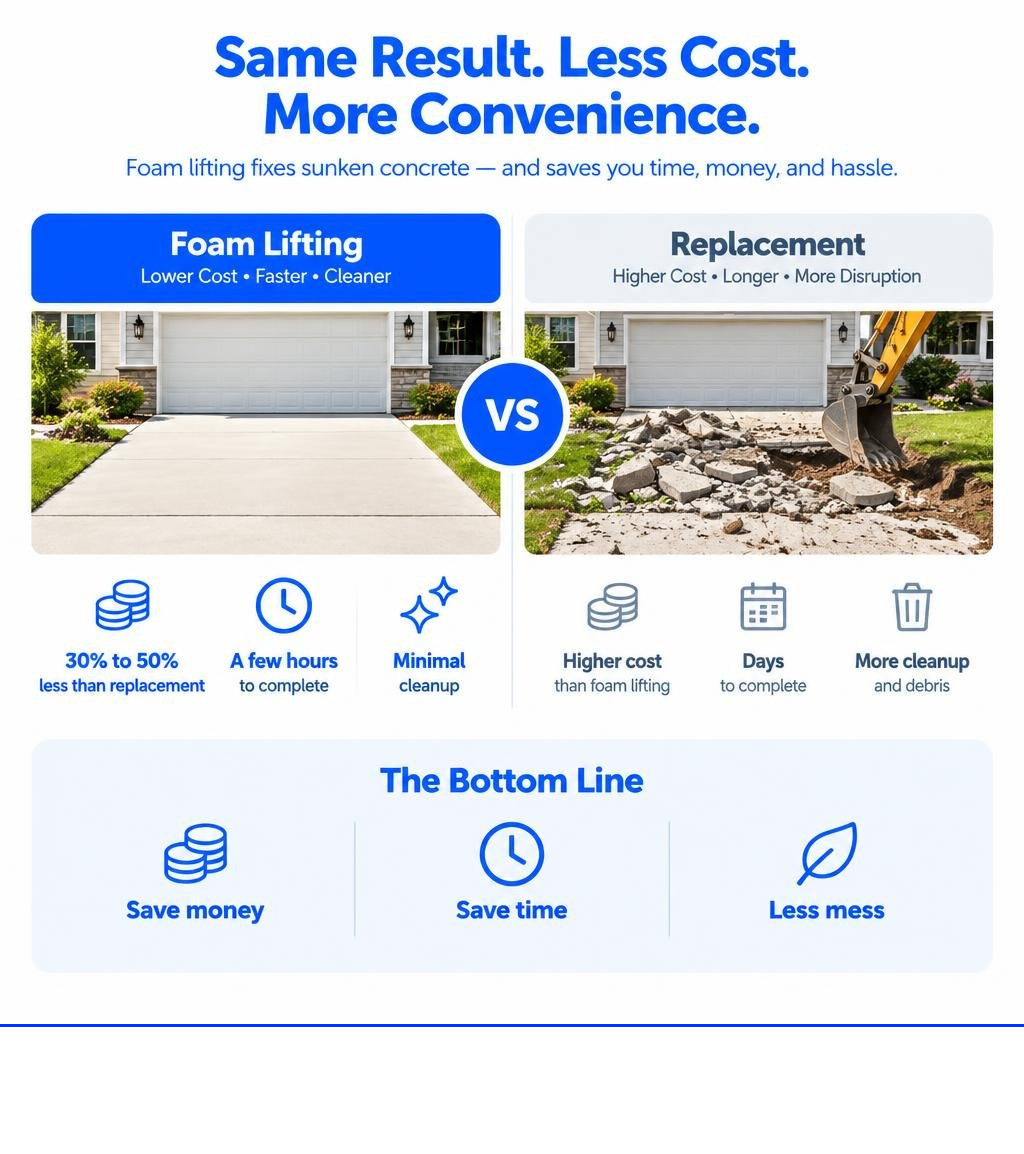
Polyurethane concrete lifting typically costs $5 to $25 per square foot, with most residential projects ranging from $1,500 to $4,500. The total depends on the slab size, settlement depth, and the amount of foam needed beneath it. FoamWorks Concrete Leveling repairs sunken concrete for 30% to 50% less than full tear-out and replacement. Most repairs take just a few hours, and the surface can be used almost immediately.
Lifting also avoids much of the digging, landscape damage, debris removal, and disposal that can add to replacement costs. A free estimate will show what your slab needs and what you could save.
I’m Trey McNamee, owner of FoamWorks Concrete Leveling. My more than 20 years in building-materials marketing, strategy, and product development help me explain polyurethane concrete lifting cost and long-term value to homeowners in Northwest Ohio, Southeast Michigan, and Northeast Indiana.
Key terms for polyurethane concrete lifting cost:
- how does polyurethane foam lifting work
- how long does foam concrete leveling last
- what is polyurethane concrete leveling
Understanding Polyurethane Concrete Lifting Cost in 2026
When homeowners evaluate sunken slabs around their homes, they often wonder how contractors determine pricing. The national average to lift a standard 300-square-foot section of sunken concrete sits around $3,000, with overall project costs generally ranging from $1,500 to $4,500. Smaller, single-panel repairs can cost as little as $500, while larger, complex concrete-lifting projects can reach $12,500 or more.
Understanding how pricing is structured requires looking at how labor and specialized materials interact. Professional contractors rely on precise data benchmarks, such as those compiled in Angi’s concrete lifting cost data, which indicate that skilled labor accounts for 70% to 80% of the overall cost (typically $2,100 to $2,400 on an average job). The remaining percentage covers the high-density structural polymer required to fill subterranean voids and raise heavy concrete.
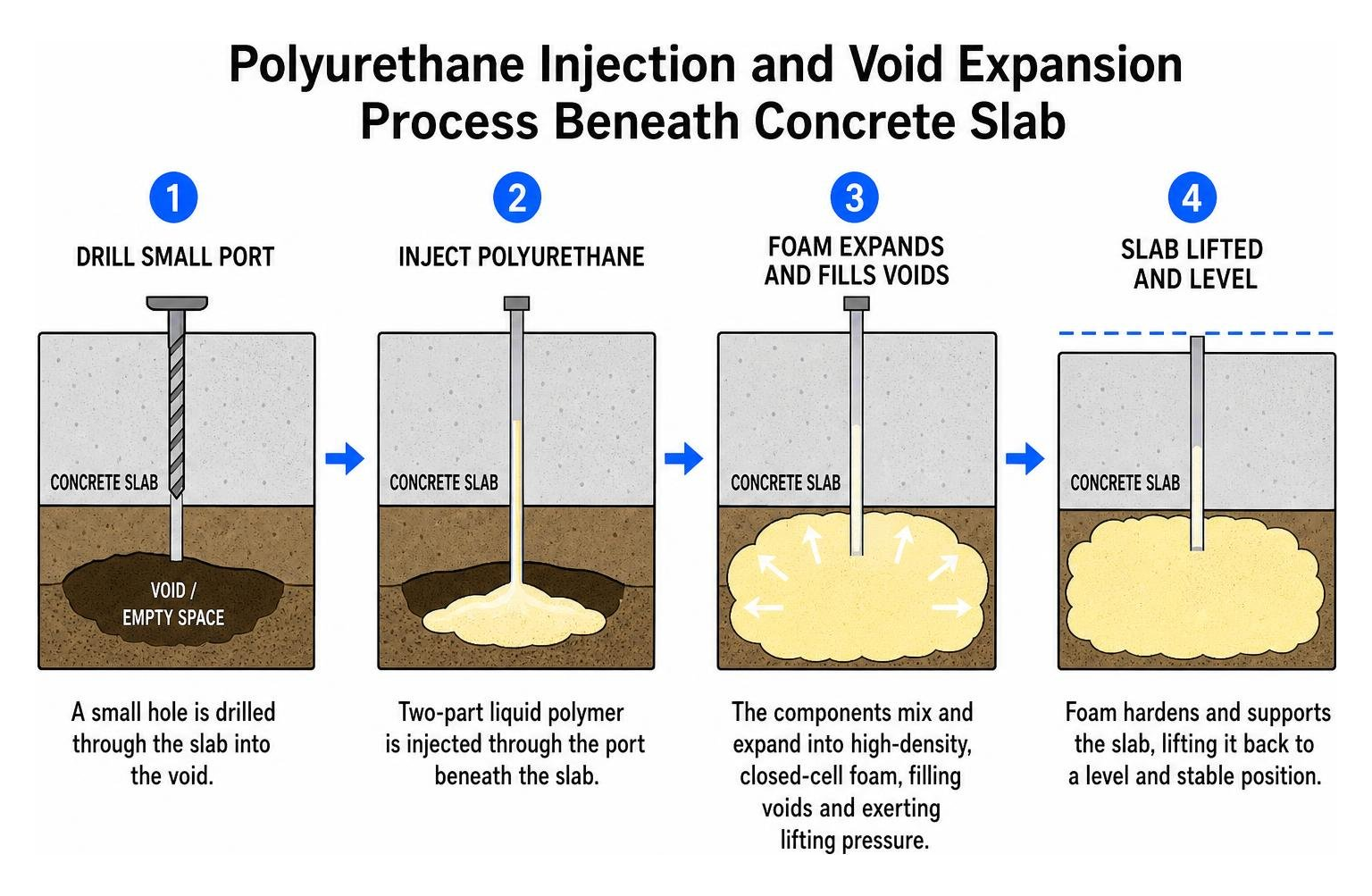
To understand why precision foam injection carries this pricing structure, it helps to examine how polyurethane foam lifting works to fix sinking concrete. A two-part liquid polymer is injected through small ports drilled directly into the slab. As the components mix beneath the surface, they undergo a rapid chemical reaction, expanding into a high-density, closed-cell foam that exerts incredible lifting pressure while filling underground voids.
Average Polyurethane Concrete Lifting Cost per Square Foot
Across the industry, polyjacking generally runs between $5 and $25 per square foot, with an overall national average of approximately $15 per square foot. The broad range reflects variations in settlement depth, slab thickness, and polymer density required for the project.
Homeowners researching what polyurethane concrete leveling is quickly find that paying for high-grade polymer delivers remarkable precision. Because the material expands accurately within seconds, contractors can control slab elevation down to a fraction of an inch, protecting adjoining structures and matching control joints seamlessly.
Estimating Polyurethane Concrete Lifting Cost by Surface Type
Different concrete surfaces experience varying degrees of load stress, soil settlement, and exposure. A front walkway panel supporting foot traffic requires a different approach and volume of material than a multi-car garage floor or heavy driveway slab.
| Surface Type | Average Square Footage | Typical Cost Range | Primary Cost Drivers |
|---|---|---|---|
| Sidewalk / Walkway | 50 – 150 sq. ft. | $320 – $1,900 | Panel count, trip hazard removal, root intrusion |
| Driveway Section | 200 – 450 sq. ft. | $650 – $3,200 | Vehicle load requirements, subbase erosion |
| Patio / Pool Deck | 150 – 400 sq. ft. | $650 – $3,400 | Drainage slope corrections, landscaping access |
| Garage Floor Slab | 400 – 600 sq. ft. | $1,200 – $2,300 | Slab thickness, void volume under vehicle tracks |
| Large Concrete Slab Area | 800 – 1,500 sq. ft. | $4,800 – $12,500+ | Large slab size, deep void stabilization |
At FoamWorks Concrete Leveling, we repair sunken or uneven concrete for 30% to 50% less than full tear-out and replacement, helping homeowners throughout Northwest Ohio, Southeast Michigan, and Northeast Indiana protect their property without unnecessary excavation.
Polyurethane Foam Lifting: Upfront Cost vs. Long-Term Value
Homeowners comparing repair options often focus on the upfront quote without considering the total lifecycle cost of the slab. While polyurethane foam injection carries a higher material price per square foot than some surface-level fixes, it delivers far greater long-term value.
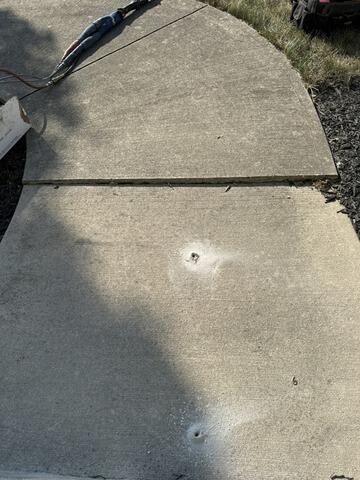
Polyurethane foam creates a stable, lasting subbase without overloading the weak ground that caused the original settlement. Because the foam is lightweight, it does not add significant dead weight to the soil beneath your slab, which helps prevent the kind of secondary settlement that can lead to repeat repairs. Evaluating the long-term value and longevity of polyurethane slab lifting shows why this approach holds up so well over time.
Material and Labor Pricing Considerations
Polyurethane foam equipment requires significant capital investment, highly trained technicians, and premium raw materials. However, those investments yield superior performance benefits for your slab.
| Metric / Feature | Polyurethane Foam Lifting |
|---|---|
| Cost per Square Foot | $5 – $25 (Avg. $15) |
| Cure & Usability Time | 15 – 30 Minutes |
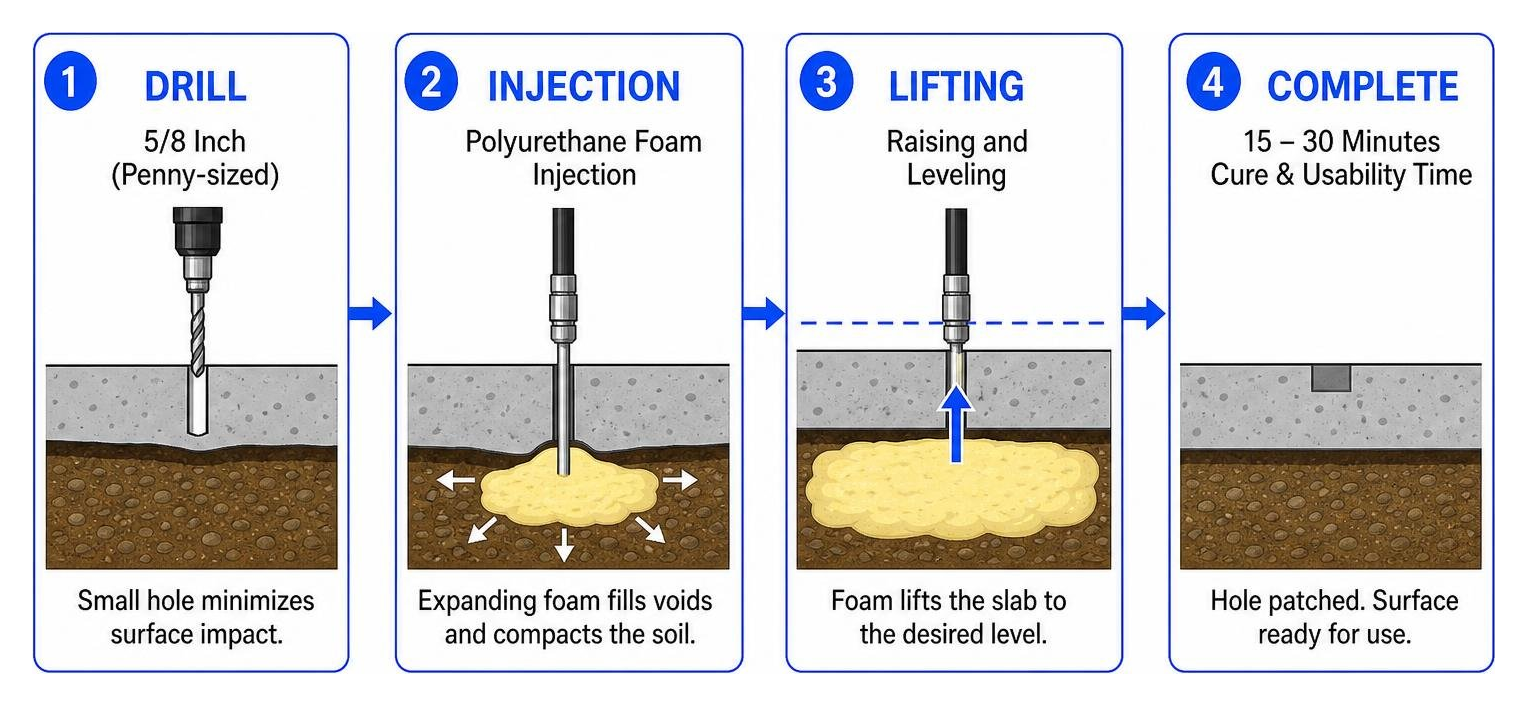
| Drill Hole Diameter | 5/8 Inch (Penny-sized) |
| Weight Added to Soil | 2 – 4 lbs per cubic foot |
| Compressive Strength | 6,000 – 14,000 lbs/sq. ft. |
| Washout Resistance | 100% Hydrophobic (Waterproof) |
Weight, Soil Settlement, and Lifespan Factors
A major reason polyurethane foam performs so well is its strength-to-weight ratio. Expanding closed-cell foam weighs only 2 to 4 pounds per cubic foot yet supports compressive loads between 6,000 and 14,000 pounds per square foot.
Because the polymer is hydrophobic, it will not wash away during seasonal heavy rains or break down through freeze-thaw cycles. It effectively seals the underside of the concrete, preventing moisture infiltration from eroding the subbase in the future.
Key Factors That Influence Polyjacking Project Pricing
Every concrete slab rests on unique ground conditions. When estimating the total investment for a lifting project, several key job-site variables determine the volume of polymer required and the overall scope of labor.
Void Depth, Soil Instability, and Site Accessibility
The total amount of foam required depends directly on the depth of the voids beneath the surface. Slabs that have settled several inches or sit atop washed-out granular soil require significantly more chemical volume than slabs experiencing minor settlement.
Accessibility also plays a role. If a sunken patio or pool deck sits behind tight gates or obstacles, polyurethane lifting provides a distinct advantage: technicians can easily run lightweight injection hoses hundreds of feet from the service trailer without driving heavy trucks across manicured lawns.
Post-Lift Finishing, Drainage Corrections, and Maintenance
Achieving permanent results requires addressing the root causes of soil erosion, such as poorly directed downspouts or open surface joints that allow water to pool beneath the slab.
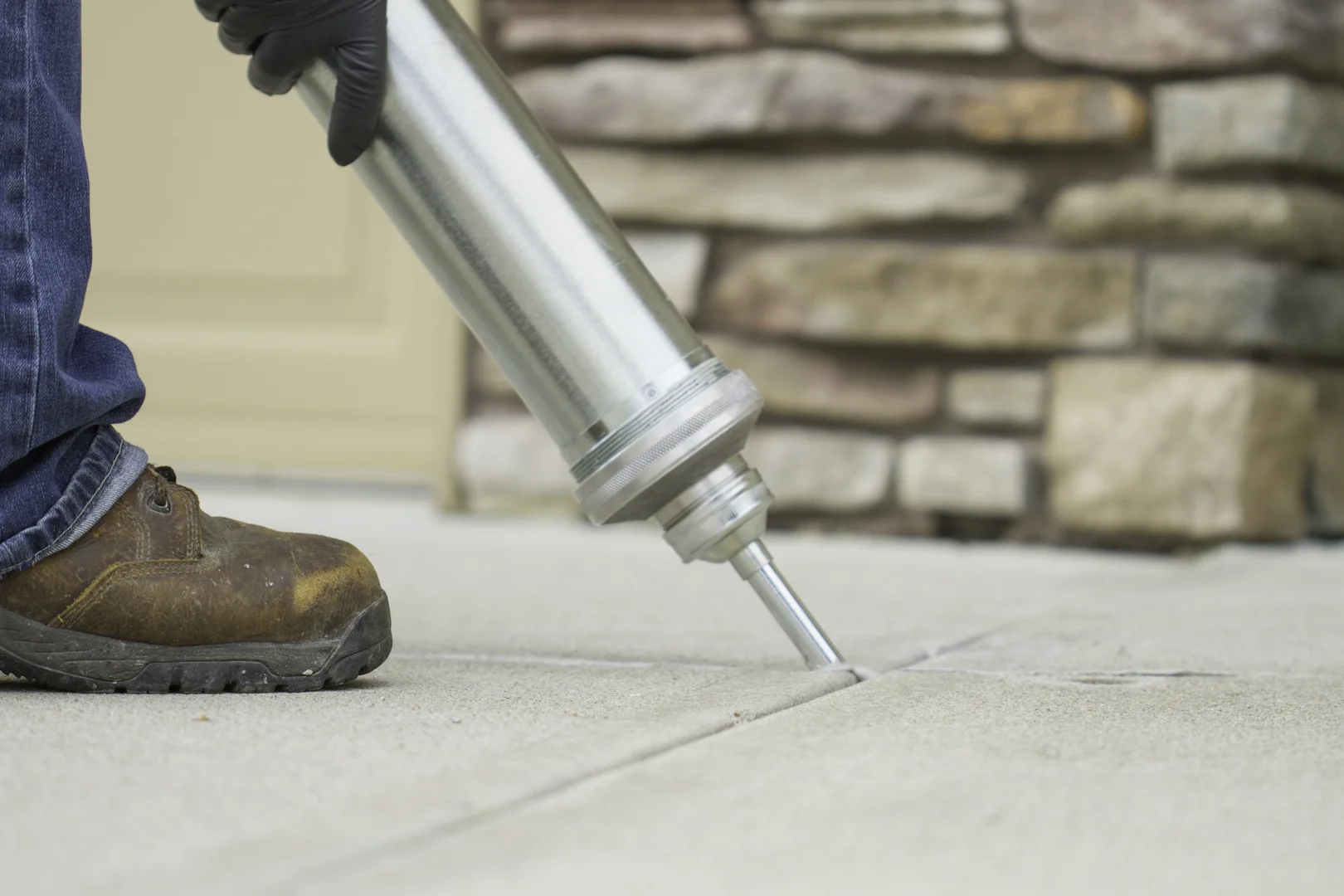
After raising the slab, sealing open joints and cracks protects your investment. Professional surface crack sealing typically adds $75 to $200 to a project, or it can be handled as a minor DIY maintenance step. Sealing prevents moisture from entering beneath the concrete and washing out the surrounding soil. For comprehensive surface protection, exploring essential concrete repair and crack sealing ensures your restored slabs stay protected against winter freeze-thaw cycles. FoamWorks also provides crack repair and sealing alongside concrete leveling.
Frequently Asked Questions About Concrete Leveling Costs
Is polyjacking a permanent solution for sunken concrete?
Yes, polyurethane foam lifting is considered a permanent repair for sunken concrete. Closed-cell high-density polyurethane is non-biodegradable and impervious to moisture, meaning it will never rot, crush, or break down over time. As long as surrounding water drainage issues (such as overflowing gutters or misdirected downspouts) are corrected, the polymer beneath your slab will outlast the concrete resting on top of it.
How much does it cost to lift a concrete driveway vs. sidewalk?
Lifting a sunken concrete driveway typically costs between $650 and $3,200, depending on the number of panels settled and the depth of the voids beneath them. Driveway repairs require high-load polymer formulations designed to support heavy passenger vehicles and delivery trucks. By comparison, sidewalk lifting is generally less material-intensive, averaging between $320 and $1,900 for standard walkway sections.
How fast can concrete be used after polyurethane injection?
Polyurethane foam begins expanding instantly and reaches 90% of its full structural compressive strength within 15 to 30 minutes. You can walk across a leveled sidewalk immediately after our crew finishes patching the small injection ports, and driveways can be parked on the exact same day.
Conclusion: Making the Right Investment for Your Concrete
While polyurethane foam leveling carries a higher upfront material price per square foot than temporary surface fixes, it provides unmatched long-term value. By stabilizing underlying soils with lightweight, waterproof polymer, you eliminate tripping hazards, restore curb appeal, and prevent recurring settlement issues.
At FoamWorks Concrete Leveling, our family-owned team brings over 30 years of experience to every project across Northwest Ohio, Southeast Michigan, and Northeast Indiana. We stand behind our work with a lifetime warranty and a commitment to 100% customer satisfaction.
Contact us today to schedule your free estimate for high-density polyurethane foam injection services and discover how easy it is to restore your concrete surfaces for 30% to 50% less than the cost of replacement.