
Find Reliable Foundation Contractors Near Me Without the Guesswork
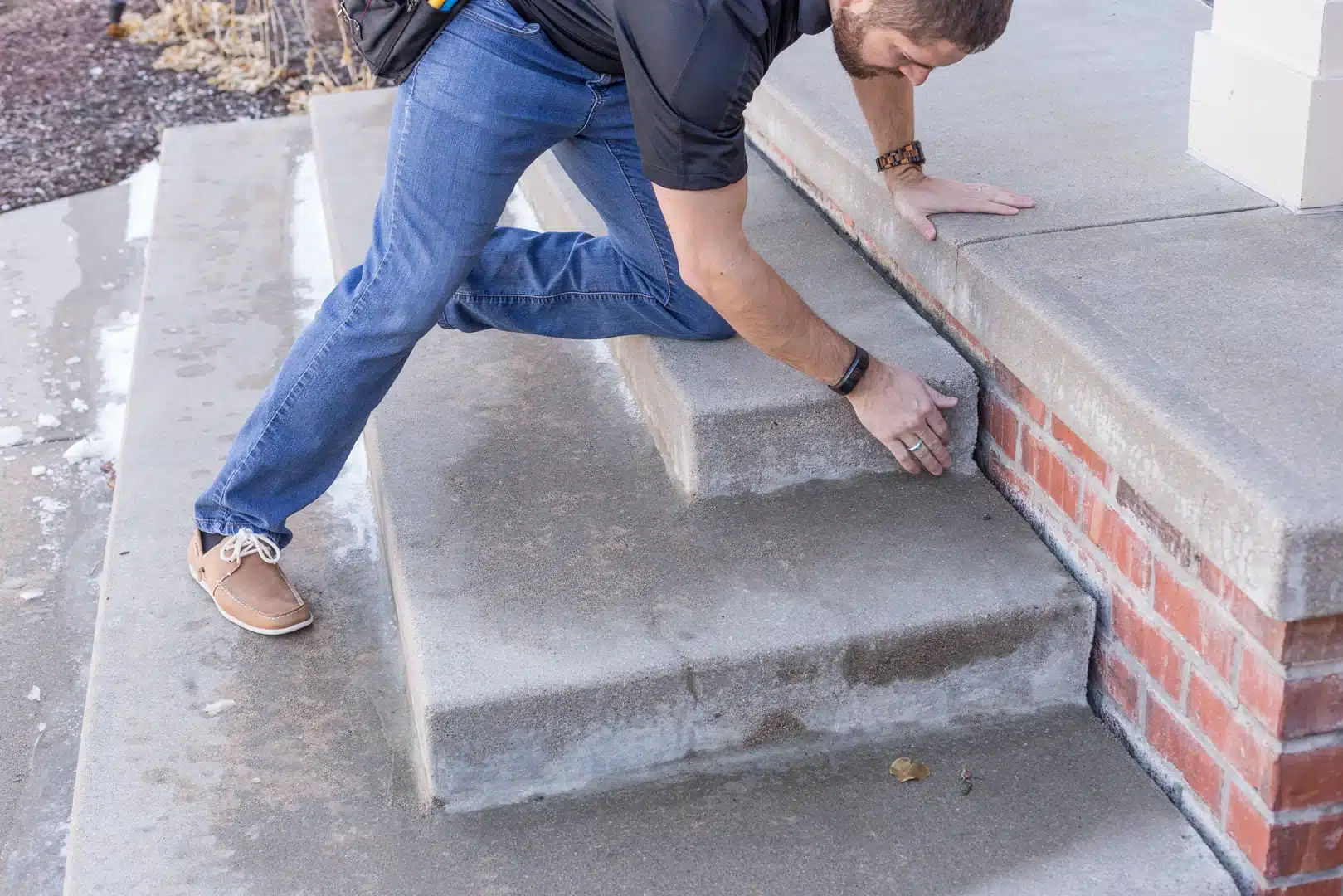
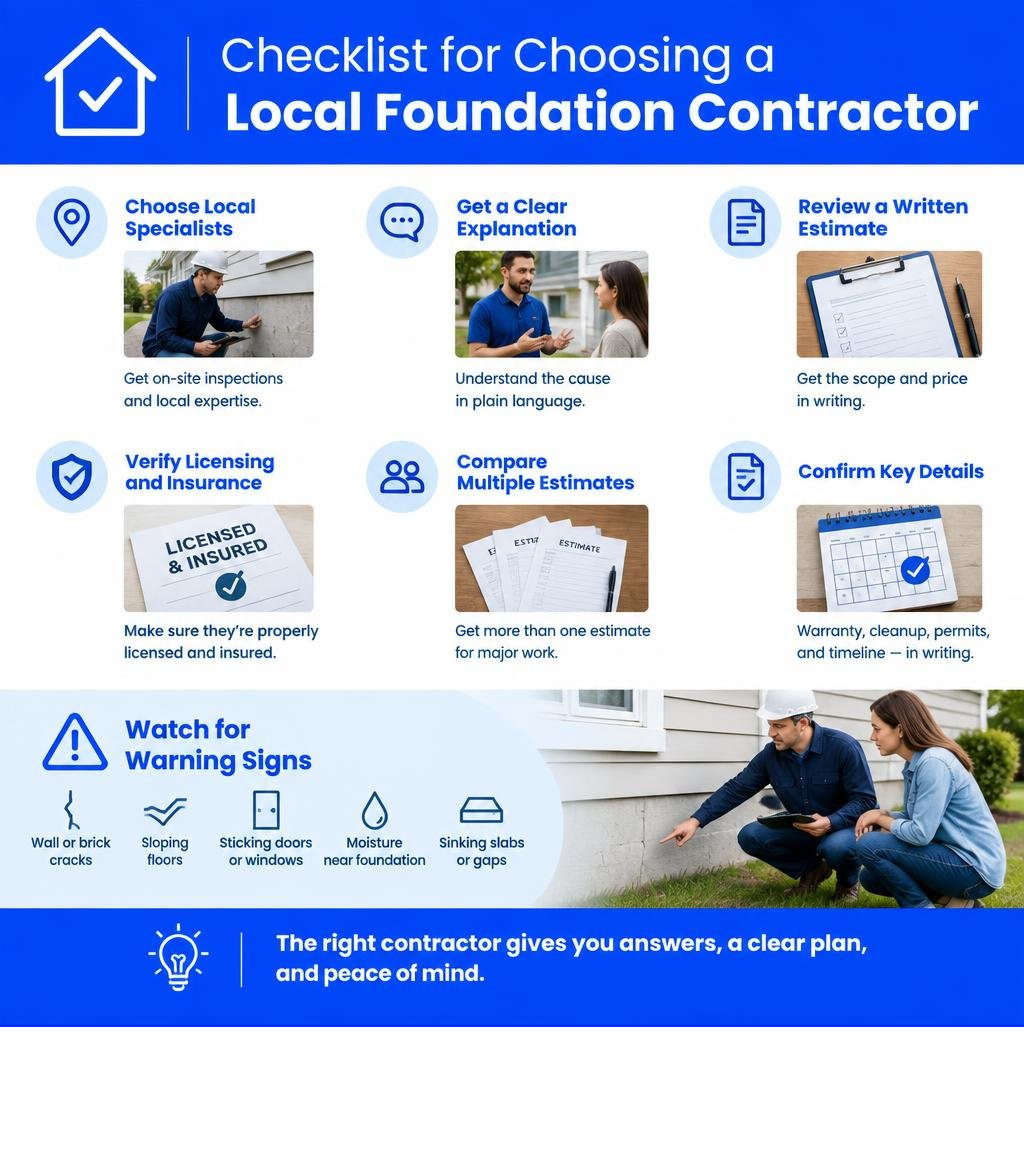
To find reliable foundation contractors near me, start by choosing local specialists who can inspect the problem in person, explain the cause in plain language, provide a written scope and price, and show proof of licensing and insurance where required. Get more than one estimate for major structural work, ask what repair method they recommend and why, and make sure the warranty, cleanup, permits, and timeline are in writing.
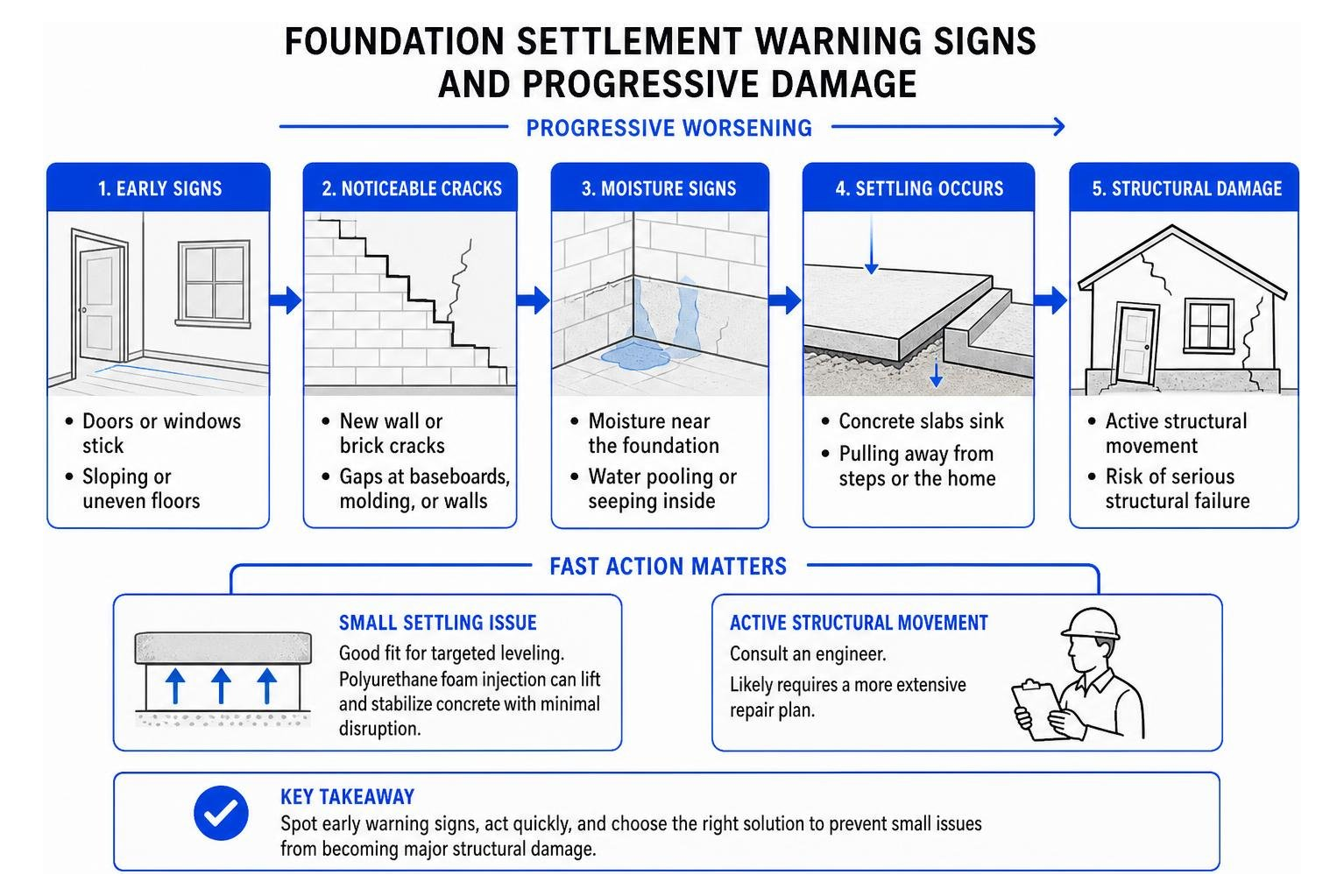
Watch for early warning signs such as new wall or brick cracks, sloping floors, doors or windows that stick, moisture near the foundation, or concrete slabs that sink and pull away from steps or the home. Fast action matters: a small settling issue may be a good fit for targeted leveling, while active structural movement may need an engineer and a more extensive repair plan.
For sunken driveways, patios, walkways, and concrete slabs, polyurethane foam injection can often lift and stabilize concrete without the disruption of replacement. FoamWorks Concrete Leveling completes most repairs in a few hours, with little excavation and a surface that can typically be used almost right away.
I am Trey McNamee, owner of FoamWorks Concrete Leveling, serving homeowners throughout Northwest Ohio, Southeast Michigan, and Northeast Indiana. With more than two decades of experience in building-materials strategy and a team with 30+ years of combined field experience, I help homeowners evaluate foundation contractors near me and make practical repair decisions with confidence. For a broader overview of how foundations behave and fail, the Foundation (engineering)) entry on Wikipedia explains the structural role of footings and soil support.
Easy foundation contractors near me glossary:
1. Early Warning Signs Your Home Needs a Foundation Specialist
Discovering shifts in your home’s structural base can feel unsettling, but catching issues early prevents massive headaches down the road. Foundations bear the entire structural load of your house, and when the underlying soil shifts, washes out, or contracts, the building responds.
Homeowners should monitor their property for several telltale indicators:
- Interior doors that suddenly stick, swing open on their own, or refuse to latch properly.
- Noticeable sloping, bouncing, or unlevel flooring across hallways and living areas.
- Windows that jam in their frames due to subtle structural racking.
- Gaps forming between baseboards, crown molding, interior walls, and floor surfaces.
- Chimneys or exterior steps separating and tilting away from the primary structure.
- Water pooling around perimeter footings or seeping into lower living spaces.
Recognizing the unmistakable signs your concrete slab is settling helps you intervene before cosmetic flaws evolve into severe structural failures.
Identifying Exterior vs. Interior Foundation Damage
Assessing your home requires looking at both indoor finishes and outdoor masonry. Indoors, minor drywall cracks above door frames often stem from standard humidity shifts, but diagonal cracks wider than a quarter-inch running toward the ceiling signal uneven structural settlement.
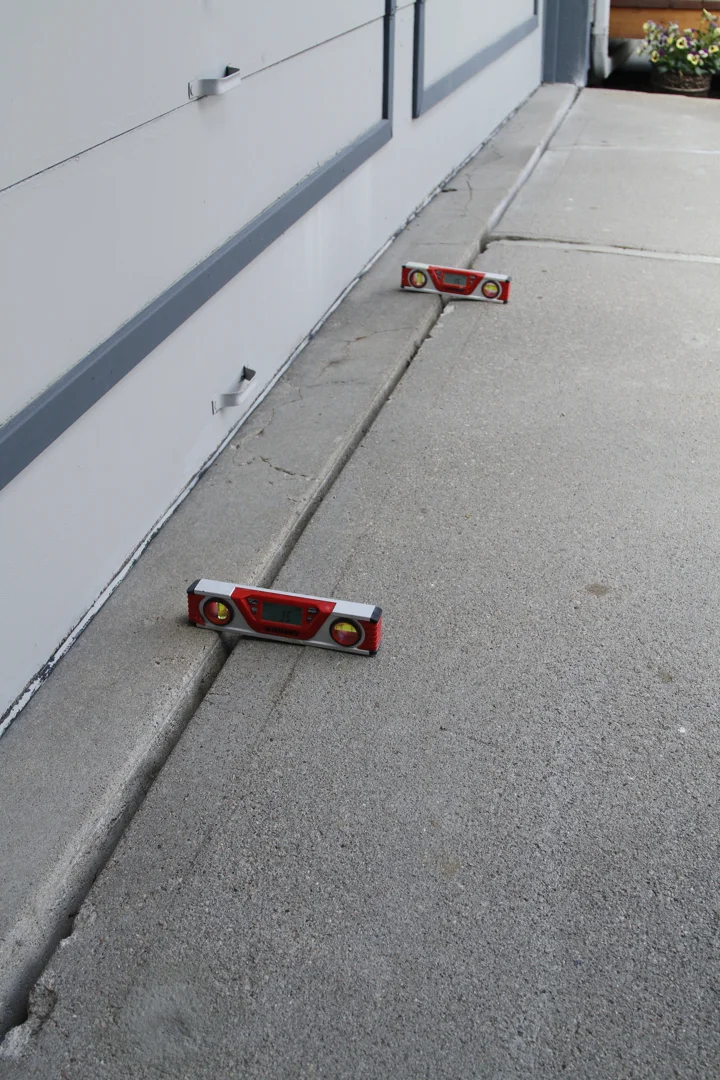
Outside, brick veneer and block walls tell a clear story. Look for stair-step cracking along mortar joints, especially near building corners and window openings. When settling occurs, window frames distort, pulling caulking apart and allowing drafts and moisture penetration. Professional contractors use precision laser level assessments to measure floor elevation drops down to an eighth of an inch, mapping out the exact dip before recommending targeted foundation crack repair solutions.
When Settling Becomes a Structural Emergency
Not every crack demands immediate evacuation, but certain conditions require rapid stabilization. Soil surrounding your foundation expands when saturated, exerting massive lateral pressure—known as hydrostatic pressure.
Critical red flags include:
- Inwardly bowing or bulging basement walls.
- Horizontal shearing cracks near the middle or lower third of masonry walls.
- Severe floor deflection that compromises load-bearing interior partitions.
- Plumbing lines shearing or backing up due to deep slab displacement.
When these conditions appear, waiting will only multiply the eventual repair bill.
2. Types of Residential Foundations and Common Repair Methods
Every home requires a specific foundational approach dictated by local soil profiles, regional frost depths, and architectural layout.
The four primary residential foundation types include:
- Slab-on-Grade: A single, thick concrete slab poured directly over prepared, compacted soil or stone. Popular in warmer areas and modern additions.
- Crawl Space Systems: Elevated perimeter stem walls supporting wood joists and subflooring, providing access to plumbing and ductwork.
- Full Poured or Block Basements: Deep structural walls sitting on wide concrete footers below the frost line, creating functional underground storage or living space.
- Frost Walls: Foundation walls built without a full basement where perimeter footings sit beneath local freeze-depth lines to prevent ground heaving.
| Foundation Type | Primary Vulnerability | Typical Concern | Relative Cost Impact |
|---|---|---|---|
| Slab-on-Grade | Soil settlement, void formation | Sinking or uneven slab sections | Low to Moderate |
| Crawl Space | Beam rot, moisture, pier sinking | Sagging floors and moisture buildup | Moderate |
| Full Basement | Hydrostatic bowing, wall cracks | Bowing or cracked basement walls | Moderate to High |
| Frost Wall | Frost heave, poor drainage | Heaving or shifting perimeter walls | Moderate |
Core Services Offered by Foundation Contractors Near Me
Professional contractors provide solutions ranging from concrete stabilization to protective sealing. Key services homeowners commonly look for include:
- Full-scale residential foundation repair and slab stabilization.
- Structural crawl space repair and support.
- Concrete crack repair and void filling beneath settled slabs.
- Hydrophobic concrete sealing and exterior waterproofing.
Modern Foundation Leveling Methods
Traditional structural repair often relied on invasive excavation or heavy concrete slurry additions that added thousands of pounds of weight onto already-struggling subsoil. Today, advanced high-density polyurethane foam foundation repair provides a cleaner, lightweight, non-invasive alternative.
By drilling penny-sized access holes directly through the compromised slab, technicians inject expandable structural polymers. As the foam expands, it compacts loose soil, fills subterranean voids, and delivers precision slab foundation leveling that lifts settled concrete back to its intended grade without tearing up your landscaping.
3. How Much Does Foundation Repair Cost in 2026?
Understanding project costs helps you budget effectively and avoid surprise change orders. Nationwide averages for general foundation repairs sit around $5,000, with typical projects falling between $2,200 and $7,800. Minor crack sealing may cost only a few hundred dollars, whereas complex structural underpinning involving deep hydraulic or helical steel piers can climb from $10,000 to over $25,000.
Key cost factors include:
- Total square footage of affected concrete.
- Soil composition and subterranean void severity.
- Structural access (interior living spaces vs. open exterior yards).
- Engineering reports and municipal permit fees.
- Labor hours and specialized lifting materials required.
Reviewing known residential foundation repair cost factors gives homeowners clear expectations before inviting contractors out for estimates.
Budgeting for Minor Fixes vs. Major Structural Repairs
Small, non-structural hairline cracks can usually be sealed using targeted polyurethane injections or specialized sealants. However, when an entire section of your driveway, patio, interior floor, or garage slab drops, homeowners frequently assume total replacement is mandatory.
Tear-out and replacement involves heavy demolition machinery, dumpster rentals, fresh concrete pours, and weeks of curing time. In contrast, high-density foam concrete leveling lifts and stabilizes existing concrete for 30% to 50% less than full tear-out and replacement. This method eliminates disposal fees, preserves surrounding lawns, and lets you use the surface almost immediately.
Preserving Home Value and Preventing Collateral Damage
Leaving foundation issues unaddressed is costly. Unresolved structural settling can reduce a home’s resale value by up to 20%, triggering red flags during buyer inspections and complicating mortgage approvals.
Beyond property value, settling causes secondary collateral damage:
- Plumbing supply lines and sewer pipes can crack or shear beneath sinking slabs.
- Roof trusses and framing members can warp under uneven load transfers.
- Finished drywall, tile floors, and custom cabinetry can crack and separate.
Proactive stabilization protects your home equity and avoids expensive secondary repairs.
4. How to Choose and Vet Foundation Contractors Near Me
Finding the right contractor does not have to be an overwhelming chore. Taking a structured vetting approach ensures you hire a licensed, competent team that stands behind its work.
Verify these essential items before hiring:
- Proper Licensing & Registration: Confirm valid state contractor licenses and local municipal registrations.
- Comprehensive Insurance: Demand current certificates for general liability and worker’s compensation insurance to protect yourself from on-site liabilities.
- Itemized Written Bids: Avoid vague verbal quotes. Insist on clear line-item proposals detailing material types, site prep, cleanup, and payment terms.
- Verified Local Reputation: Look for established local contractors with strong third-party reviews and Better Business Bureau accreditation.
Questions to Ask Foundation Contractors Near Me Before Signing
Before putting your signature on any proposal, ask these direct questions:
- What specific repair method are you recommending, and why is it better than alternative approaches for my soil type?
- Does your company handle all the work directly, or do you rely on outside subcontractors?
- What does your warranty cover, and is it fully transferable to future homeowners if I sell?
- How will underground utilities be mapped out before work begins?
- What is your specific protocol for site cleanup and restoring disturbed landscaping?
Understanding the End-to-End Repair Process and Timelines
A structured repair follows an orderly sequence to guarantee permanent results:
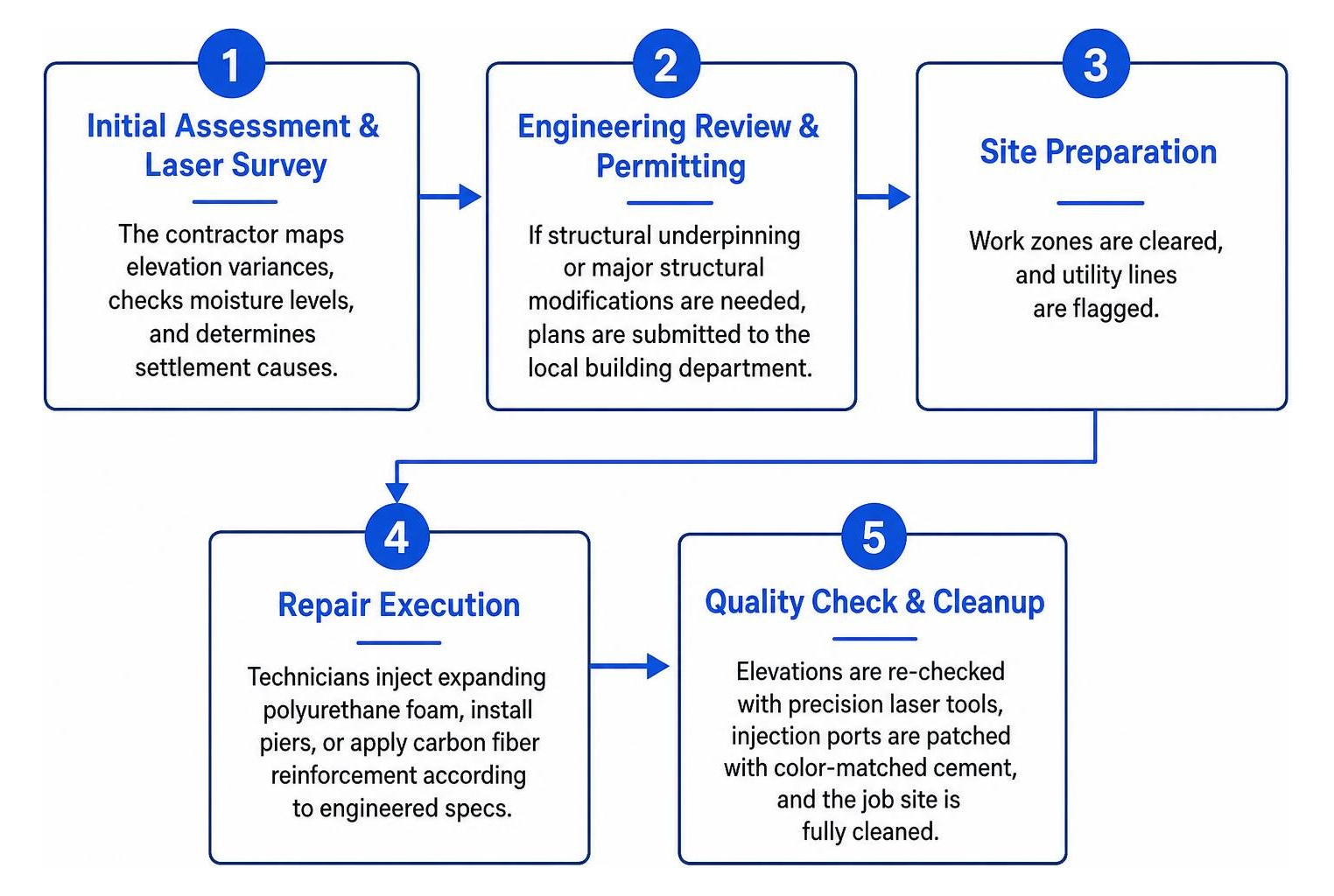
- Initial Assessment & Laser Survey: The contractor maps elevation variances, checks moisture levels, and determines settlement causes.
- Engineering Review & Permitting: If structural underpinning or major structural modifications are needed, plans are submitted to the local building department.
- Site Preparation: Work zones are cleared, and utility lines are flagged.
- Repair Execution: Technicians inject expanding polyurethane foam, install piers, or apply carbon fiber reinforcement according to engineered specs.
- Quality Check & Cleanup: Elevations are re-checked with precision laser tools, injection ports are patched with color-matched cement, and the job site is fully cleaned.
5. Proactive Maintenance to Protect Your Foundation Long-Term
Preventative maintenance keeps the soil around your home stable and minimizes the risk of future settlement.
Follow these proven property-care strategies:
- Direct Roof Water Away: Clean gutters regularly and install downspout extensions that discharge rainwater at least 5 to 10 feet away from foundation walls.
- Maintain Proper Soil Grading: Ensure soil slopes downward away from your foundation at a minimum slope of 6 inches over the first 10 feet.
- Install Subsurface Drainage: In low-lying yards, install French drains or catch basins to divert standing ground water before it saturates the soil.
- Manage Landscaping and Trees: Avoid planting large, moisture-thirsty trees close to perimeter footings, as root systems extract massive volumes of water during dry months, causing soil shrinkage and localized settlement.
- Seal Concrete Surfaces: Apply breathable silane-siloxane sealers to concrete flatwork to prevent moisture penetration and freeze-thaw spalling.
Reviewing foundation leveling essentials helps you understand how consistent moisture management keeps your foundation stable year after year.
Frequently Asked Questions About Residential Foundation Work
How long does a typical foundation repair take to complete?
Project duration depends heavily on the chosen repair method. High-density polyurethane foam leveling for sunken interior slabs, porches, or garage floors is typically completed in just a few hours, allowing immediate foot and vehicle traffic. In contrast, complex structural projects involving excavation, helical piers, or new poured concrete footers usually take 3 to 10 business days, depending on weather conditions, permitting, and concrete curing times.
Do I need a municipal permit for foundation repairs or installations?
Minor concrete leveling, void filling, and superficial crack sealing typically do not require municipal building permits. However, major structural alterations—such as installing steel push piers, rebuilding load-bearing masonry walls, underpinning footings, or excavating for new additions—almost always require formal engineering plans, building department permits, and mandatory local municipal inspections before closeout.
What is the most cost-effective method to fix a sinking concrete foundation?
For settling concrete slabs, walkways, pool decks, and garage floors that remain structurally intact, polyurethane foam injection is the most cost-effective method available. Because foam lifting uses the existing slab rather than demolishing it, homeowners save 30% to 50% compared to full concrete replacement while avoiding landscape damage, dumpster fees, and lengthy curing downtime.
Conclusion
Foundation concerns can feel overwhelming, but you do not have to tackle them without guidance. By recognizing the early warning signs of settlement, understanding your repair options, and asking the right vetting questions, you can partner with local professionals who protect your home’s structural integrity without unnecessary stress.
At FoamWorks Concrete Leveling, our family-owned team brings over 30 years of combined field experience to every project throughout Northwest Ohio, Southeast Michigan, and Northeast Indiana. We specialize in fast, non-invasive foam injection leveling, crack repair, and concrete sealing backed by a lifetime warranty. Explore our expert interior slab leveling and foundation support solutions today, and contact us to schedule your free estimate.