
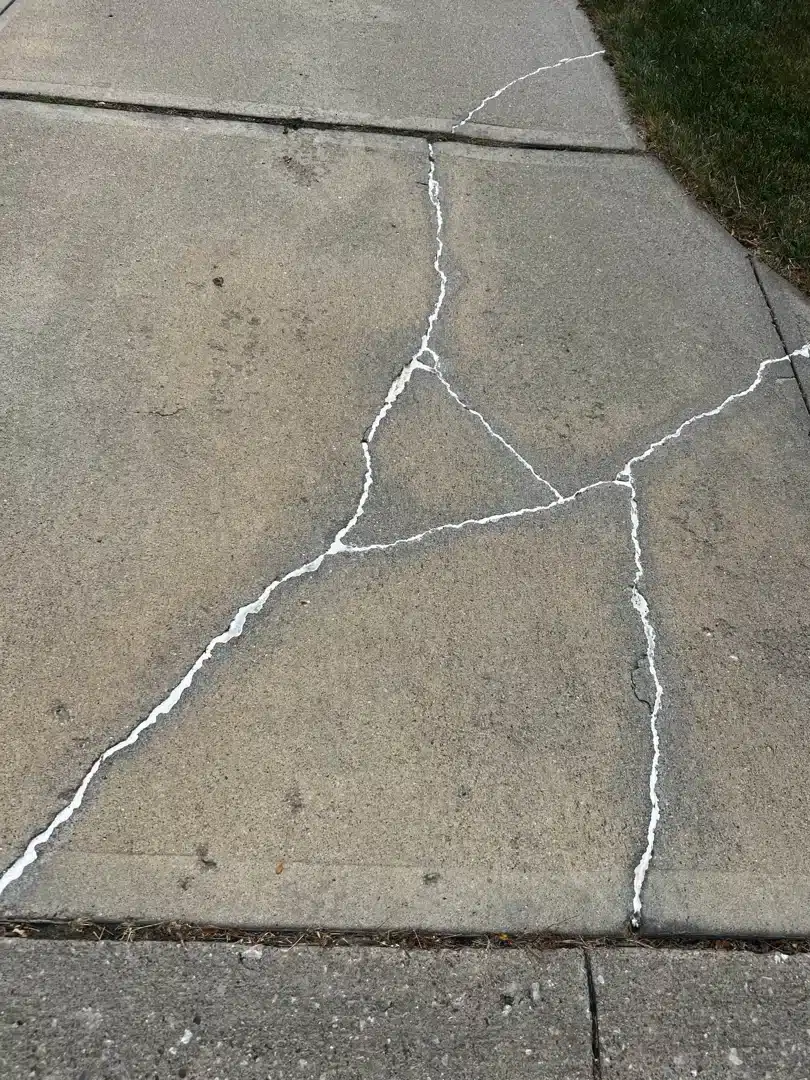
Choose the Right Concrete Crack Sealant at Home Depot
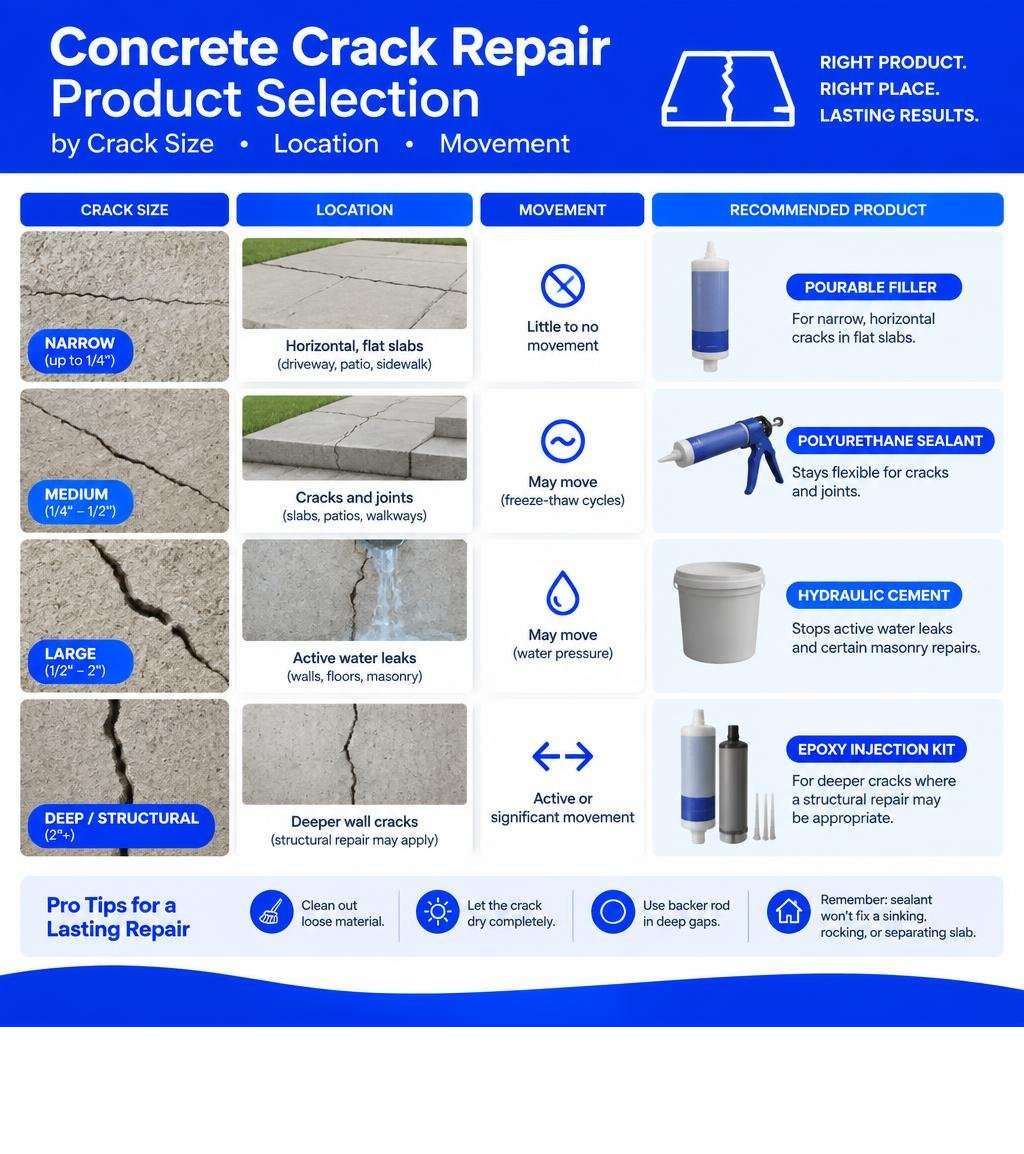
For a typical driveway, patio, or sidewalk crack, choose a flexible polyurethane sealant or a ready-to-use crack filler labeled for exterior concrete. At Home Depot, the best choice depends on where the crack is, how wide and deep it is, and whether the slab moves during Northwest Ohio, Southeast Michigan, and Northeast Indiana freeze-thaw seasons.
- Use a pourable filler for narrow, horizontal cracks in flat slabs.
- Use a caulk-gun polyurethane sealant for cracks and joints that need to stay flexible.
- Use hydraulic cement for active water leaks and certain masonry repairs.
- Use an epoxy injection kit for deeper wall cracks where a structural repair may be appropriate.
A concrete crack sealant Home Depot sells can help keep water out, but it will not correct a slab that is sinking, rocking, or separating because of soil movement. Cleaning out loose material, letting the crack dry, and using backer rod in deep gaps are just as important as picking the product.
I am Trey McNamee, owner of FoamWorks Concrete Leveling, with more than two decades of experience in building-material marketing, strategy, and product development. I use that background, along with our team’s concrete repair experience, to help homeowners understand when a concrete crack sealant Home Depot carries is a sensible DIY fix and when leveling is the longer-lasting answer.
Essential concrete crack sealant home depot terms:
Crack Fillers vs. Crack Sealants: Key Differences
When walking down the masonry aisle, homeowners often use the words “filler” and “sealant” interchangeably. However, exploring caulking vs sealing concrete differences reveals distinct chemical and mechanical behaviors.
Concrete crack fillers are typically rigid or semi-rigid compounds—such as acrylics, vinyl mortars, or cement-based pastes—designed to pack a static void and restore a flat surface profile. They are great for cosmetic touch-ups on slabs that experience zero shifting.
In contrast, concrete sealants (primarily polyurethanes, silicones, and hybrid polymers) are formulated with high elasticity. When winter hits places like Toledo, OH or Fort Wayne, IN, exterior concrete slabs shrink slightly, widening the joints. In the summer heat, the concrete expands. A rigid filler will pull away from the edges or fracture under these thermal dynamics. A flexible sealant stretches and compresses while maintaining an impenetrable watertight bond, stopping subsurface moisture infiltration before it destabilizes the base.
| Feature | Concrete Crack Fillers (Rigid / Semi-Rigid) | Concrete Crack Sealants (Elastomeric / Polyurethane) |
|---|---|---|
| Primary Material | Acrylic latex, vinyl patch, cementitious grout | Polyurethane, hybrid polymer, 100% silicone |
| Elasticity / Movement | Very low to none (rigid) | High (expands and contracts with slab movement) |
| Best Application | Static hairline cracks, indoor floors, cosmetic filling | Control joints, expansion gaps, active outdoor driveway fissures |
| Waterproofing Ability | Moderate (can crack if slab moves) | Superior (maintains continuous watertight adhesion) |
| Vertical vs. Horizontal | Mostly horizontal (trowel-grade paste) | Both horizontal (pourable/self-leveling) and vertical (non-sag) |

Best Concrete Crack Sealant Home Depot Options Compared
The Home Depot concrete aisle carries a vast spectrum of repair compounds ranging from under $10 squeeze tubes to comprehensive $250+ foundation stabilization kits. By understanding concrete sealant options, you can balance container size, chemical formulation, and cure speeds to match your driveway or patio project.
Top Pourable and Polyurethane Concrete Crack Sealant Home Depot Brands
For driveways, sidewalks, and pool decks, pourable and cartridge-based polyurethanes provide the best durability:
- Quikrete 1 Qt. Concrete Crack Sealant 864000: A staple for DIYers at $12.85 per quart (boasting a 4.5/5 rating from over 2,040 customer reviews). Its pourable viscosity naturally flows into horizontal cracks in sidewalks and walkways, curing to a natural concrete gray.
- 10.1 oz. Concrete Crack Sealant – The Home Depot: Retailing at $9.25 (rated 4.4/5 across 468 reviews), this cartridge format provides precision application for horizontal and minor vertical cracks, drying to a flexible, durable finish.
- 10.1 fl. oz. Sikaflex Concrete Fix No-Sag Concrete Crack Repair Polyurethane Sealant in Limestone: Priced around $8.88, this high-performance, non-sag formula is engineered for both vertical joints and horizontal slabs, remaining permanently elastic even through severe Midwest temperature swings.
- 10.1 fl. oz. Concrete Repair Sealant: At just $5.22 per cartridge, this Sakrete option seals joints up to 3/8-inch wide with weather-resistant durability.
- 1 Qt. Fast Drying Concrete Crack Filler: Selling at $17.98, this ready-to-use, no-mix formula is ideal for quick turnarounds on patios, garage floors, and driveways.
- 2 Gal. 250 ft. Small Black Permanent Blacktop Crack Filler: Priced at $132.87, this heat-applied, melt-in product covers 250 feet of blacktop or asphalt-adjoining concrete seams with a lifetime guarantee. The medium gray version for concrete joints holds an impressive 4.2 rating from 284 reviews.
- 0.25 Gal. Elastomeric Crack Filler Reflective Roof Coating: A knife-grade elastomeric compound that bridges exterior gaps across concrete, wood, and masonry.
- 1 gal. Clear Water Repellent Concrete and Masonry Sealer: At $96.55, this penetrating barrier safeguards entire concrete slabs against water and salt damage after cracks have been sealed.
Specialty Repair Kits, Epoxies, and Hydraulic Cements
For more severe gaps, structural bonding, or basement walls, Home Depot provides heavy-duty options:
- DRICORE Concrete Repair Crack Injection Kit: A $67.12 Best Seller (3.7/5 rating from 87 reviews) designed for expanding polyurethane foam injection into deep basement foundation wall cracks.
- DRYLOK 4 lb. Fast Plug Hydraulic Cement Mix: Carrying a 4.5/5 rating across 403 reviews, this rapid-setting mix expands as it hardens within minutes to choke off active water leaks under hydrostatic pressure.
- Rust-Oleum 24 oz. Concrete Patch and Repair Kit: Boasting a 4.4/5 rating from 302 reviews, this high-strength two-part epoxy tackles heavy spalling, deep chips, and high-traffic garage floor fissures up to 2 inches wide.
For budget-conscious homeowners fixing concrete cracks at home, selecting the right chemical base prevents wasted trips and premature bond failure.
How to Apply Concrete Crack Sealant: Step-by-Step Driveway and Slab Guide
Applying a concrete crack sealant correctly requires meticulous technique. Even the highest-rated product will peel within one season if applied over dust, oil, or loose crumbling aggregate.

Surface Preparation and Crack Cleaning
Preparation determines 90% of your repair’s lifespan when repairing cracked concrete slabs.
- Chisel and Undercut: If the crack has jagged, crumbling edges, use a cold chisel and hammer to remove loose concrete. Try to create an inverted “V” or backward-angled channel so the sealant locks mechanically into the slab.
- Scrub with a Wire Brush: Run a stiff wire brush along the entire fissure to dislodge stubborn dirt, moss, and loose mortar.
- Vacuum Thoroughly: Use a wet/dry shop vac or high-pressure blower to pull every grain of dust and loose aggregate out of the void.
- Degrease and Dry: If the crack is in a driveway contaminated by motor oil, clean it with a concrete degreaser. Ensure the crack is 100% dry; moisture trapped in the concrete pores ruins polyurethane adhesion.
Choosing the Right Concrete Crack Sealant Home Depot Offers for Your Surface
Measure the width and depth of the gap before applying product.
- Cracks Under 1/4 Inch Wide: Pourable sealants like Quikrete 864000 or Behr Fast Drying Crack Filler flow into narrow crevices without extra tooling.
- Cracks 1/4 Inch to 1/2 Inch Wide: Use an elastomeric caulk tube (such as Sikaflex Concrete Fix) applied with a heavy-duty caulking gun.
- Cracks Deeper than 1/2 Inch: Never fill the entire depth with liquid sealant—it will slump, bubble, and fail to cure. Instead, push a foam backer rod into the joint, seating it roughly 1/4 to 3/8 inch below the slab surface.
Addressing gaps early is vital for preventing structural concrete disasters, as open joints channel stormwater directly beneath the slab, eroding sub-base soils.

Application, Tooling, and Cure Time
- Load and Cut: Snip the sealant cartridge tip at a 45-degree angle to match the width of your crack. Puncture the inner foil seal.
- Dispense Steadily: Hold the gun at a 45-degree angle and squeeze the trigger with smooth, even pressure, keeping the nozzle submerged in the bead to prevent air pockets. Fill the crack until the sealant is slightly mounded above the slab surface.
- Tool the Joint: Within 10–15 minutes, use a flexible putty knife, margin trowel, or gloved finger dipped in mineral spirits to press the sealant firmly against both sidewalls and strike it flush with the surrounding concrete.
- Protect During Curing: Block off the driveway or sidewalk. Keep foot traffic off the area for at least 12–24 hours and vehicle traffic off for 48–72 hours to allow the polymer matrix to reach full tensile strength.
Frequently Asked Questions About Concrete Crack Repair
What is the drying time for concrete crack sealants?
Drying times vary across products at The Home Depot. Fast-drying acrylic fillers skin over in less than 10 minutes and dry to the touch within 1 hour. Traditional polyurethane sealants (like Sikaflex or Quikrete Polyurethane) skin over in 2 to 4 hours, become rain-ready within 8 hours, and require a full 24 to 48 hours to cure completely. Cold temperatures below 50°F (10°C) or extremely arid conditions can extend cure times. For a deeper breakdown of temperature windows, visit our concrete sealant FAQ guide.
Can concrete crack sealant be used on vertical surfaces?
Yes, provided you choose a non-sag formula. Standard pourable sealants are low-viscosity self-leveling liquids that will quickly run out of a wall crack and pool on the floor. For vertical foundation fissures, retaining walls, or steps, select a non-sag polyurethane cartridge like Sikaflex Concrete Fix or an epoxy injection system like the DRICORE Repair Kit. These thixotropic formulas hold their shape against gravity while bonding to vertical concrete walls.
How long does a concrete crack sealant repair last?
A high-grade polyurethane sealant installed over a properly cleaned, stable joint typically lasts 3 to 7 years. Acrylic crack fillers have a shorter lifespan of 1 to 3 years. Sealant longevity is primarily determined by solar UV exposure, seasonal freeze-thaw cycles across our service area in Northwest Ohio, Southeast Michigan, and Northeast Indiana, and whether the concrete slabs underneath are stable or actively shifting.
Conclusion
Sealing concrete cracks with products from The Home Depot is an essential part of regular home maintenance that protects your driveway, sidewalk, or patio against water intrusion and frost heave. However, caulks and pourable fillers are only designed to bridge gaps—they cannot fix sinking slabs, tripping hazards, or deep sub-base soil voids.
When DIY sealants pull apart year after year, it means your concrete is moving beneath the surface. Knowing when temporary patches fail helps homeowners avoid wasting money on recurring surface fixes.
At FoamWorks Concrete Leveling, we fix the root problem with professional high-density polyurethane foam injection. Serving communities across Ann Arbor, MI, Toledo, OH, Fort Wayne, IN, and surrounding areas, our precision lifting raises sunken slabs back to their original grade in just a few hours. Polyurethane injection costs 30% to 50% less than full tear-out and replacement, involves zero landscape damage, and lets you walk or drive on the surface almost immediately. Backed by 30+ years of industry experience and a lifetime warranty, we deliver permanent stability.
Before you apply your next tube of sealant, explore our professional concrete repair and leveling services and contact us today for a free estimate!