

How to Check if Your Pool Deck Is Safe
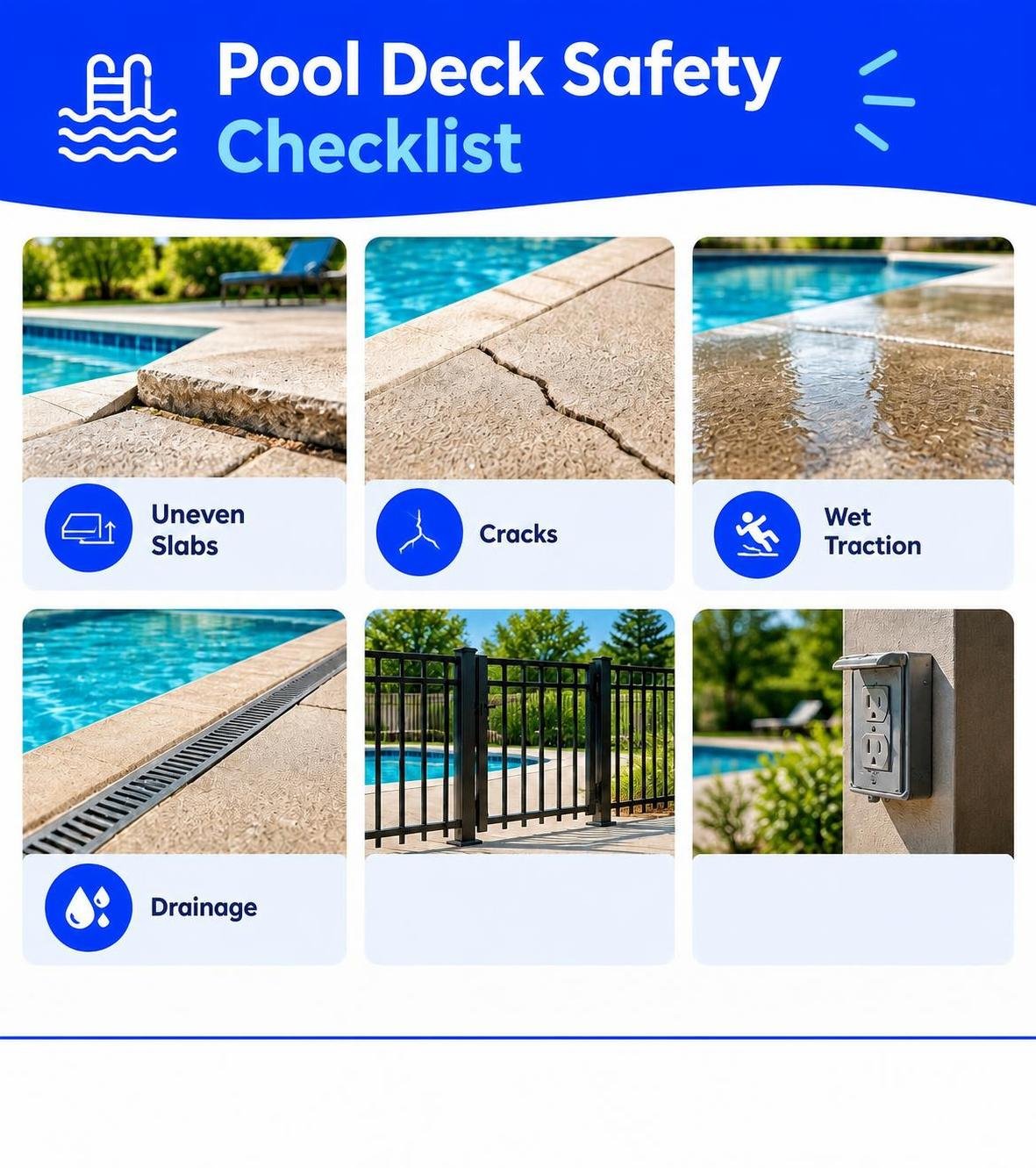
Asking yourself, “is my pool deck safe?” Start with a walk around the pool, then check the deck again when it is wet. Look for:
- Slabs that have sunk or shifted, leaving raised edges that could trip someone.
- Cracks that are widening, loose coping, or water that pools on the deck.
- Slick patches, especially where algae or worn surfaces reduce grip.
Keep people off any hazardous area until it is repaired. Focus the deck inspection on concrete conditions that can create trip, slip, drainage, or cracking hazards. The guide below shows what you can inspect yourself and when to call a professional.
I’m Trey McNamee, owner of FoamWorks Concrete Leveling, which serves Northwest Ohio, Southeast Michigan, and Northeast Indiana. My building-materials background and our team’s concrete repair work inform how I help homeowners answer “is my pool deck safe?”
Is my pool deck safe glossary:
Critical Signs: How to Tell Is My Pool Deck Safe from Physical Hazards?
A backyard swimming pool is meant to be a place of relaxation, exercise, and family fun. However, concrete pool decks endure extreme conditions year-round, from harsh winter freeze-thaw cycles to scorching summer heat and constant splashes of chlorinated or saltwater pool water. Over time, these environmental stressors compromise the structural integrity of your surround.
When evaluating your pool deck, the most critical physical hazards fall into three categories: vertical elevation offsets (trip hazards), horizontal separations (structural joint failures), and loose edge materials (coping deterioration). Understanding how to spot evaluating dangerous concrete cracks is your first line of defense against painful stubbed toes, sprained ankles, or worse, accidental falls into the water.
You should also look for unmistakable signs of settling concrete slabs, such as pooling water against the foundation or visible gaps underneath the outer edge of your concrete. If any portion of your pool deck has shifted more than a quarter-inch relative to the adjacent slab, it represents an immediate tripping hazard that requires attention.
Cracking, Soil Settlement, and Sinking Slabs
Why do pool decks sink and crack in the first place? In regions like Northwest Ohio, Southeast Michigan, and Northeast Indiana, seasonal weather plays a massive role. During winter, moisture trapped in the soil under your pool deck freezes and expands, pushing the slabs upward (frost heave). In spring and summer, the soil thaws and dries out, causing uneven settlement.
Additionally, the excavation process used to install in-ground pools disturbs the surrounding native soil. If backfill material is not compacted thoroughly during initial construction, it will consolidate and settle over subsequent years. Water splashing over the pool coping or running off unsealed control joints washes fine soil particles away, creating hidden subterranean voids.
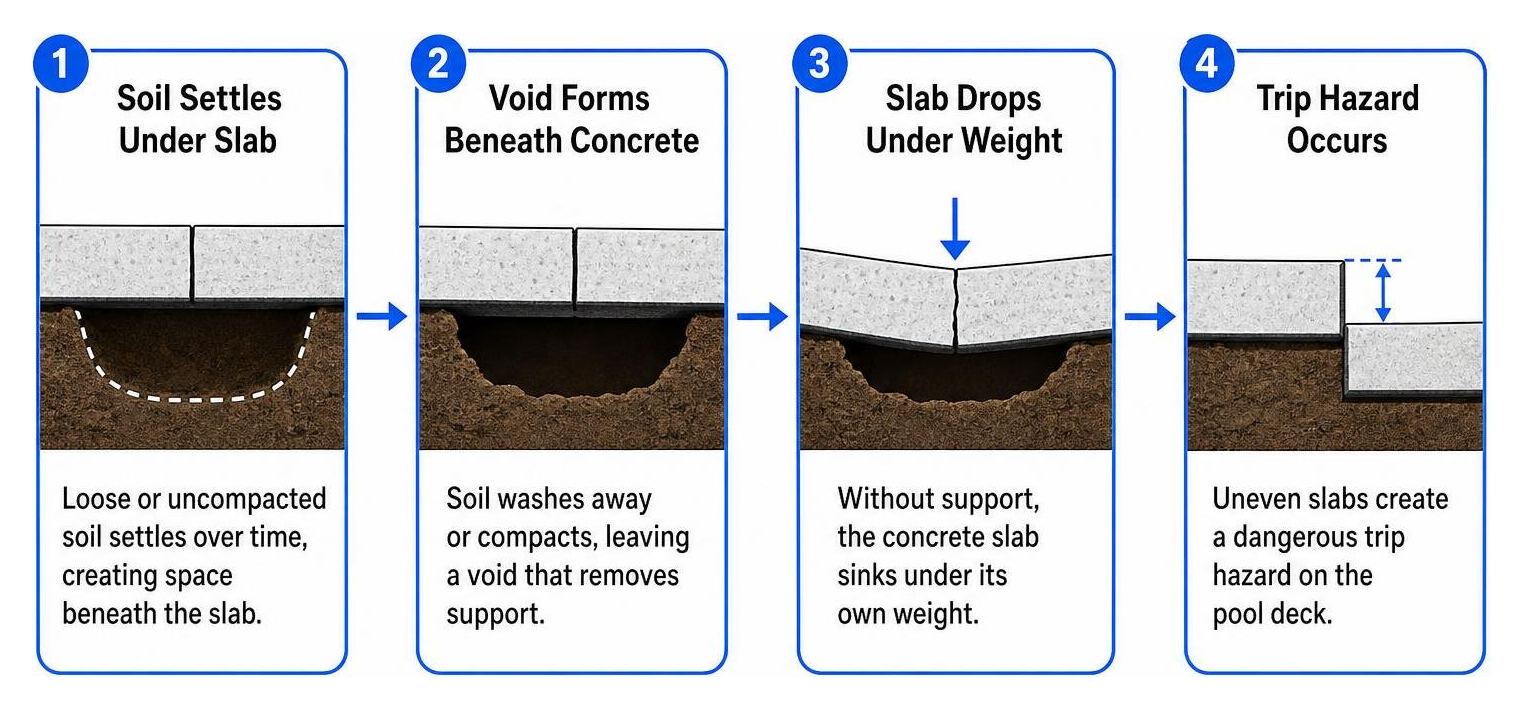
When voids form, the unsupported concrete slab eventually cracks and drops under its own weight. Implementing proven strategies for fixing sunken pool decks prevents water from continuing to funnel underneath the foundation. Addressing these settlement issues quickly is essential for eliminating backyard trip hazards before family members or guests suffer injuries.
Slip and Burn Prevention: Improving Traction and Surface Temperature
Physical elevation shifts are only half the safety equation. Slipping on wet surfaces and burning bare feet on superheated concrete account for a substantial percentage of pool deck injuries every season.
A safe pool deck must maintain an adequate dynamic coefficient of friction (DCOF) even when thoroughly saturated with water and sunscreen lotion, while simultaneously reflecting enough solar radiation to keep surface temperatures within a comfortable range for bare skin.
Why Pool Decks Become Slippery and How to Restore Traction
Have you ever wondered why smooth concrete turns into a literal slip-and-slide when wet? The physics behind deck slips comes down to hydroplaning. When a flat foot steps onto a smooth, non-porous wet surface, a microscopic layer of water becomes trapped between the skin and the concrete. Without texture to channel the water away, the foot loses direct physical contact with the substrate, causing traction to drop to near zero.
Common contributors to slippery pool decks include:
- Micro-Texture Wear: Heavy foot traffic and weather wear down broom finishes over time, polishing the surface smooth.
- Organic Biofilm Accumulation: Algae, mold, and mildew thrive in damp, shaded deck zones, forming slick, nearly invisible organic layers.
- Sunscreen and Body Oil Residue: Aerosol sunscreens leave oily chemical films that repel water and create extremely slick zones around lounging areas.
To restore traction, pool owners should apply high-performance, protective concrete sealants formulated with non-slip grit additives such as micronized polypropylene beads or aluminum oxide aggregate.
While non-slip sealer additives provide an immediate safety boost, they generally last 1 to 3 years before routine foot traffic and UV degradation require reapplication. For a longer-lasting traction option, ask a qualified pool-deck surface specialist which treatment is appropriate for the existing concrete.
Surface Color and Heat Exposure
Surface color affects how hot a concrete pool deck feels in direct sunlight. Darker concrete commonly absorbs more heat than lighter colors, so monitor the surface during hot weather and keep children and pets off concrete that feels painfully hot to the touch.
Keeping the deck clean, promptly addressing algae or residue, and repairing uneven slabs helps reduce common pool-deck safety hazards.
Maintenance and Repair: Concrete Leveling and Safe Cleaning Protocols
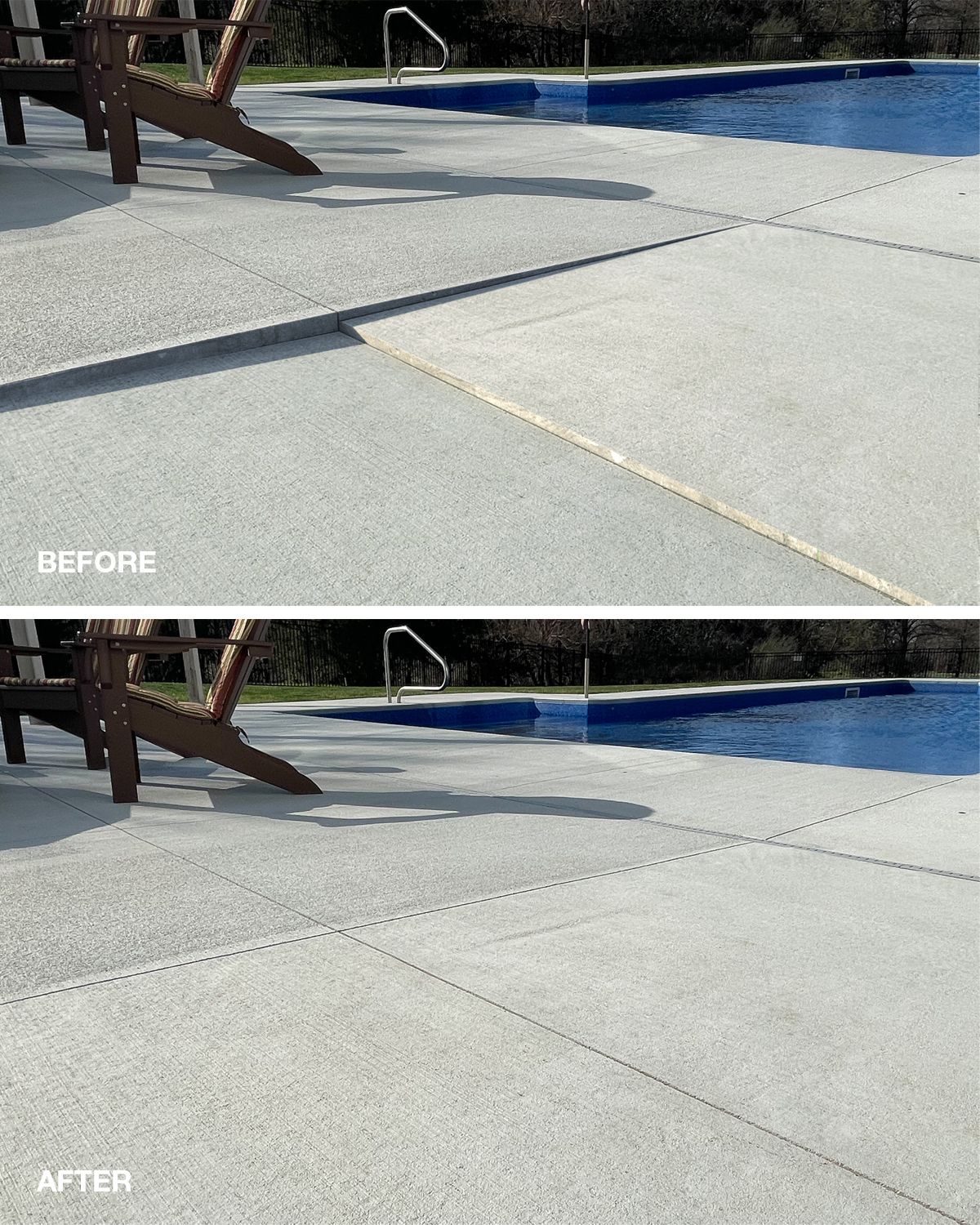
Routine pool deck maintenance involves two essential tasks: stabilizing the structural foundation of the slabs and maintaining surface cleanliness without damaging the concrete.
When pool slabs sink, many homeowners mistakenly assume that tearing out and pouring brand-new concrete is the only solution. Fortunately, modern advancements in professional concrete repair offer much faster, cleaner, and more affordable alternatives.
Polyurethane Foam Injection for Uneven Slabs
At FoamWorks Concrete Leveling, we specialize in high-density polyurethane foam injection to fix sunken pool decks across Northwest Ohio, Southeast Michigan, and Northeast Indiana.
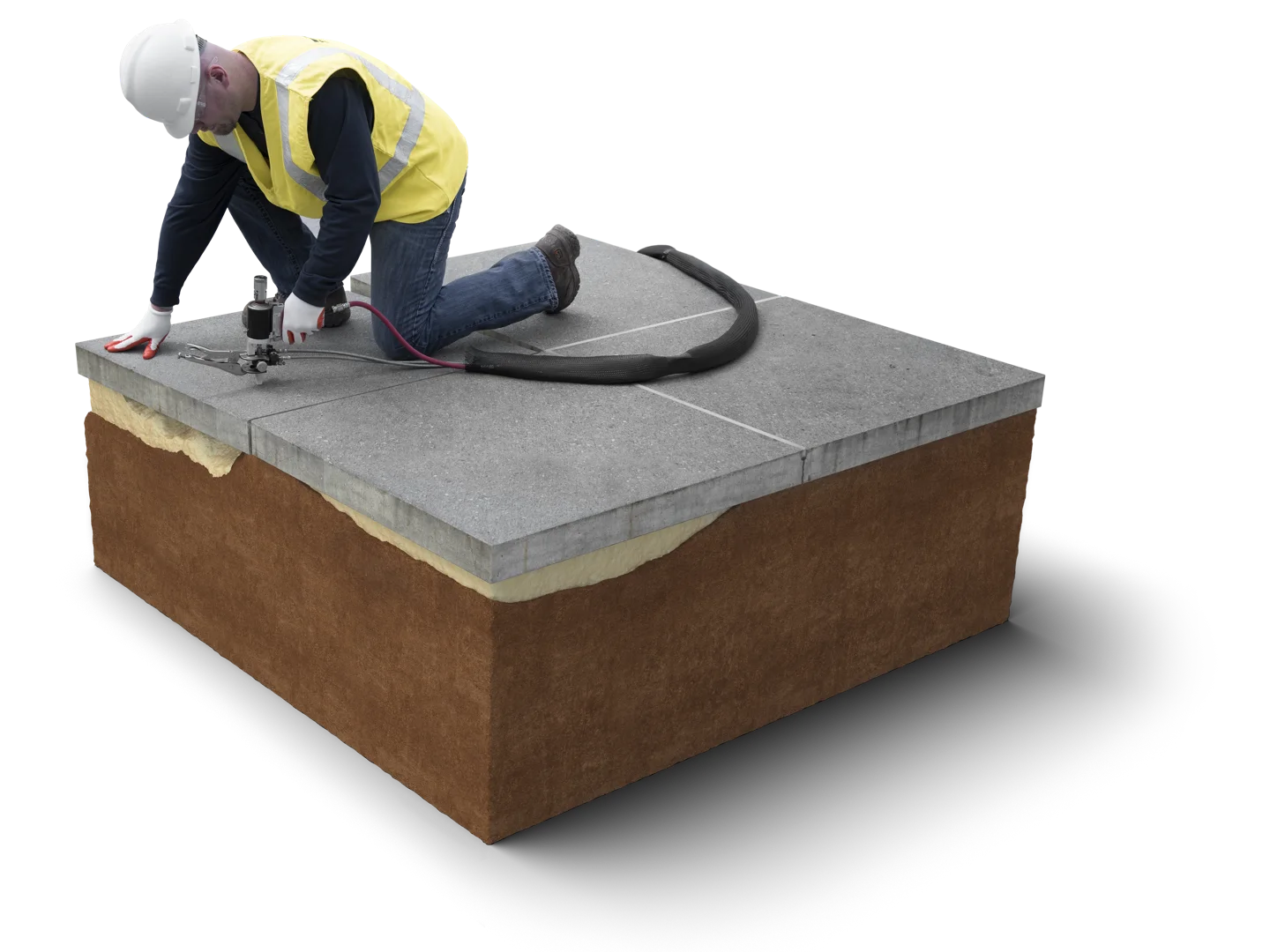
Expanding structural foam is lightweight and waterproof, allowing it to fill voids beneath unstable pool-deck slabs without adding substantial weight to the underlying soil.
Here is how the polyurethane leveling process works:
- Precision Drilling: We drill penny-sized 5/8-inch holes in strategically calculated locations across the sunken concrete slabs.
- Foam Injection: We inject high-density polyurethane foam underneath the slab. The liquid flows into hidden voids, expanding rapidly to compact loose subsoil.
- Controlled Lifting: As the foam expands, it gently lifts the concrete slab back into perfect alignment with surrounding coping, drains, and adjoining decks.
- Patch & Seal: The injection holes are patched with color-matched cement, and control joints are sealed to prevent future water infiltration.
Taking time for repairing pool deck cracks before summer prevents winter moisture from reopening sub-slab voids.
Understanding the polyurethane concrete lifting process reveals why it has become the gold standard: FoamWorks Concrete Leveling uses polyurethane foam injection to repair sunken or uneven concrete for 30% to 50% less than full tear-out and replacement, helping homeowners save significantly on repair costs. Most repairs are completed in just a few hours, and the surface can be used almost immediately. Because there’s no need for heavy excavation, the process also reduces landscape damage, labor costs, debris removal, and disposal fees that come with replacing concrete. We provide free estimates to see how much you can save.
Frequently Asked Questions About Pool Deck Safety
Is My Pool Deck Safe if Hairline Cracks Start Appearing?
Hairline surface cracks (often called map cracking or crazing) are generally aesthetic and do not immediately make a deck structurally unsafe. However, unsealed cracks allow pool water and rain to seep beneath the slab. In freeze-thaw climates, this water freezes, expands, and rapidly turns tiny fissures into wide fractures and tripping ledges.
Addressing the issue early with professional sealing cracked concrete keeps moisture out and prevents soil erosion under the slab.
How Do I Know Is My Pool Deck Safe from Extreme Heat During Summer?
You can test your pool deck’s heat safety using the simple “five-second barefoot test.” On a sunny afternoon at peak heat (around 2:00 PM), press the back of your hand or your bare foot against the deck surface for five continuous seconds.
If it feels painfully hot or forces you to pull away, the deck is unsafe for bare skin and can cause thermal burns to children and pets. Applying a light-colored, solar-reflective coating can reduce surface temperatures by up to 20°F.
Conclusion
Ensuring your pool deck is safe requires a proactive, multi-layered approach. From eliminating trip hazards caused by sunken slabs to checking drainage, wet-surface traction, and concrete elevation changes, regular inspections keep your backyard fun, beautiful, and accident-free.
If your pool deck has developed uneven steps, sunken slabs, or hazardous cracks, you don’t have to deal with the high cost and mess of full concrete replacement. FoamWorks Concrete Leveling brings 30+ years of building-materials experience to provide fast, reliable, polyurethane foam lifting and crack sealing backed by a lifetime warranty. We proudly serve homeowners across Northwest Ohio, Southeast Michigan, and Northeast Indiana—including communities in Toledo, Ann Arbor, Fort Wayne, Findlay, Monroe, Adrian, and surrounding towns.
Ready to restore your pool deck’s safety and beauty? Take the first step today and schedule expert pool deck repair with our team for a fast, free estimate!