
How to Find a Trusted Epoxy Crack Injection Contractor Nearby
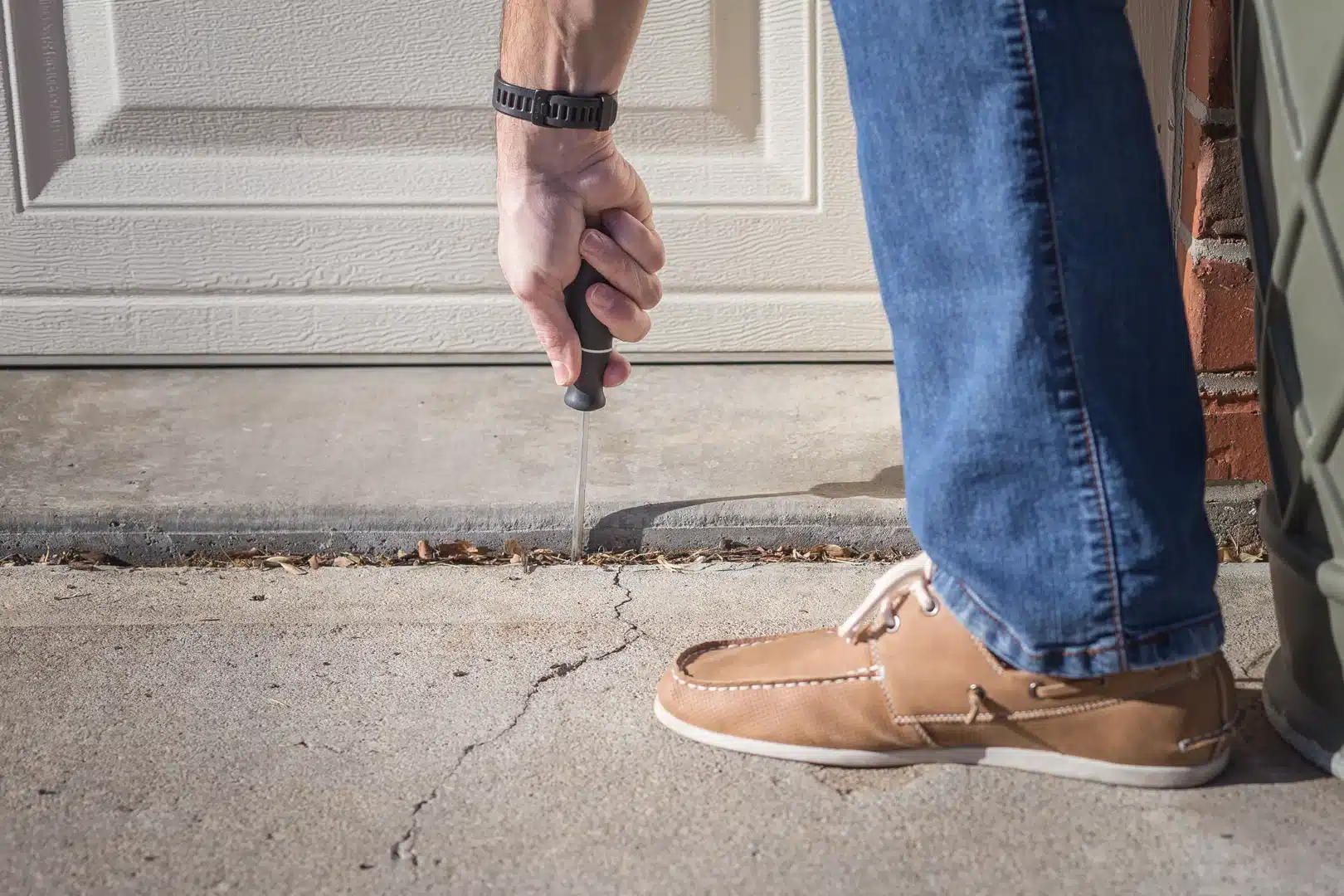
Looking for epoxy injection crack repair contractors near me? Start with local foundation repair specialists who will inspect the crack before recommending epoxy. Ask whether the crack is still moving, whether epoxy is suitable for it, and what the written estimate and warranty cover. If the wall is bowing or the crack is growing, ask for a structural assessment before agreeing to an injection repair.
I’m Trey McNamee, owner of FoamWorks Concrete Leveling, which specializes in polyurethane concrete leveling and concrete restoration across Northwest Ohio, Southeast Michigan, and Northeast Indiana. My 20-plus years in building-materials strategy and product development help me guide homeowners searching for epoxy injection crack repair contractors near me toward better questions and clearer estimates.
How to Find Qualified Epoxy Injection Crack Repair Contractors Near Me
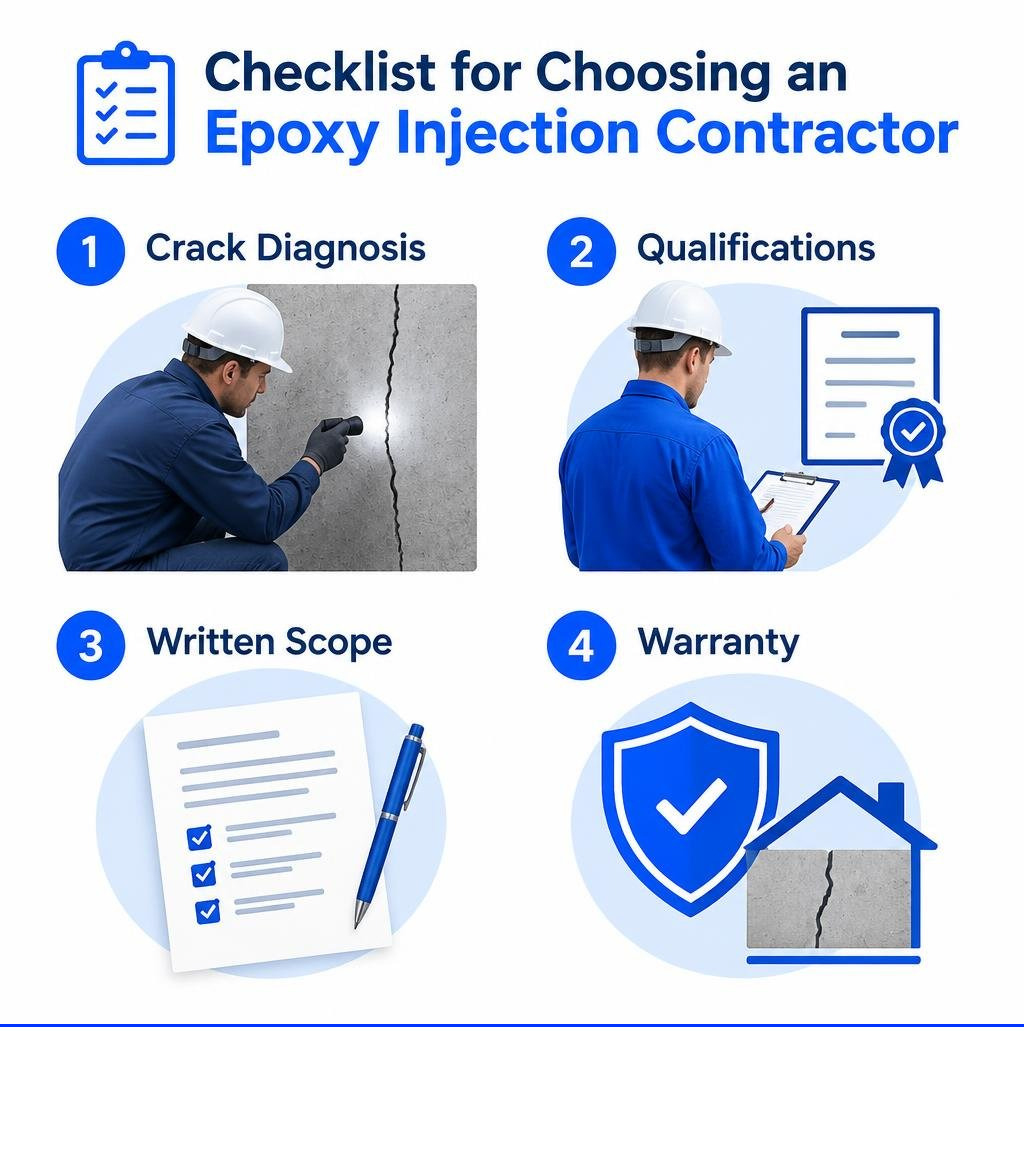
Finding reliable local contractors requires looking past flashy advertising and focusing on diagnostic skill. When homeowners begin finding the best solutions for foundation crack repair near me, they often discover that a simple surface patch won’t solve underlying movement.
A qualified specialist begins with a comprehensive structural assessment rather than rushing to sell an injection. They check for external drainage faults, measure wall deflection, and evaluate soil conditions across regions like Toledo, Ann Arbor, or Fort Wayne.
Always insist on written, itemized estimates that detail:
- Surface preparation methods
- Injection port spacing and specific resin formulations
- Cleanup procedures and port removal
- Comprehensive warranty details covering both materials and labor
Key Credentials to Look for in Epoxy Injection Crack Repair Contractors Near Me
When vetting prospective specialists, verify their foundational credentials:
- Liability Insurance and Workman’s Comp: Ensure the company carries full commercial general liability insurance to protect your property during pressure injection.
- Specialized Certifications: Look for teams trained in structural polymer application and deep crack bonding techniques.
- Transferable Lifetime Warranties: A reputable contractor stands behind their work with a warranty that transfers to future buyers if you sell your home.
- Verified Customer Feedback: Check independent reviews across local communities in Southeast Michigan and Northwest Ohio to gauge customer satisfaction and punctuality.
Critical Questions to Ask Contractors Before Signing a Contract
Before signing a proposal, ask these direct questions:
- Is this crack active or dormant? If the crack is actively moving, rigid epoxy alone may fail.
- What injection pressure will you use? Excessive pressure can blow out surface seals or force material past the footing into drainage weep tiles.
- How will you protect interior living areas and exterior weep systems? Uncontrolled injection can clog perimeter drainage pipes.
- What happens if a secondary crack develops nearby? Understand their policy if structural stress migrates.
Understanding Epoxy Crack Injection: How Structural Bonding Works
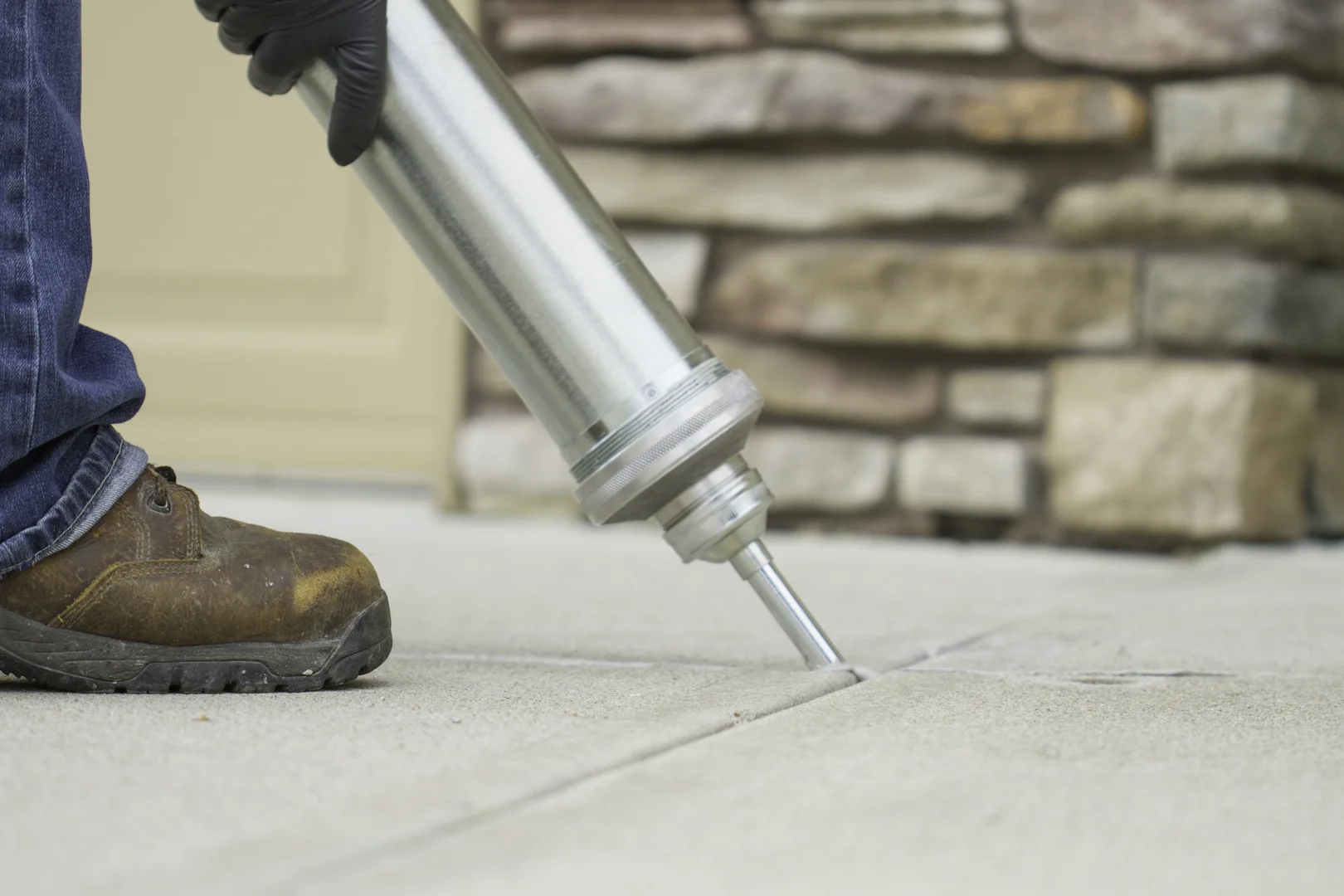
Epoxy injection is a specialized concrete repair method designed to weld fractured concrete back into a monolithic unit. By utilizing low-viscosity structural resins, technicians can penetrate hairline fractures as narrow as 0.002 inches.
To master structural concrete repair with modern epoxy injection methods, contractors utilize dual-component metering pumps or dual-cartridge dispensing systems. These systems maintain exact resin-to-hardener mixing ratios under controlled pressures ranging from 2 psi to 200 psi.
While structural epoxy resins boast tensile strengths around 7,000 psi, concrete itself typically resists only about 300 psi of direct tension. The epoxy creates a bond line stronger than the concrete itself, effectively restoring compressive and shear loads. Quality concrete crack sealing and repair relies entirely on ensuring the resin reaches the full depth of the wall.
Dormant vs. Active Cracks: When Is Epoxy Injection the Right Fix?
Understanding crack dynamics is critical before selecting an injection material. Before jumping in, ask yourself: are your concrete cracks a recipe for disaster?
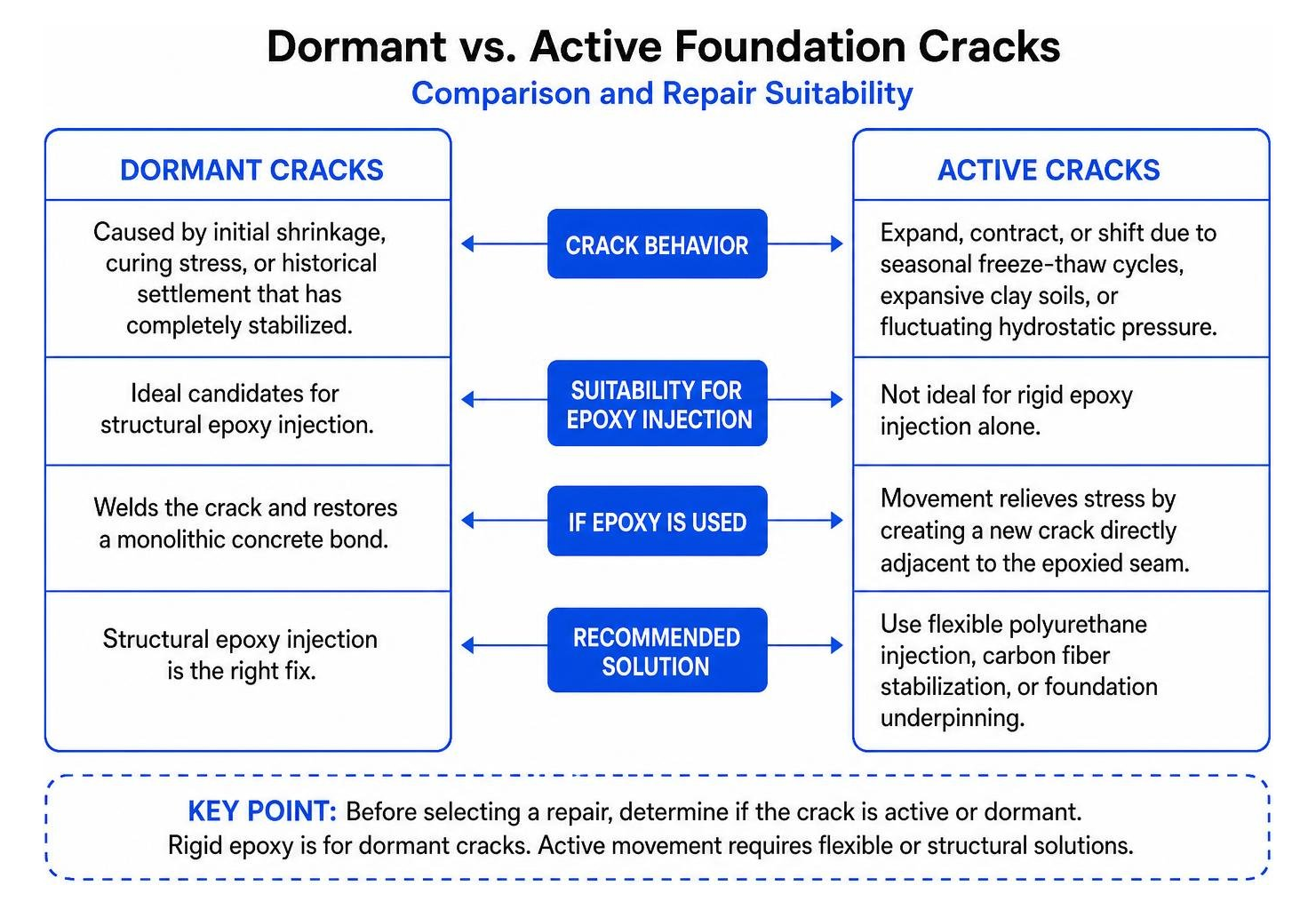
- Dormant Cracks: Cracks caused by initial concrete shrinkage, curing stress, or historical settlement that has completely stabilized. These are ideal candidates for structural epoxy injection.
- Active Cracks: Cracks that expand, contract, or shift due to seasonal freeze-thaw cycles, expansive clay soils, or fluctuating hydrostatic pressure.
If you inject rigid epoxy into an active crack, the foundation’s continued thermal or soil-driven movement will simply relieve stress by creating a new crack directly adjacent to the epoxied seam. Active movement calls for a flexible polyurethane injection approach that can accommodate ongoing structural movement rather than rigid bonding alone.
Step-by-Step Professional Foundation Crack Repair Process
Professional crack repair requires methodical execution to achieve full-depth penetration.
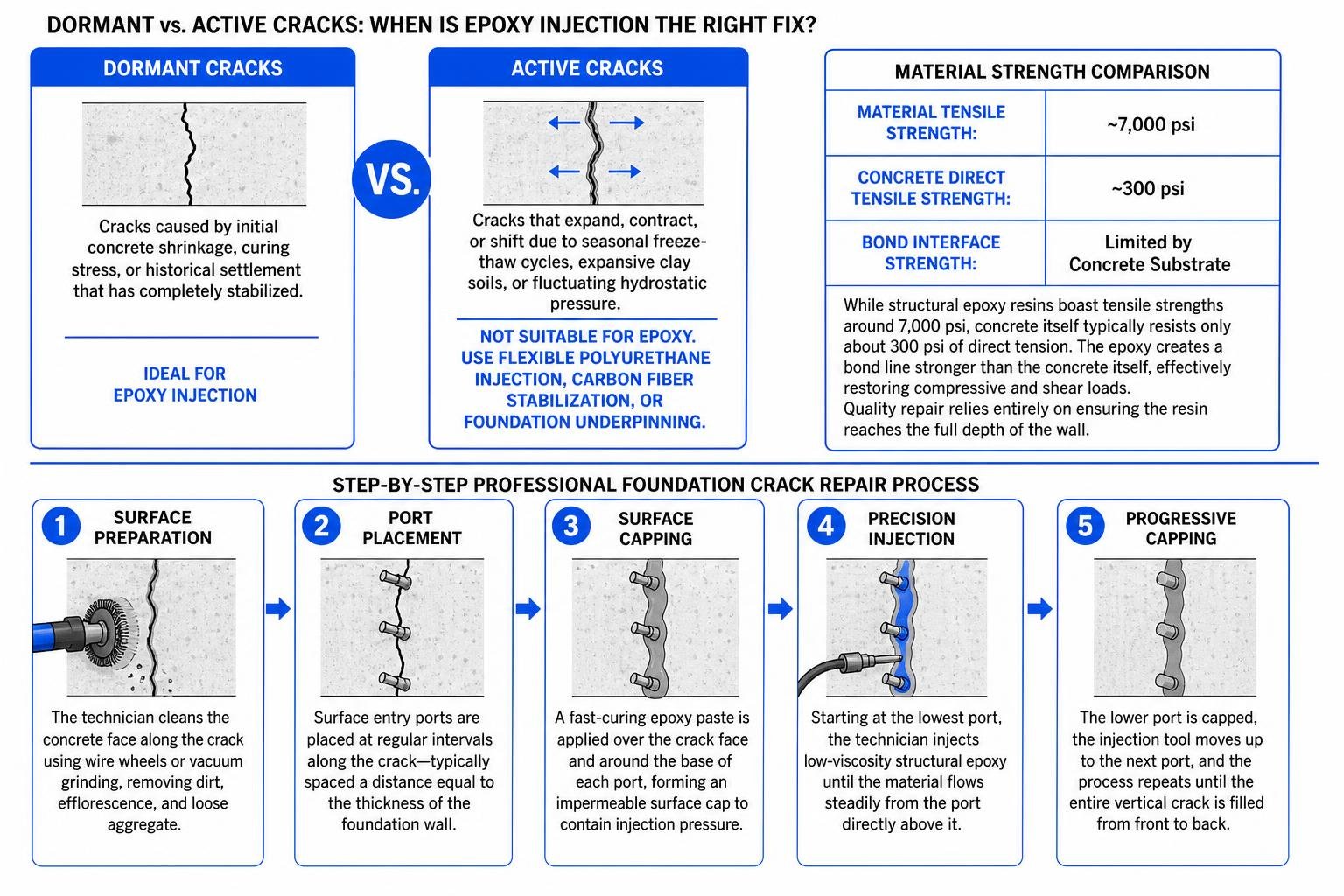
- Surface Preparation: The technician cleans the concrete face along the crack using wire wheels or vacuum grinding, removing dirt, efflorescence, and loose aggregate.
- Port Placement: Surface entry ports are placed at regular intervals along the crack—typically spaced a distance equal to the thickness of the foundation wall.
- Surface Capping: A fast-curing epoxy paste is applied over the crack face and around the base of each port, forming an impermeable surface cap to contain injection pressure.
- Precision Injection: Starting at the lowest port, the technician injects low-viscosity structural epoxy until the material flows steadily from the port directly above it.
- Progressive Capping: The lower port is capped, the injection tool moves up to the next port, and the process repeats until the entire vertical crack is filled from front to back.
- Port Removal & Finishing: Once cured, the ports and surface paste are knocked down or ground flush with the wall face.
For complex wall issues, property owners turn to dedicated cracked concrete repair services.
Why Expertise Matters for Contractors Near Me for Epoxy Injection Crack Repair
Injecting epoxy requires careful balance. If an inexperienced operator pumps at excessive pressure, they risk surface blowout or forcing resin into sub-slab gravel and perimeter weep tiles, causing expensive drainage clogs.
Proper diagnosis by experienced professionals ensures that your residential foundation repair addresses both water intrusion and structural load demands without secondary damage.
Limitations, Risks, and Necessary Supplemental Reinforcements
Epoxy injection has distinct mechanical limits:
- Stress Transfer: Rigid epoxy does not resolve active foundation movement; it simply transfers mechanical stress to adjacent unreinforced concrete.
- Water Infiltration During Curing: While moisture-tolerant epoxies exist, actively leaking cracks with running water are often better sealed with expanding polyurethane foams before structural bonding.
- Ongoing Monitoring: When walls show lateral deflection or bowing, a full structural evaluation is necessary to determine whether the wall can handle lateral earth pressures over time.
Cost, Timelines, and Warranty Expectations for Epoxy Crack Repair
- Single-Crack Project Costs: Injecting an isolated vertical basement crack generally ranges from $400 to $1,000 depending on wall thickness, access, and crack length.
- Linear Foot Pricing: Multi-crack or extensive repairs typically cost between $45 and $120 per linear foot.
- Project Timelines: A single-crack repair takes 1 to 2 hours of on-site labor. The epoxy fully cures to maximum strength within 24 hours.
- Warranty Coverage: Look for transferable lifetime warranties that guarantee the injected crack will remain structurally bonded and leak-free for the lifespan of the structure.
When sunken interior floors or exterior concrete slabs cause secondary foundation stresses, our polyurethane foam injection repairs uneven concrete for 30% to 50% less than full tear-out and replacement. Most slab lifting repairs wrap up in just a few hours with almost immediate usability, eliminating heavy excavation, lawn damage, and debris disposal fees.
Frequently Asked Questions About Epoxy Foundation Repair
Can epoxy injection restore the full structural strength of a foundation wall?
Yes. Cured structural epoxy possesses a tensile strength of roughly 7,000 psi and superior compressive strength compared to standard concrete. When injected completely through the fissure, it bonds the cracked sections back into a solid, monolithic concrete element capable of transferring structural loads.
Will an epoxy-injected crack ever reopen or leak again?
A properly injected dormant crack will not reopen along the bonded epoxy line because the resin adhesive strength exceeds the tensile strength of the concrete. However, if unaddressed soil pressure or foundation settling continues, a new crack may form in the weaker concrete nearby.
How long does an epoxy injection repair typically take to complete and cure?
Most single-crack residential repairs are completed in 1 to 2 hours. The epoxy resin achieves functional cure strength within a few hours and achieves full cure within 24 hours, at which point the surface can be painted or framed over.
Conclusion
Finding the right local contractor for foundation crack repair comes down to careful diagnostics, proper pressure control, and choosing the right material for your specific structural conditions. Whether your property needs rigid epoxy bonding for dormant cracks or slab stabilization, working with experienced specialists protects your home’s long-term value.
For uneven concrete slabs or settling walkways around your foundation, learn more about our high-density polyurethane foam injection and advanced concrete leveling methods to restore stability with lifetime warranty protection. Contact us today for a free estimate across Northwest Ohio, Southeast Michigan, and Northeast Indiana.