
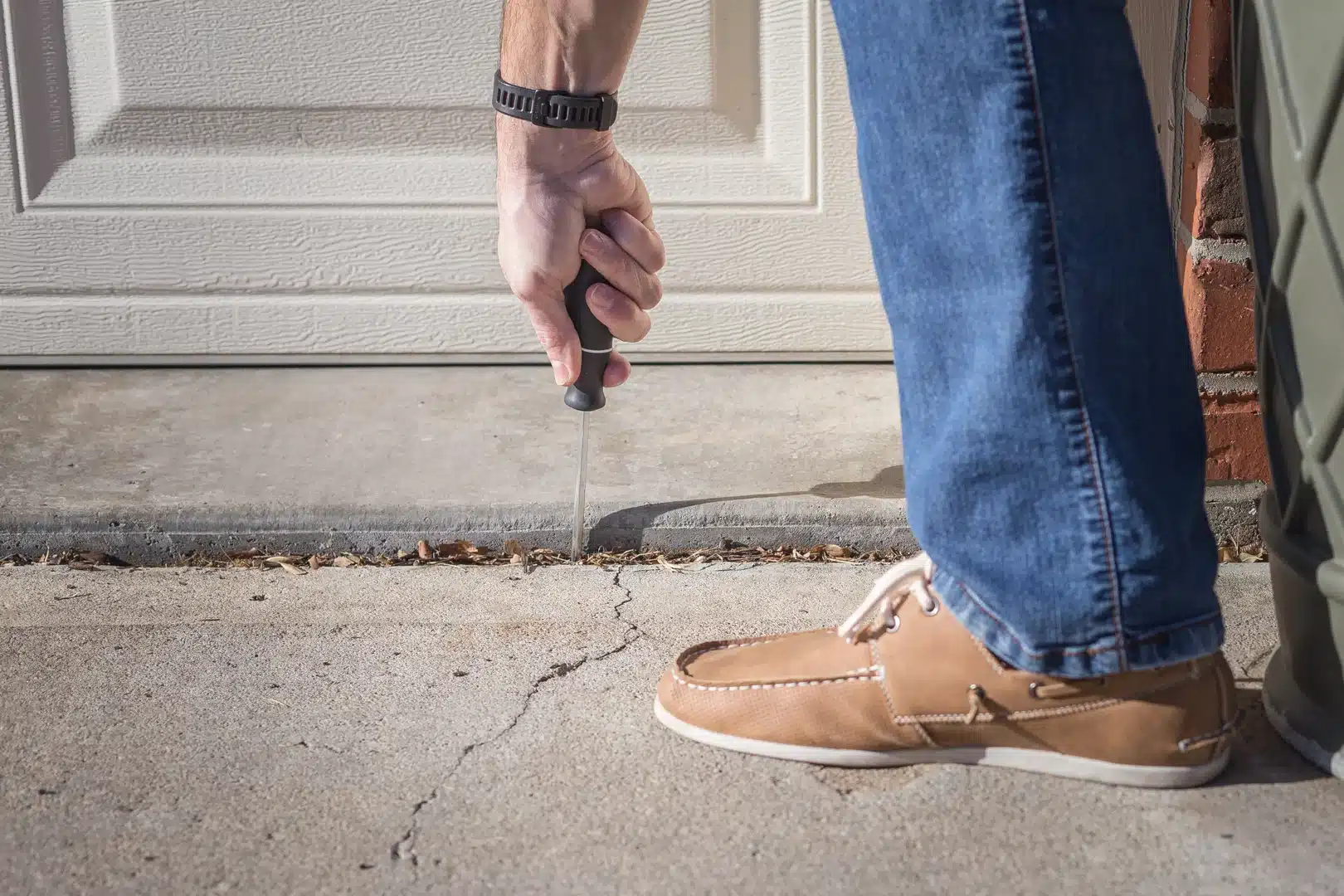
Foundation Repair Starts With the Right Diagnosis
Foundation repair means finding out why a home or concrete slab is moving, then using the right solution to stabilize it. Watch for cracks that grow, sticking doors or windows, sloping floors, gaps near trim, bowing walls, or concrete that sinks toward the house. The right repair may involve deep piers for structural settlement, wall reinforcement for inward pressure, or polyurethane foam injection to lift and support settled concrete slabs.
Not every crack means a major structural problem. In fact, about 20% of homes inspected for foundation concerns do not need structural repair. A careful inspection should separate normal cosmetic aging from active movement caused by shifting soil, poor drainage, drought, erosion, or freeze-thaw cycles.
For sunken driveways, patios, walkways, garage floors, and some interior slabs, polyurethane foam leveling can be a fast, low-disruption option. FoamWorks Concrete Leveling uses this method to repair uneven concrete for 30% to 50% less than tear-out and replacement. Most foam repairs take only a few hours, with little excavation and surfaces ready for use soon after.
I am Trey McNamee, owner of FoamWorks Concrete Leveling, with more than 20 years of experience in building-material strategy, product development, and customer-focused repair solutions. In this guide, I will break down foundation repair methods, warning signs, costs, and the questions to ask before choosing a solution.
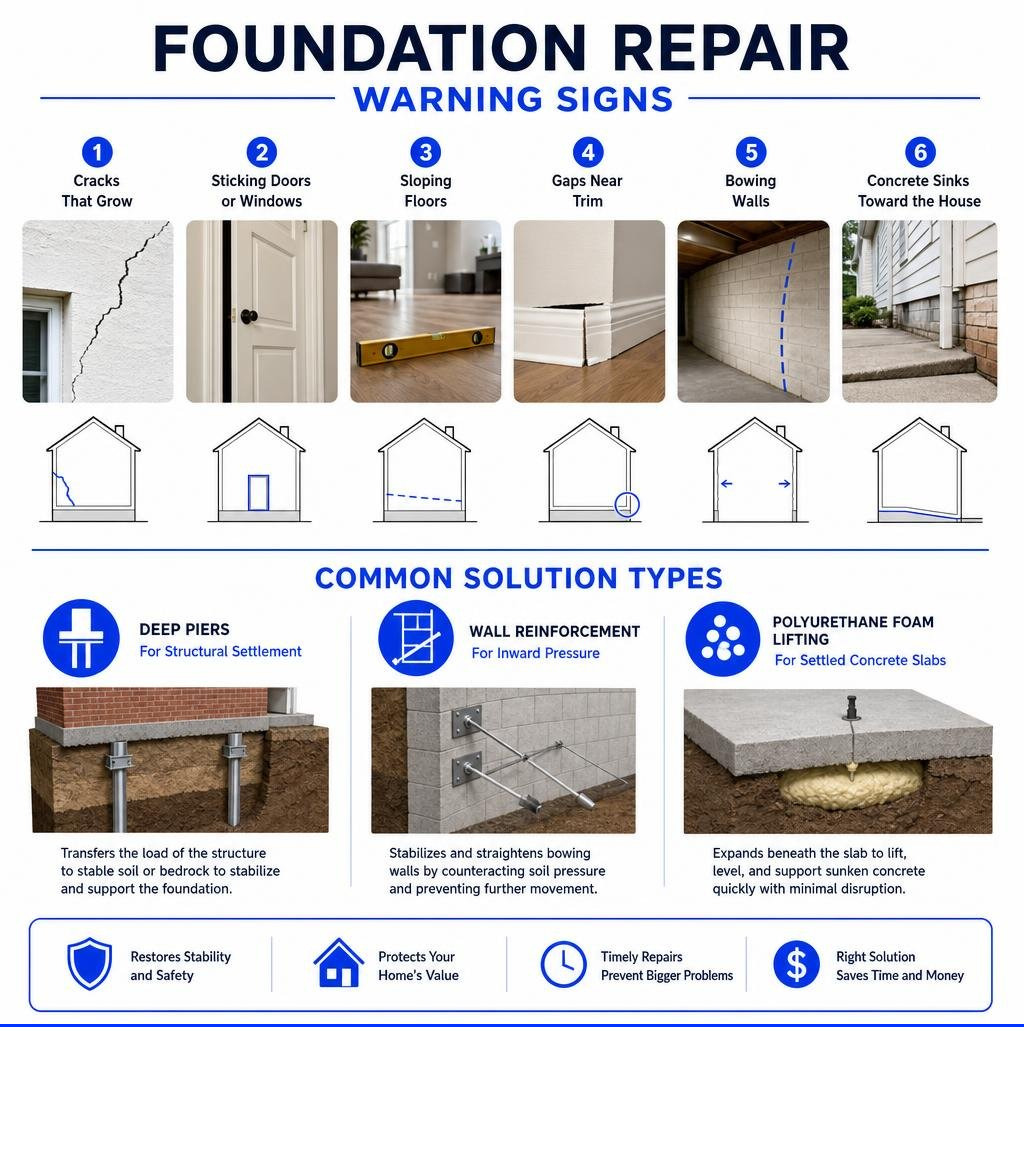
Basic foundation repair terms:
Diagnosing Structural Movement and Environmental Causes
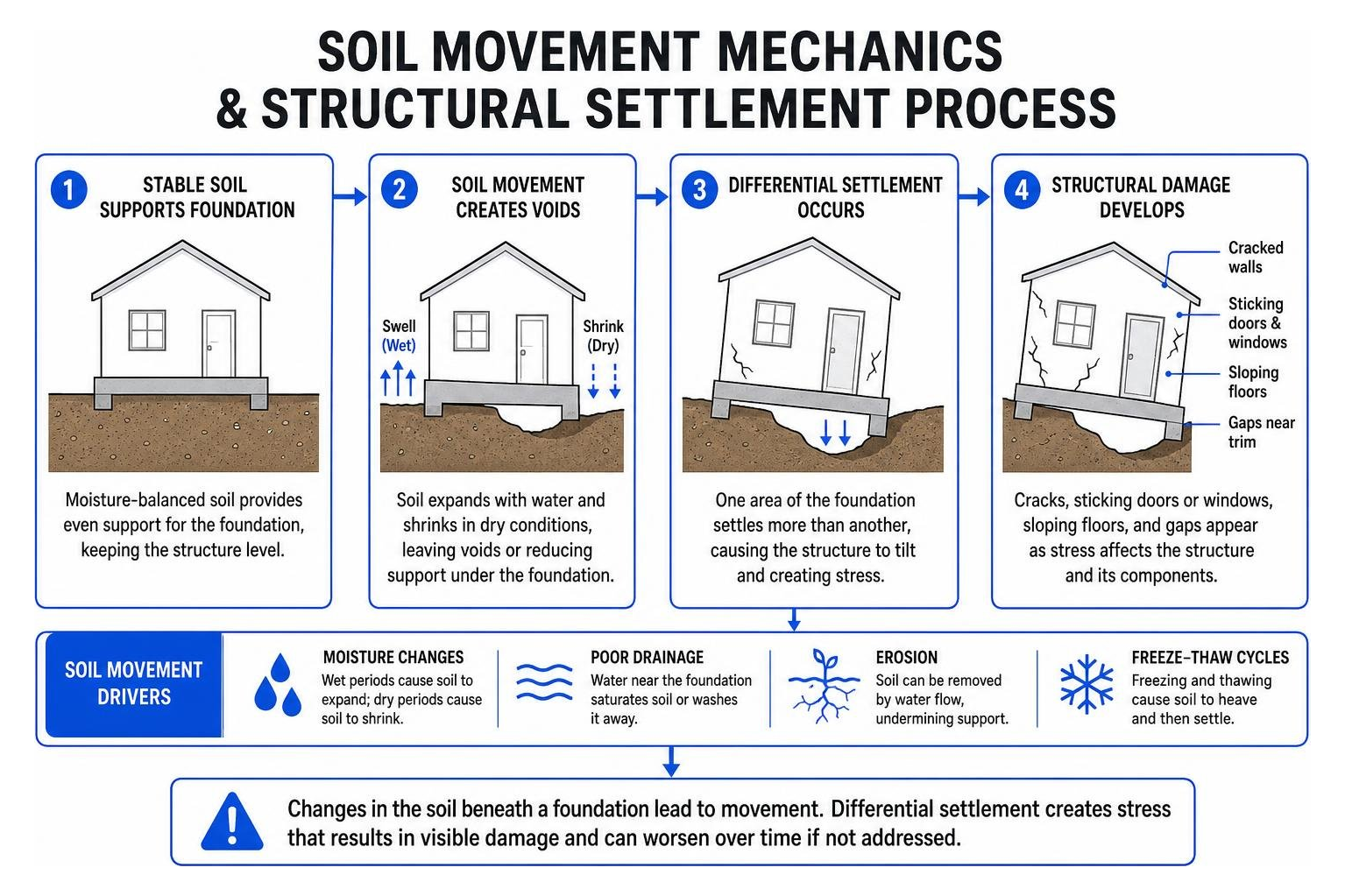
Every foundation rests on the earth, which means any change in the soil beneath your footings or slab directly impacts the stability of your home. Structural movement generally falls into two categories: uniform settlement (where the entire structure sinks evenly, often causing minor issues) and differential settlement. Differential settlement occurs when one section of the foundation drops while another stays supported, placing immense twisting and shearing stress on framing, drywall, plumbing lines, and masonry.
Recognizing the unmistakable signs your concrete slab is settling allows homeowners to intervene before minor structural shifts become catastrophic failures. When the earth under a slab compacts or washes away, interior partition walls may separate from ceilings, floors can slope noticeably, and doors and windows begin to stick in their frames.
Geotechnical Drivers of Settlement
Soil is dynamic, expanding and contracting based on weather, moisture, and local geology. Understanding the primary causes of concrete problems helps identify why foundations shift:
- Expansive Clay Soils: Clay particles absorb water quickly and swell dramatically during wet seasons. In periods of dry weather or severe drought, this clay shrinks and pulls away from foundation footings, leaving unsupported voids.
- Freeze-Thaw Cycles: Water expands by approximately 9% when freezing. When moisture accumulates beneath shallow concrete footings and uninsulated slabs, repeated winter freezing forces the foundation upward (frost heave), while spring thaws cause abrupt, uneven dropping.
- Hydrostatic Pressure: Poor surface drainage, missing downspout extensions, or saturated backfill create heavy lateral water pressure against exterior basement walls, forcing them inward.
- Poor Soil Compaction: When homes are constructed on uncompacted fill soil, the ground naturally consolidates under the heavy structural load over time, resulting in deep, uneven settlement.
- Under-Slab Plumbing Leaks: Undetected freshwater or sewer leaks beneath a slab wash away structural sub-base soils or hyper-saturate localized clay, causing isolated floor drops.
Interior and Exterior Warning Signs
Early diagnosis saves thousands of dollars in remediation costs. While minor hairline shrinkage cracks are common in newly cured concrete, distinct patterns indicate active structural settlement:
- Stair-Step Cracks in Exterior Brick or Block: Cracks that step diagonally along mortar joints indicate that one corner or section of the foundation footing is sinking.
- Diagonal Drywall Fissures: Cracks extending from the corners of doorframes and windows toward the ceiling point to frame racking caused by uneven foundation support.
- Chimney Separation: Because exterior chimneys rest on separate, heavily loaded footings, they often tilt away from the siding when underlying soil compresses.
- Bowing, Bulging, or Shearing Basement Walls: Inward movement along the middle of a foundation wall or horizontal cracks along mortar lines signify excessive lateral earth pressure.
- Sloping and Uneven Floors: Dropping subfloors or interior slabs indicate failing support posts, rotted sill plates, or void formation beneath the concrete slab.
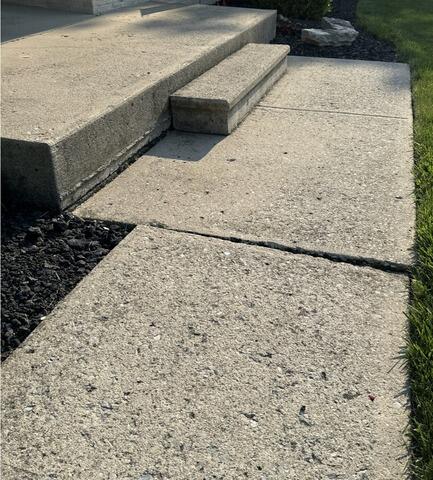
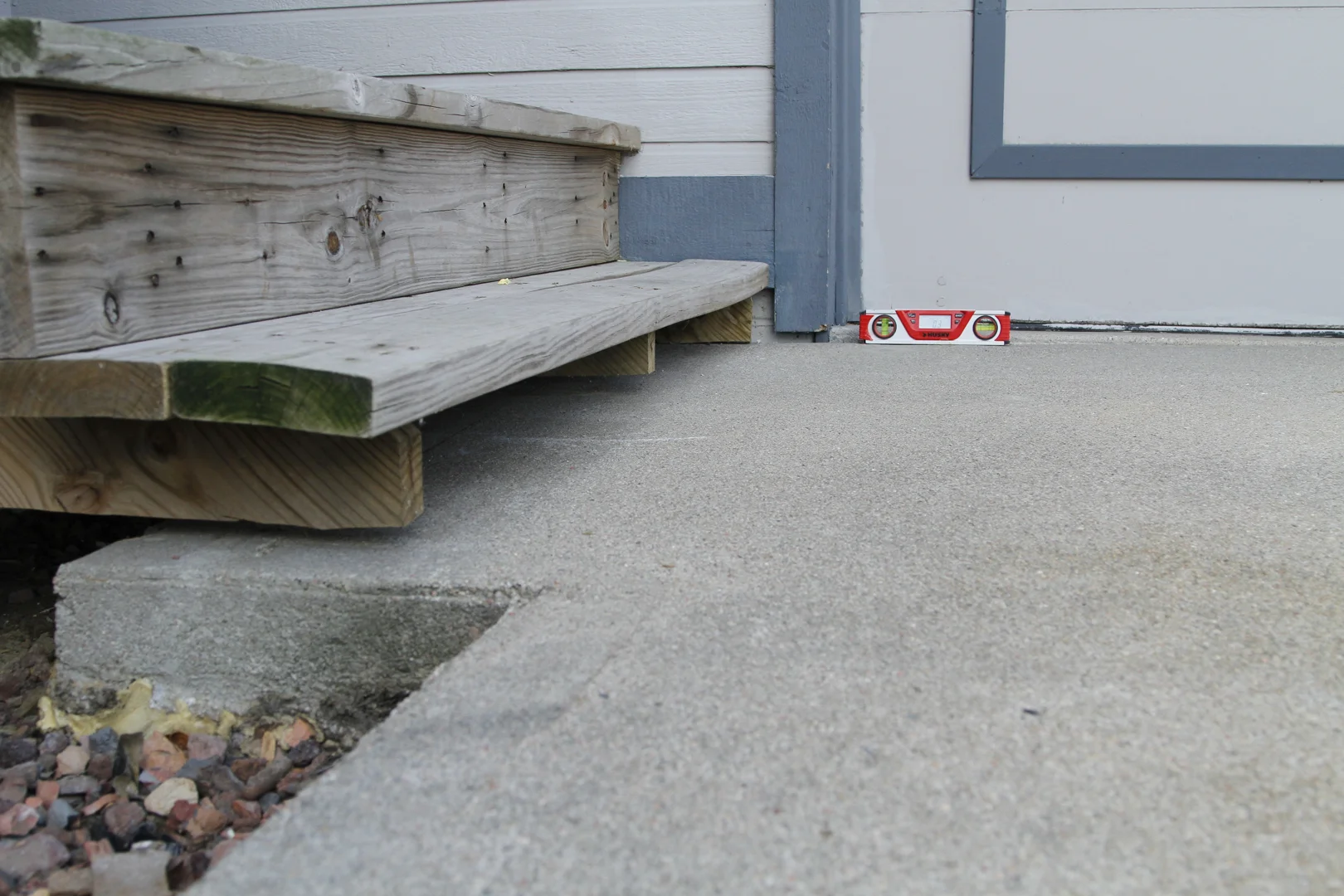
- Surface Fractures and Sinking Slabs: Visible cracked concrete on garage floors, basements, and porches often reveals underlying soil erosion or settlement.
Core Methods in Modern Foundation Repair
Depending on whether a home is built on a poured concrete basement, a crawl space with pier-and-beam construction, or a slab-on-grade foundation, repair strategies vary significantly. Modern geotechnical engineering provides targeted methods to stabilize deep structural footings, level flat concrete surfaces, and reinforce compromised walls.
Deep Piering Systems for Structural Foundation Repair
When the shallow soil beneath a home cannot support its load, deep piering transfers the weight of the structure down to load-bearing strata or solid bedrock.
- Steel Push Piers: Driven hydraulically through high-strength steel brackets bolted to the foundation footing. Push piers use the weight of the home as resistance, driving individual steel pipe sections dozens of feet down until reaching dense load-bearing strata. Once seated, synchronized hydraulic manifolds lift the foundation back toward level.
- Helical Piers: Engineered steel shafts with welded helical screw flights that are mechanically rotated deep into the ground. These are ideal for lighter structures, porch additions, and areas with unstable, sandy, or loose soils where push piers cannot gain sufficient resistance.
- Segmented Concrete Pilings: Precast concrete cylinders pressed into the ground using hydraulic jacks. While cost-effective in certain soil conditions, they require uniform alignment along internal cables or steel pipes to prevent shifting under lateral loads.
- Depth Clauses: In deep-piering contracts, contractors include depth clauses detailing the price per foot (typically $20 to $30 per foot) if piers must penetrate deeper than initial geotechnical estimates to reach competent bedrock.
Slab Lifting and Polyurethane Foam Injection
For sinking flatwork, attached garage slabs, porches, and interior slab-on-grade floors, structural piering is often unnecessary. High-density expanding polymer injection, also called polyurethane foam concrete leveling, provides a fast, minimally invasive alternative.
During this process:
- Technicians drill penny-sized holes (roughly 5/8-inch in diameter) through the settled slab.
- Specialized injection ports deliver a two-part liquid polyurethane formulation beneath the concrete.
- The liquid expands rapidly into an ultra-dense, closed-cell foam, filling sub-slab voids, compacting weak soil, and lifting the slab back into alignment.
- The polyurethane is hydrophobic, meaning it repels water, will not wash away during heavy rains, and cures to full load capacity within 15 to 30 minutes.
Compared to traditional mudjacking—which uses heavy cement-and-topsoil slurry through large 2-inch holes and often breaks down after repeated freeze-thaw cycles—polyurethane foam adds virtually no dead-weight load to fragile soils.
Wall Reinforcement and Soil Retention
When expansive soil or hydrostatic pressure pushes basement walls inward, stabilization systems restore structural balance:
- Carbon Fiber Straps: High-tensile carbon fiber grid straps bonded to the interior masonry wall with epoxy resin prevent further inward bowing without taking up floor space.
- Steel I-Beams (PowerBraces): Heavy-gauge vertical steel beams secured to the concrete floor slab and anchored to upper floor joists to halt severe lateral wall movement.
- Helical Tiebacks and Wall Anchors: Steel plates installed inside the basement tied to anchor plates embedded deep in virgin soil outside the home. These assemblies stabilize walls and can be tightened over time to pull tipped walls back plumb.
- Adjustable Crawl Space Jacks: Heavy-duty steel support columns installed in crawl spaces to reinforce sagging subfloor joists and level bouncy interior floors.
Financial Breakdown and Cost Influencing Factors
Foundation remediation costs vary widely depending on the depth of unstable soil, structural square footage, job site accessibility, and the chosen engineering approach. Understanding standard cost tiers helps homeowners plan structural repairs effectively.
Cost Tiers for Foundation Repair and Budget Planning
Nationwide, standard foundation repairs average just over $5,000, with typical projects falling between $2,200 and $8,100. However, project costs can range from minor surface crack maintenance to complete structural rebuilds:
| Repair Tier | Scope of Work | Estimated Cost Range |
|---|---|---|
| Minor / Cosmetic | Hairline crack epoxy injection, downspout adjustments, localized sealing | $250 – $800 |
| Moderate Structural | Carbon fiber wall bracing, single-corner piering (2–4 piers), polyjacking | $1,000 – $12,000 |
| Major Remediation | Full-perimeter steel/helical piering, extensive excavation, house leveling | $15,000 – $35,000 |
| Complete Replacement | House lifting, full foundation excavation, new poured walls and footings | $20,000 – $100,000+ |
Specific methods carry individual cost considerations:
- Steel Push Piers: Averages around $15,000 to $25,000 for a standard home, running roughly $1,500 per pier installed.
- Helical Piers: Typically costs between $20,000 and $31,500+ for a complete residential system, averaging $1,500 to $2,500 per pier plus engineering and labor.
- Concrete Piering: Ranges between $20,000 and $30,000 depending on excavation requirements and curing conditions.
- Polyurethane Foam Jacking: Typically costs between $900 and $7,500 depending on the square footage of the settled slab, offering a major discount compared to full tear-out and replacement.
- Mudjacking: Costs $700 to $3,200, though its lifespan is often limited to 2 to 5 years in wet or freezing climates.
When evaluating sunken flatwork or settled interior slabs, foam injection can be completed for 30% to 50% less than full concrete replacement. By avoiding heavy demolition, homeowners save on labor, disposal fees, and lawn restoration.
Evaluating Inspections, Warranties, and Insurance Coverage
Before signing a contract, understand how inspections, warranties, and insurance policies work:
- Structural Engineer vs. Contractor Inspection: While most foundation contractors offer free estimates, hiring an independent residential structural engineer ($500 to $1,500+) provides an objective assessment without sales pressure. When hiring an engineer, verify their credentials through the National Council of Examiners for Engineering and Surveying (NCEES) licensing board. If expansive clay or deep stability issues are present, a comprehensive soil engineering report ($500 to $3,000) provides precise geotechnical data.
- Insurance Limitations: Standard homeowners insurance policies generally exclude foundation settlement, soil expansion, and deferred maintenance. Coverage typically applies only if the foundation damage is directly caused by a sudden covered peril, such as an internal plumbing line explosion or severe storm impact.
- Lifetime Transferable Warranties: Reputable foundation contractors offer lifetime transferable warranties on deep piering, wall anchor systems, and polyurethane lifting. A transferable warranty protects your investment and provides written assurance to prospective buyers when selling the home.
Frequently Asked Questions About Residential Foundation Issues
Can I stay in my home during foundation repairs?
Yes, in the vast majority of cases, you can safely stay in your home during foundation repairs. Most residential stabilization projects—including exterior hydraulic piering, wall anchor installations, and polyurethane foam leveling—are performed from the exterior or contained within unfinished basements and crawl spaces.
Contractors isolate work zones to minimize dust and noise. Structural repairs rarely require utility shutoffs for more than a few hours. Temporary relocation is typically necessary only during massive structural overhauls, such as whole-house lifting, complete foundation teardowns, or extensive deep interior piering beneath finished living areas.
How long does a typical repair project take?
Repair timelines depend heavily on the chosen remediation method:
- Polyurethane Foam Leveling: 1 to 4 hours. The polyurethane material cures within minutes, allowing immediate use of driveways, walkways, and interior slabs.
- Basement Wall Reinforcement (Carbon Fiber / Beams): 1 to 2 days. Carbon fiber installation and steel beam bracing require minimal excavation.
- Exterior Push or Helical Piering: 2 to 5 days. Piering requires hand or mini-excavator digging around footings, hydraulic driving, system testing, foundation lifting, and backfilling.
- Total Foundation Replacement: 3 to 6+ weeks. Involves extensive municipal permitting, utility disconnections, structural shoring, excavation, concrete pouring, and multiple curing stages.
What financing options are available for foundation repair?
Because foundation movement requires prompt intervention to prevent compounding damage, several financing routes can help spread out project costs:
- Contractor Financing Programs: Many professional foundation contractors offer same-as-cash 0% interest promotional financing for 12 to 24 months, as well as reduced-rate long-term plans with approved credit.
- Home Equity Lines of Credit (HELOC) & Home Equity Loans: These options allow homeowners to borrow against accrued home equity at lower interest rates, making them suitable for mid-to-high tier structural piering jobs.
- Unsecured Personal Home Improvement Loans: Fast-funding loans that do not require home equity, making them helpful for immediate emergency repairs.
- Phased Project Planning: For properties requiring extensive piering along multiple elevations, engineers can prioritize the most compromised elevations first, allowing homeowners to budget the remaining stabilization work in structured phases.
Conclusion
A damaged or settling foundation does not resolve itself over time. What begins as a minor step crack in exterior brick or a slightly uneven floor slab can gradually compound into ruptured plumbing lines, severe wall shearing, and diminished property value. Addressing structural movement early protects your home’s framing and keeps repair costs manageable.
Whether your home requires deep load-bearing steel piers to address deep soil settlement, carbon fiber reinforcement to resist lateral earth pressure, or high-density foam injection for interior slab leveling, accurate diagnosis is the first step toward long-term structural stability.
If you are dealing with sunken driveways, shifting walkways, uneven patio slabs, or settling interior concrete floors, reach out to our experienced team at FoamWorks Concrete Leveling for a comprehensive, free evaluation. Our precision polyurethane foam injection repairs uneven concrete quickly and cleanly, restoring stability and safety to your property.