
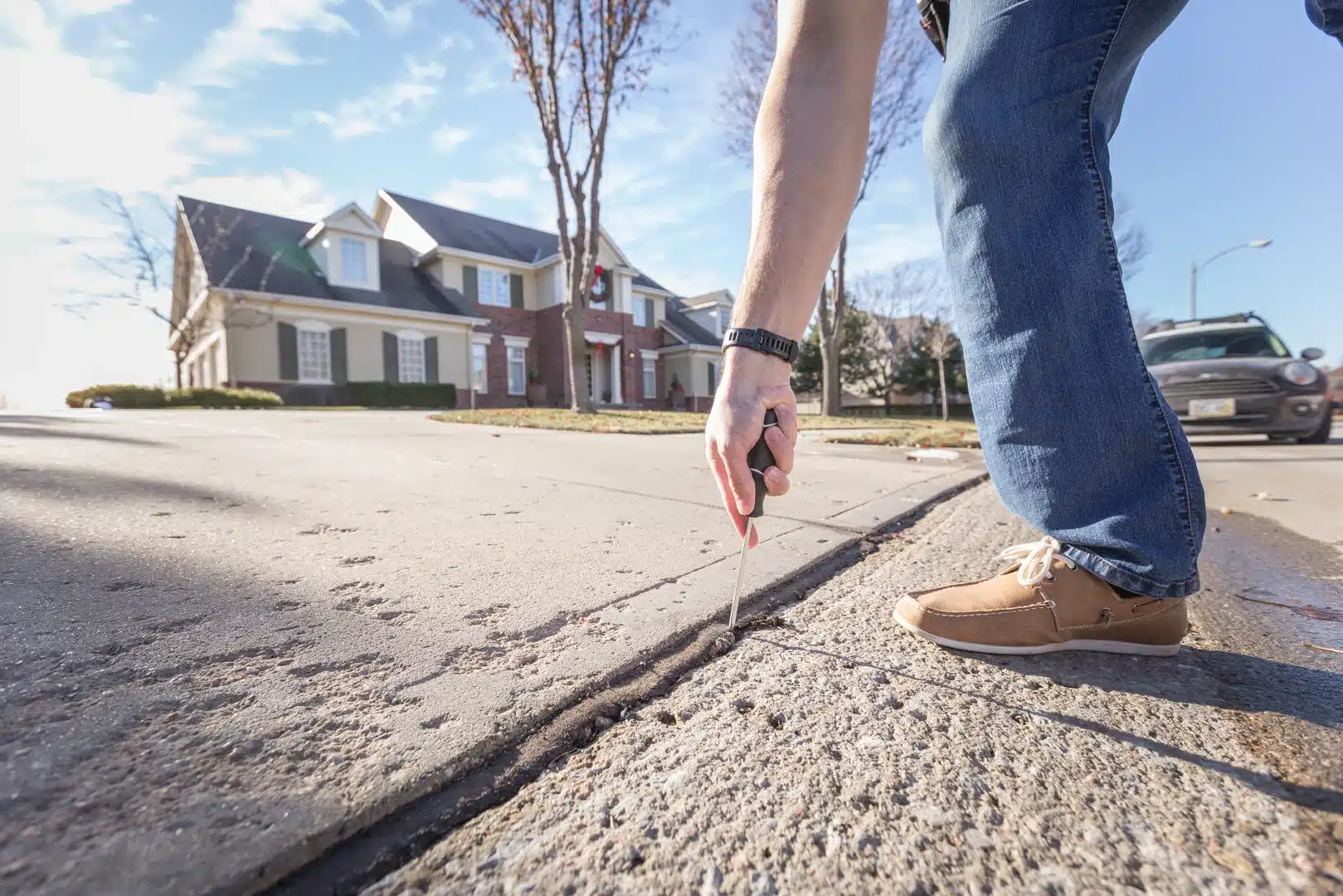
How to Choose a Local Cement Repair Contractor
When searching for cement repair contractors near me, start with three checks: ask how they’ll diagnose the damage, verify their insurance and any required local credentials, and get a written estimate that explains the repair method and warranty. For a sinking slab, ask whether it can be leveled before agreeing to a full replacement.
That matters in Northwest Ohio, Southeast Michigan, and Northeast Indiana, where uneven driveways and patios can become trip hazards. A dependable contractor should explain what caused the problem, not just offer to cover the visible damage.
I’m Trey McNamee, owner of FoamWorks Concrete Leveling. Our team brings more than 30 years of combined industry experience to helping homeowners who search for cement repair contractors near me make a sound choice. Here are the traits to look for.
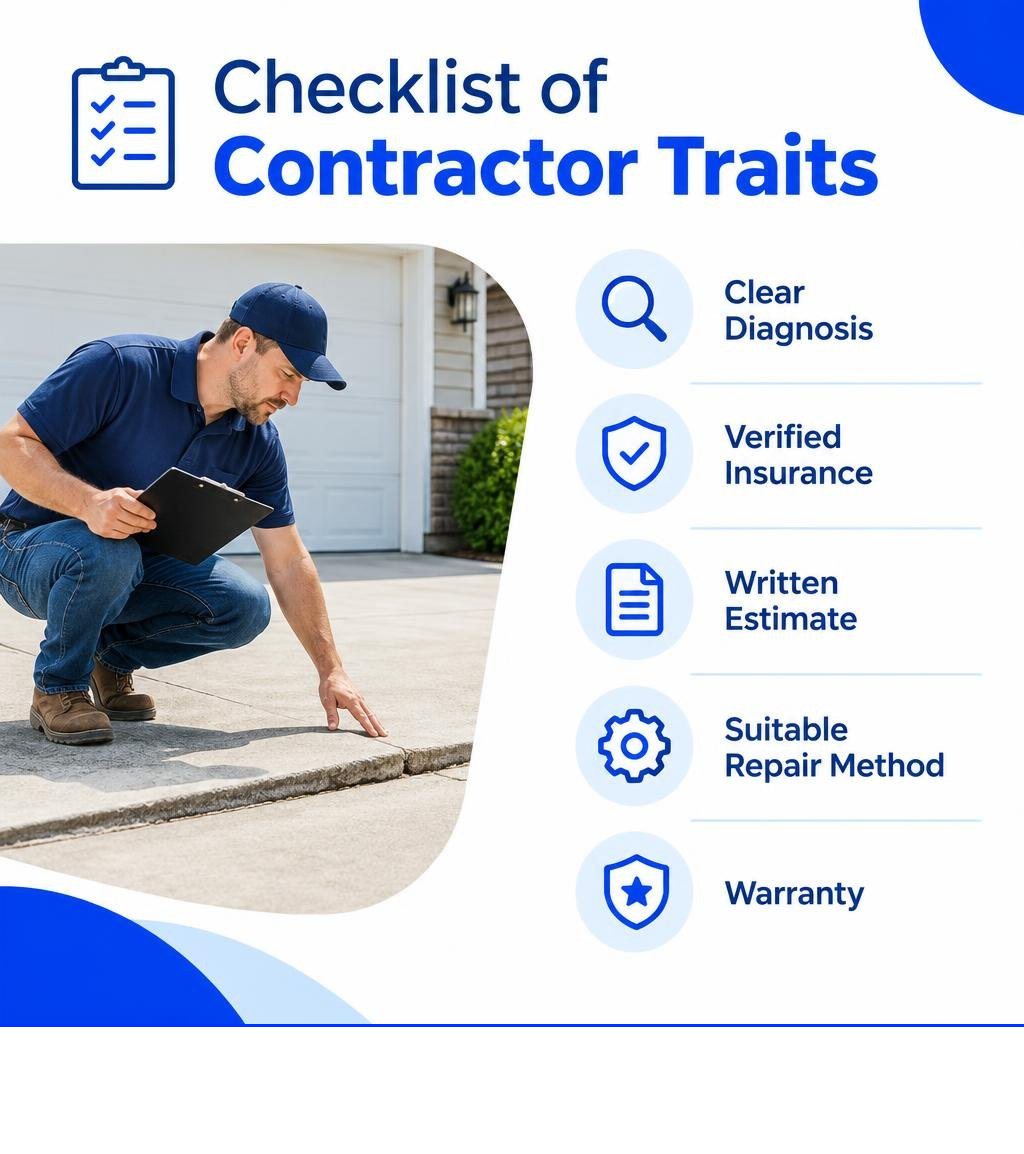
Simple cement repair contractors near me glossary:
A useful first conversation should stay focused on the condition of the concrete and the repair approach being proposed. Ask the contractor to walk through the visible symptoms, the likely cause beneath the slab, and the reason the recommended method fits that condition. A clear explanation helps homeowners separate a lasting repair plan from a quick cosmetic fix.
It also helps to confirm what the written estimate includes before work begins. The estimate should identify the affected area, the expected repair method, and the warranty. That information gives homeowners a practical way to compare local contractors while keeping the decision centered on safety, durability, and the condition of the existing concrete.
A contractor who explains these details clearly gives homeowners a stronger starting point for a confident decision.
1. Specialized Slab-Leveling Repair Methods
Finding damaged concrete around your home or commercial building can be frustrating. Whether it is a sinking pool deck in Toledo, a cracked front walkway in Fort Wayne, or a sunken garage entrance in Ann Arbor, your first question is usually: Can this be fixed, or do I have to tear it all out?
A dependable contractor always begins with an honest structural assessment. Many contractors default to tearing out and repouring concrete simply because that is the only service they sell. However, genuine specialists evaluate whether the slab is dealing with cosmetic surface wear, soil-related settlement, or terminal structural failure.
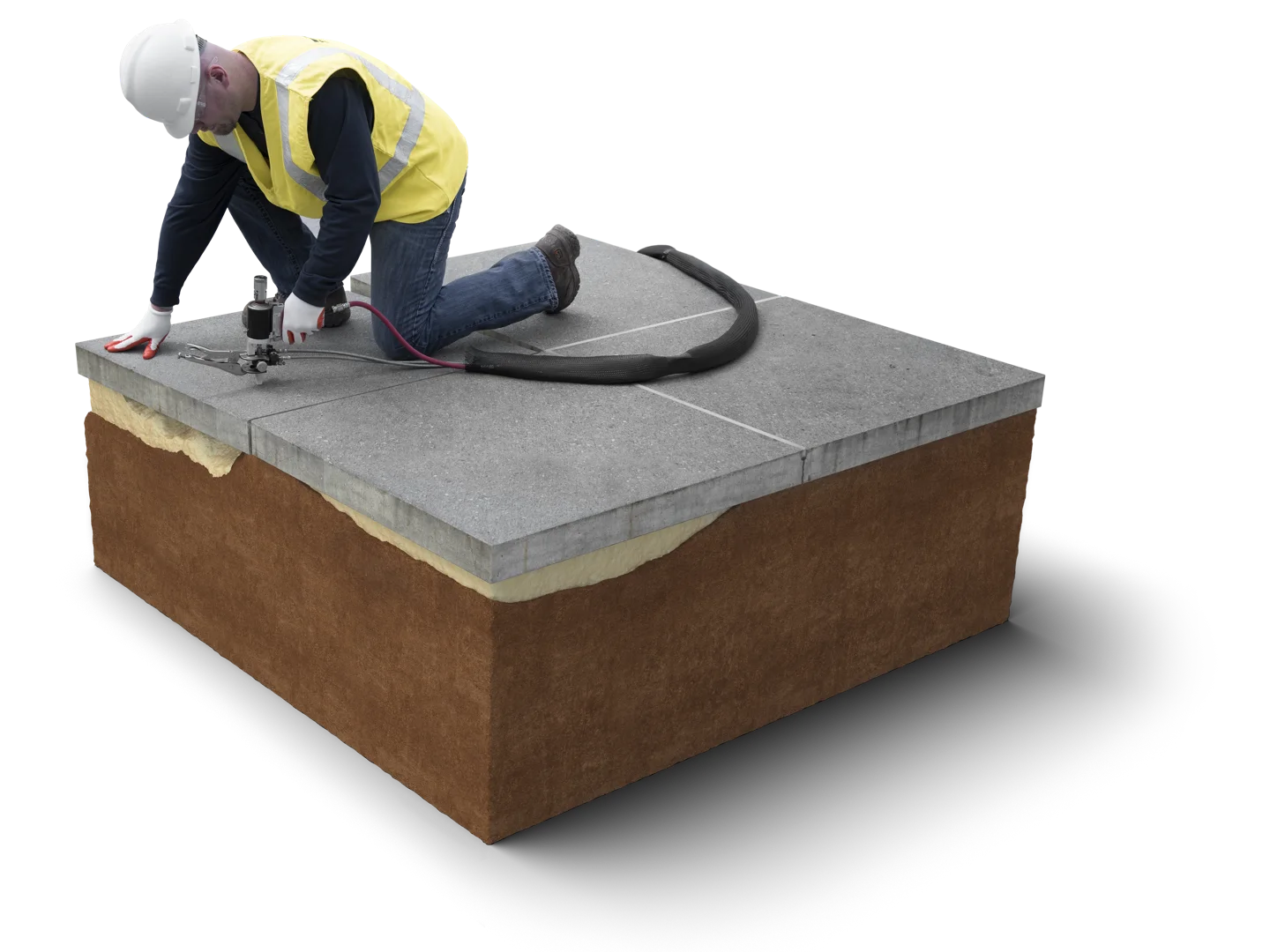
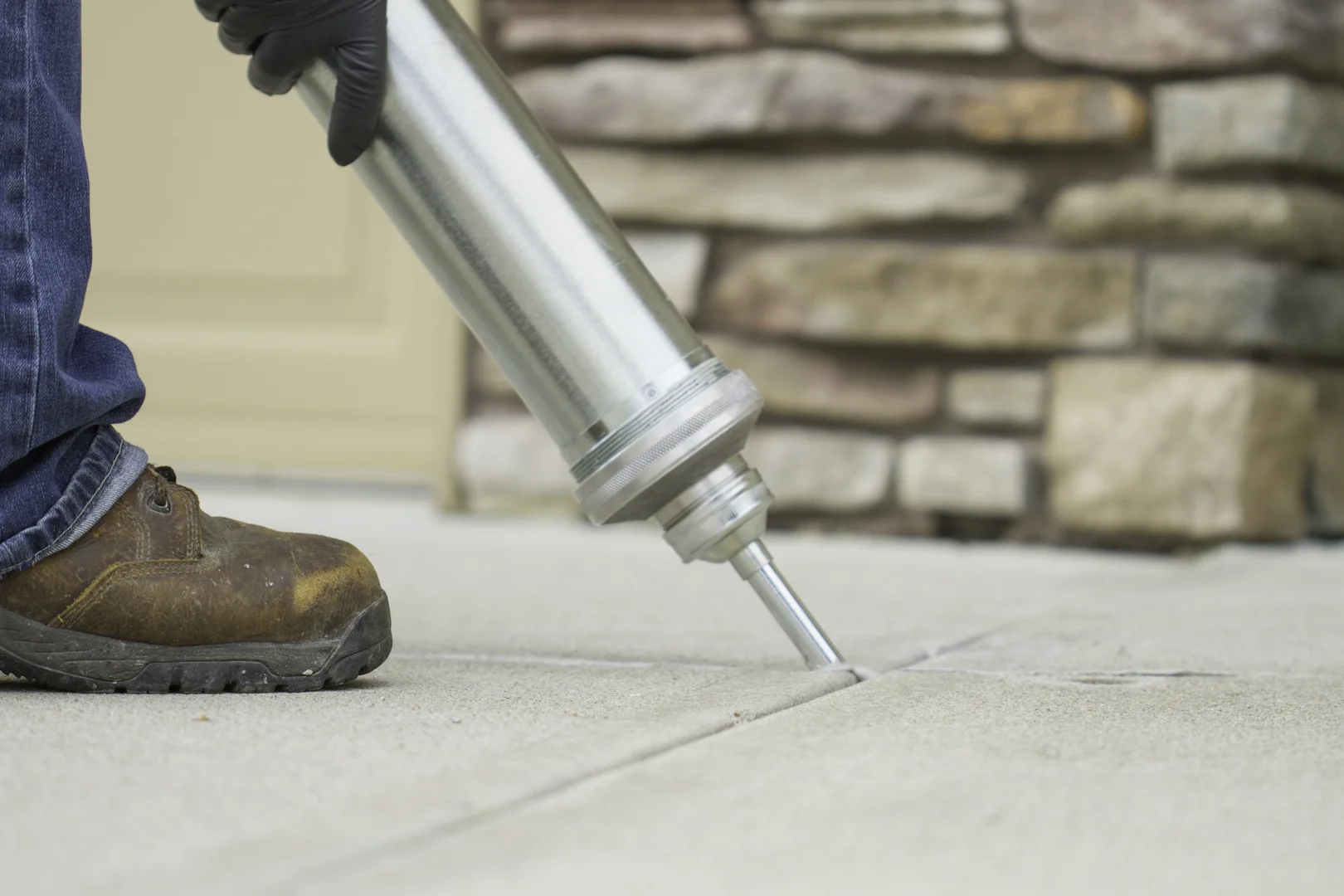
Instead of enduring disruptive demolition, high-density polyurethane injection allows us to lift and stabilize settled slabs cleanly. We inject expanding foam underneath the sunken slab through dime-sized ports. The material expands, fills sub-surface voids, and raises the surface back to grade in a matter of minutes.
Professional concrete repair can address sunken or uneven slabs without disruptive demolition. We use polyurethane foam injection to lift and stabilize settled concrete, helping homeowners avoid the mess and expense of unnecessary tear-out. Most repairs are completed in just a few hours, and the surface can be used almost immediately. Because there is no need for heavy excavation, the process also reduces landscape damage, labor costs, debris removal, and disposal fees that come with replacing concrete.
Accurate Diagnosis: Slab-Leveling Decision Factors
Concrete problems generally fall into three categories: surface degradation (spalling/flaking), cracking caused by thermal movement, or settlement caused by subbase erosion and poor soil compaction.
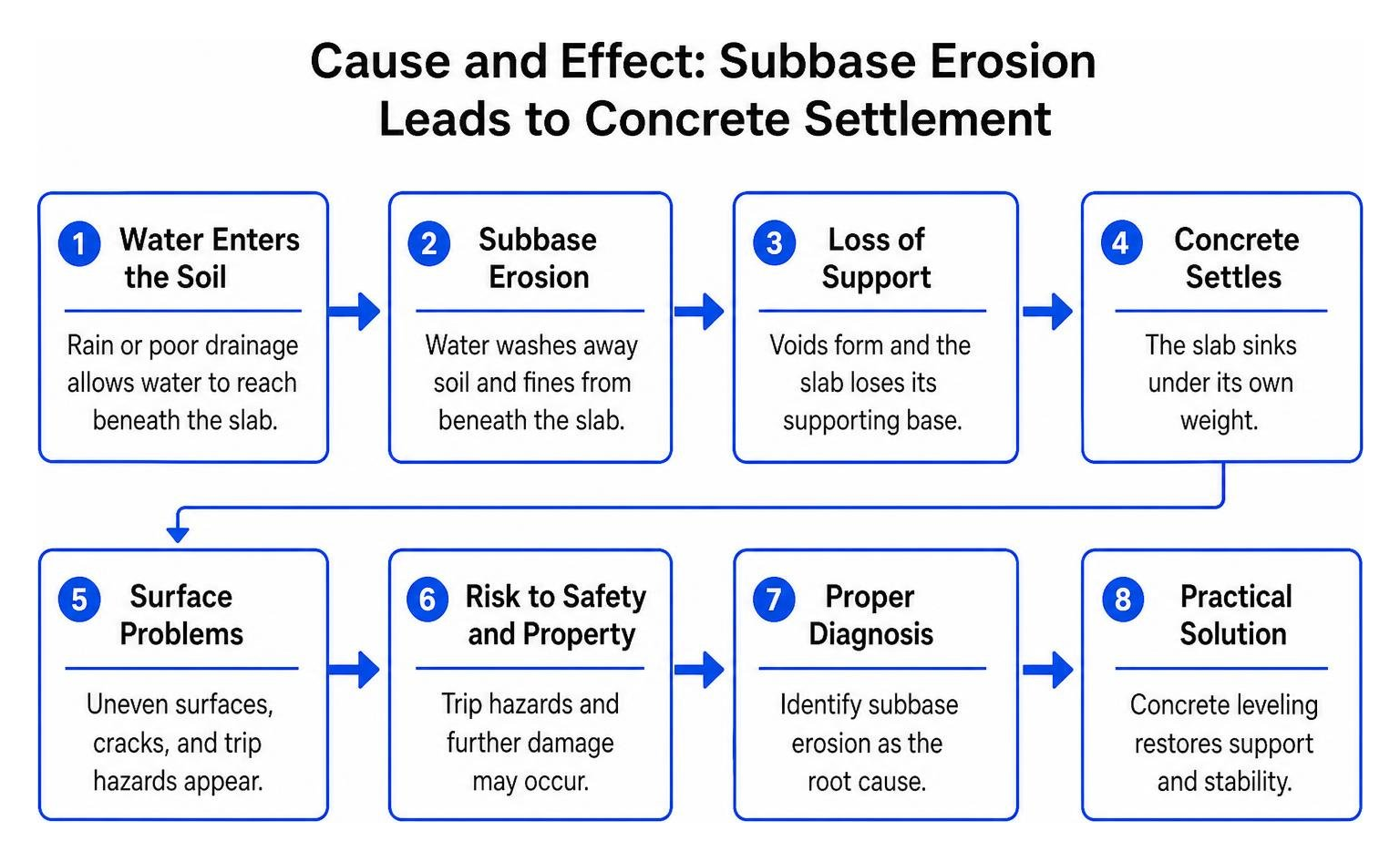
When soil washes away or shrinks beneath a slab, the concrete loses its supporting base and sinks under its own weight. If the slab itself remains structurally intact without severe web-like cracking, practical concrete leveling is the most efficient, durable solution.
| Foam-Injection Leveling | Best For | Relative Cost |
|---|---|---|
| Polyurethane Slab Lifting | Sinking slabs, subbase voids, and uneven trip hazards | A cost-effective repair option for eligible slabs |
The key question is whether the slab is still a good candidate for leveling. A contractor should look beyond the surface and consider whether the concrete remains substantially intact, whether settlement has created voids below it, and whether the uneven area presents a trip hazard. This diagnosis matters because lifting a stable slab addresses the underlying loss of support rather than simply covering the visible result.
During foam-injection leveling, small access ports allow the material to be placed beneath the settled concrete. As the foam expands, it fills open space below the slab and raises the surface gradually. The approach is designed to limit disruption around driveways, patios, walkways, pool decks, and garage entrances while restoring a safer, more even surface.
Homeowners should also ask how the contractor will monitor the lift. A careful crew explains where the concrete is expected to move, checks the surface as it is raised, and stops when the slab reaches the appropriate position. Clear communication about the condition of the slab and the expected outcome is an important sign that the recommendation is based on the property rather than a one-size-fits-all sales pitch.
For eligible concrete, this focused approach keeps the discussion on leveling and stabilization. It gives homeowners a clear reason for the recommendation, a practical picture of the work, and an opportunity to ask questions before the crew begins.
That level of detail helps confirm that the plan is tailored to the slab and the conditions beneath it.
It should never be guesswork.
Clear answers matter most.
2. Transparent Estimates for Concrete Leveling
Contractor pricing should never be a mystery. For sunken or uneven concrete, a written estimate should explain the condition of the slab, the proposed leveling method, access considerations, and the warranty. Those details help homeowners compare proposals based on the work being recommended instead of relying on a broad national average that may not reflect the property.
An honest assessment is especially important when a driveway, patio, walkway, pool deck, or garage entrance has settled. The contractor should identify whether soil movement or subbase erosion has left voids beneath an otherwise intact slab and explain whether foam-injection leveling is appropriate. Site access, the amount of settlement, and the extent of the affected area can influence the scope of the work.
When reviewing a proposal, look for a clear description of how the contractor will diagnose the cause of settlement, reach the affected slab, inject the foam, and address the repaired area after it is raised. The estimate should also state the warranty and identify any conditions that could affect the recommended work. For additional context, review the Cement Repair Near Me Guide 2026 and The 10 Best Concrete Companies & Contractors Near Me before comparing proposals.
Use our Cement Repair Near Me Guide 2026 to prepare questions before an on-site visit. A dependable contractor will explain the repair method in plain language, distinguish visible damage from the underlying cause, and give homeowners enough information to make a sound decision.
Before signing, use the estimate to confirm the practical details of the work. Ask what caused the slab to settle, whether the existing concrete is a suitable candidate for leveling, how the crew will reach the affected area, and what warranty applies. It is also useful to ask when the repaired surface can be used and whether the contractor expects to perform any sealing or crack-repair work as part of the recommended scope.
These questions keep the conversation focused on the condition of the property and the proposed leveling solution. They also make it easier to compare written estimates without treating a generic online price range as a substitute for an on-site assessment.
A complete estimate should make it clear which parts of the property are included in the work. For example, a contractor may need to evaluate adjacent joints, nearby drainage patterns, or areas where soil movement has created space beneath the slab. The goal is not to overwhelm the homeowner with technical language, but to explain what the crew observed and why the proposed leveling work addresses those observations.
Written details are especially valuable when a settled surface affects everyday use. A driveway or walkway may look like a simple surface problem, but the contractor should still explain whether voids, washout, or poor support are contributing to the movement. That explanation helps homeowners understand the difference between treating a visible crack and stabilizing a slab that has lost support below.
Before approving the work, confirm the warranty terms and ask what to expect on the day of service. Homeowners should know how the crew will access the area, how long the work is expected to take, and when the surface can return to normal use. These practical details make the estimate easier to evaluate and help set clear expectations for the repair.
If any part of the estimate is unclear, ask for clarification before approving the work. Homeowners should be able to identify the affected area, the proposed leveling approach, the expected schedule, and the warranty without having to guess what is included. Clear written information supports better decisions and helps prevent misunderstandings after the work is scheduled.
It also gives homeowners a useful record of the agreed scope.
That clarity supports confident planning.
3. How to Evaluate Cement Repair Contractors Near Me
Selecting the right professional requires looking past a polished sales pitch. You want an experienced team with an established track record in your specific neighborhood.
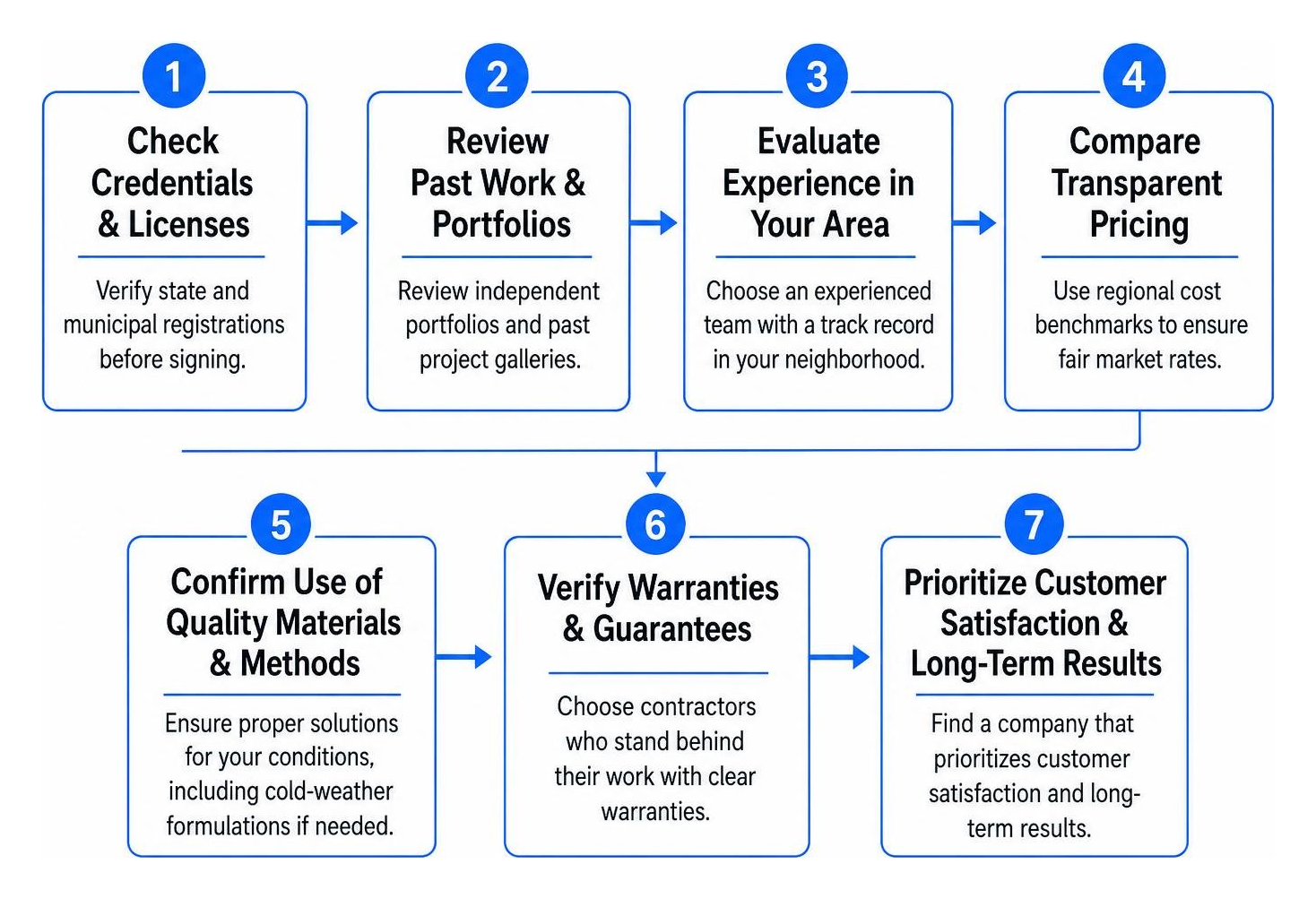
Always review independent portfolios and past project galleries, such as our work, to confirm the crew has successfully resolved issues similar to yours. If you want lasting results, stop settling for weak pours and find a reliable concrete company near me that prioritizes customer satisfaction and long-term warranties over temporary patches.
Verified Credentials and Licenses for Cement Repair Contractors Near Me
Before signing a contract, verify that the company holds the required state and municipal registrations:
- Licensing and Business Standing: Check trade registries such as the Concrete Directory 2026 — Licensed concrete contractors Near You to ensure the contractor operates legally with up-to-date state licenses.
- Comprehensive Insurance: Ensure they carry both general liability coverage and active workers’ compensation to protect your property during repair work.
- Permit Awareness: In urban corridors, replacing sidewalk flags or altering driveway aprons often requires municipal Department of Transportation (DOT) or Department of Buildings (DOB) permits to clear safety citations.
Questions to Ask Cement Repair Contractors Near Me Before Hiring
When scheduling your on-site consultations, bring this list of questions:
- What is causing the concrete to fail? If the contractor does not look at subbase drainage, soil washouts, or freeze-thaw exposure, their repair will be short-lived.
- What warranty do you provide? Reputable contractors stand behind their leveling work with long-term guarantees. We back our foam-injection leveling and crack repairs with a lifetime warranty.
- What is your expected cure schedule? While traditional concrete takes 24 to 48 hours for foot traffic, 7 days for vehicles, and 28 days for a full cure, polyurethane foam leveling allows full traffic use within 15 to 30 minutes of completion.
- How do you prep the surface? Long-lasting adhesion demands clean cuts, wire-brushing, dust extraction, and high-performance bonding primers.
Credentials are one part of the decision, but the contractor’s explanation should match what is visible at the property. If a slab has settled near a downspout, along a driveway edge, or beside a patio, ask the contractor to describe how water movement or soil conditions may be affecting the support below the concrete. A clear answer shows that the crew is evaluating the cause of the problem instead of treating every crack or uneven area the same way.
Past-project photos can also be useful when they show work similar to the area being evaluated. Look for examples involving settled driveways, walkways, patios, pool decks, or garage entrances, then ask how the contractor handled access, lifting, and the final surface condition. A portfolio does not replace an on-site assessment, but it can help homeowners ask more informed questions.
The consultation should leave homeowners with a straightforward understanding of the recommendation. The contractor should be able to explain what is causing the settlement, why foam-injection leveling is or is not appropriate, what the warranty covers, and how soon the repaired area can be used. Those answers create a stronger basis for comparing local cement repair contractors than a polished sales pitch alone.
It is reasonable to take notes during the visit and compare the answers from more than one local contractor. Focus on whether each recommendation addresses the cause of settlement, describes the work clearly, and gives the homeowner a usable written estimate and warranty.
Consistent, specific answers are more useful than broad assurances.
4. Professional-Grade Materials and Equipment Utilization
Dependable contractors do not use off-the-shelf bag mixes from the local hardware store for structural repairs. Long-lasting results require specialized, industrial-grade equipment and materials:
- Closed-Cell Polyurethane Foam: Hydrophobic polymers engineered specifically to lift heavy slabs without absorbing water or breaking down underground.
- Dust-Controlled Diamond Grinders: Precision grinding equipment that levels raised joints, removes trip violations, and preps surfaces without covering your home in fine silica dust.
- Reactive Penetrating Sealers: Silane and siloxane sealers that penetrate deep into the concrete’s capillary pores, creating a barrier that repels water, road deicing salts, and oil.
Materials and equipment should support the repair plan rather than distract from it. For concrete leveling, the important point is that the contractor can lift and stabilize eligible slabs with a method suited to settlement and subbase voids. For crack repair and sealing, the work should address the affected area and help protect the concrete from water exposure.
Homeowners can ask which materials will be used, what each one is intended to do, and how the crew will prepare the area. A plain-language answer helps confirm that the recommendation fits the condition of the concrete.
Explore our services to learn more about concrete leveling, crack repair, and sealing.
Frequently Asked Questions About Concrete Repair Contractors
Do concrete repairs require municipal permits in major cities?
Minor surface repairs, crack filling, and foam injection leveling generally do not require municipal building permits. However, if your project involves pouring brand-new concrete, replacing public sidewalk flags within the city right-of-way, altering driveway aprons, or undertaking major structural foundation alterations, local municipal permits (such as DOT or building department filings) are usually mandatory. A dependable contractor will handle these filings for you.
How long does a typical concrete repair take to cure and how long will it last?
High-density polyurethane leveling cures in about 15 minutes, so the repaired surface can often be used soon after the work is complete. A contractor should explain the expected timing for the specific slab and the condition that caused it to settle.
Can concrete repairs be successfully performed during winter months?
Yes. Polyurethane slab leveling can proceed during winter when the subbase beneath the slab is not frozen solid, making foam injection a practical cold-weather option.
The expected schedule should be part of the conversation before work begins. Foam-injection leveling is often completed in a few hours, and the surface can commonly return to use shortly after the repair. Actual timing still depends on the condition of the slab, access to the work area, and the scope of the recommended repair.
For winter work, the contractor should evaluate the condition beneath the slab before proceeding. When the subbase is suitable and not frozen solid, foam injection can provide a practical way to address settlement without waiting for warmer weather. Asking about site conditions, timing, and the warranty helps homeowners understand whether the repair is appropriate for the season.
For any season, the contractor should explain the site conditions that affect the recommendation and answer questions before scheduling the work.
This preparation supports a smoother visit.
Conclusion
Choosing dependable cement repair contractors comes down to clear diagnostic assessments, modern repair techniques, proven credentials, and long-term warranty protection. Instead of paying thousands of dollars for unnecessary demolition, polyurethane foam injection restores your existing concrete quickly, cleanly, and cost-effectively.
FoamWorks Concrete Leveling is a family-owned concrete repair and leveling contractor bringing 30+ years of industry experience and a 100% customer satisfaction commitment to every project. We proudly serve homeowners and commercial property owners across Northwest Ohio, Southeast Michigan, and Northeast Indiana.
The best next step is an on-site evaluation that identifies the cause of settlement and explains whether the slab is a suitable candidate for foam-injection leveling. A clear written estimate, practical timeline, and warranty information help homeowners make an informed decision without relying on generic price ranges or broad promises.
For properties in Northwest Ohio, Southeast Michigan, and Northeast Indiana, FoamWorks Concrete Leveling focuses on leveling eligible concrete slabs, repairing cracks, and sealing concrete surfaces. That focused approach keeps the recommendation centered on restoring safer, more stable concrete where those services fit the condition of the property.
It also supports clear expectations from the first visit through completion.
Check our complete service area map to confirm coverage in your community. We provide free estimates to show you exactly how much you can save. Restore the safety, appearance, and value of your property with trusted, lifetime-warranted concrete repair today!