

Root Causes: Why Is My Concrete Sinking?
When you look down at a dipping sidewalk or a lopsided patio, it is easy to assume the heavy material itself has failed. However, concrete is remarkably resilient stuff. The real culprit almost always lies right beneath the surface. Knowing the main Causes of Concrete Problems boils down to understanding soil mechanics.
A single concrete slab can weigh anywhere from 2,000 to over 10,000 pounds. That immense mass relies entirely on a dense, fully stable base to stay flat. When the sub-base shifts, compresses, or disappears, gravity takes over, pulling the heavy slab downward.
Poor Soil Compaction and Unstable Fill
During initial construction—whether building a home, adding a garage approach, or digging utility trenches—contractors must excavate and backfill large amounts of soil. If that loose soil is not properly compacted in layers before pouring the concrete, nature will finish the job over time.
As rain, gravity, and foot or vehicle traffic press down on uncompacted fill soil, the loose dirt particles settle into a tighter formation. This natural compression leaves empty space directly beneath the heavy concrete slab. Eventually, the unsupported slab snaps or drops down to rest on the newly compressed soil layer.
Water Erosion and Subterranean Voids
Water is one of the single biggest drivers of concrete settlement across Northwest Ohio, Southeast Michigan, and Northeast Indiana. When rainwater or snowmelt rushes off a roof and empties through unmanaged downspouts, it flows along the edges of driveways and walkways.
Over time, flowing water washes fine dirt and sand particles out from under the concrete. This underground erosion creates empty pockets known as subterranean voids. Without solid dirt beneath it to bear the weight, the slab eventually tilts or breaks off into the void. Sprinkler systems, overflowing gutters, and hidden plumbing leaks can cause the exact same erosion.
Freeze-Thaw Cycles and Soil Expansion
Living in the Midwest means dealing with severe winter weather. Freeze-thaw cycles play a major role in weakening the soil foundation. When water saturates the ground under a slab and freezes, it expands—a process known as frost heave. This upward pressure can lift concrete out of alignment.
When spring arrives and the ice melts, the saturated soil turns soft and muddy. As that excess moisture drains away or evaporates during summer, expansive clay soils shrink dramatically. This constant back-and-forth cycle of expanding, contracting, and turning to mud destroys soil density, leaving empty voids that cause concrete to sink fast.
4 Unmistakable Signs Your Concrete Slab Is Settling
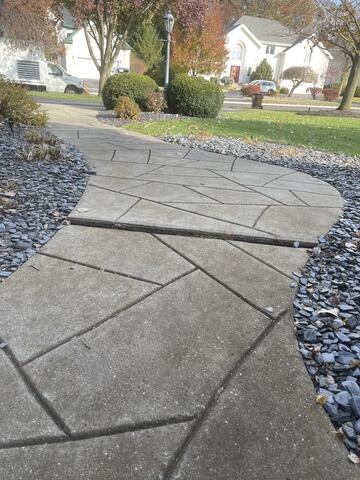
Catching concrete settlement early can save you significant time and money. If you suspect your property is shifting, keep an eye out for these four undeniable warning signs. Spotting them early makes professional Concrete Leveling straightforward and highly effective.
1. Uneven Joints, Trip Hazards, and Slab Separation
The most noticeable sign that concrete is dropping is a visible lip or step where two slabs meet. When one panel sinks faster than its neighbor, it creates a dangerous trip hazard along sidewalks, entry walkways, or porch steps.
You might also notice slabs pulling away from vertical structures like foundation walls, door thresholds, or garage floor aprons. If your front steps look like they are sliding off the house, the sub-soil beneath them is actively settling.
2. Water Pooling on Slabs and Slope Reversal
Driveways and patios are deliberately built with a gentle slope so rainwater runs safely away from your home’s foundation. As soil beneath the slab compresses or washes away, that slope can flatten out or completely reverse.
If you notice standing water pooling in the center of your driveway or patio after a rainstorm, your concrete has lost its pitch. Worse, a reversed slope channels water directly toward your home’s foundation walls, setting the stage for basement leaks and crawlspace moisture problems.
3. Cracking and Hollow-Sounding Slabs
As a slab loses sub-soil support, different sections experience uneven pressure. The concrete bends slightly under its own immense weight until it snaps, creating prominent hairline or widening fissures. If you already have Cracked Concrete, monitor whether the edges of those cracks are staying flush or beginning to drop unevenly.
Another telltale indicator is a hollow sound. If you drag a heavy chain across your concrete or stomp on a slab and hear a dull, empty echo, you are hearing a subterranean void. In extreme cases, you may even feel the slab rock slightly underfoot when you walk across it.
4. Drainage Issues: Why Is My Concrete Sinking Near Downspouts?
Take a walk around your home during or immediately after a heavy rain shower. Are your downspouts discharging water directly next to the edge of your driveway, front walk, or patio?
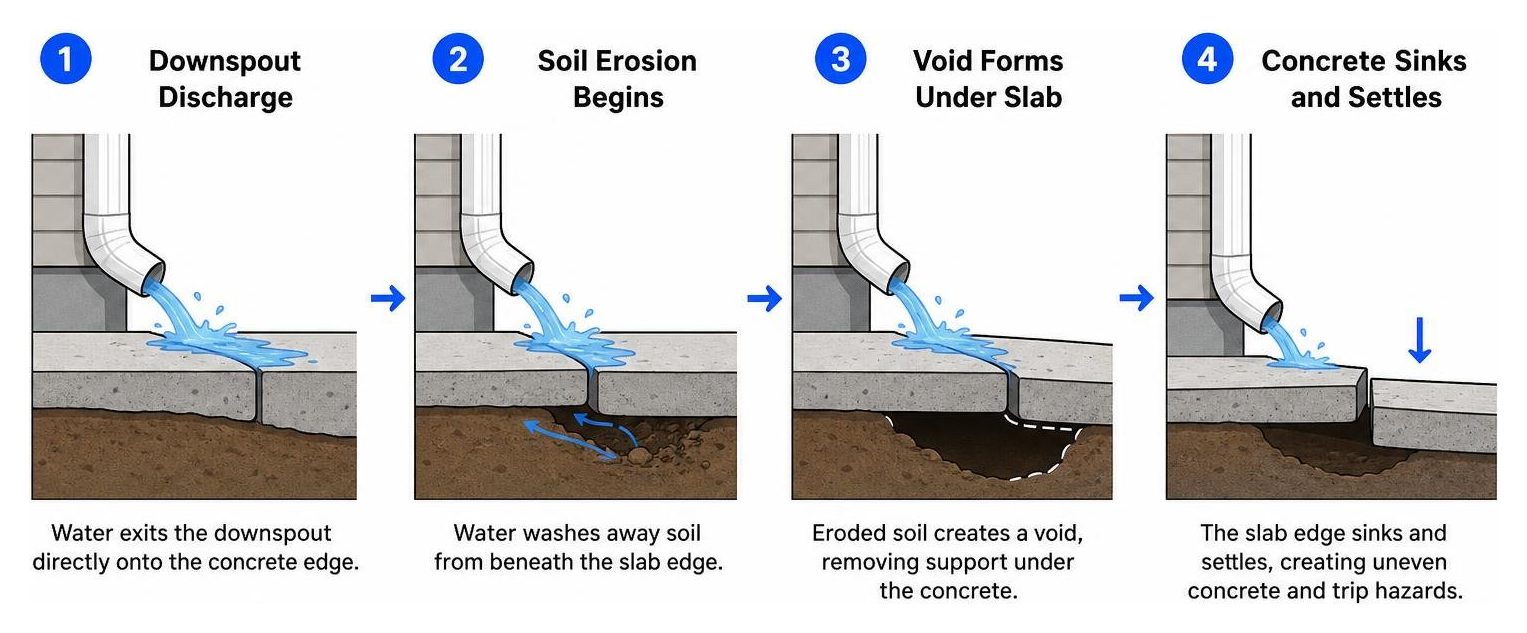
Water pouring out of roof gutters carries immense power. When pointed at unsealed concrete seams or soil edges, it rapidly carves out underground channels under the slab. If you’ve been asking yourself, “Why Is My Concrete Driveway Sinking?” check your downspout positioning first. Misdirected roof runoff is the primary culprit behind sunken garage approaches and driveway aprons.
Is Replacing Sunken Concrete Always Necessary?
When faced with uneven walkways or a sunken driveway, many homeowners assume their only option is to break out jackhammers, haul away the old concrete, and pour a brand-new slab. Fortunately, full tear-outs are rarely necessary!
| Feature / Comparison | Polyurethane Foam Lifting | Traditional Concrete Replacement |
|---|---|---|
| Primary Cost | 30% to 50% less expensive | Extremely high (labor, materials, disposal) |
| Completion Time | Typically completed in 1 to 2 hours | 2 to 4 days for prep, pour, and finishing |
| Cure Time / Usability | Ready to walk/drive on almost immediately | Must cure for 5 to 7 days minimum |
| Lawn & Property Impact | Minimal (uses small dime-sized injection holes) | High (heavy excavators, ruts, destroyed grass) |
| Fixes Root Soil Cause? | Yes, compacts base soil and fills all voids | No, pours heavy new concrete on unstable dirt |
Concrete Sinking vs. Normal Initial Settling
It is completely normal for a newly constructed home or freshly poured patio to experience minor initial settling during its first year or two as the weight of the structure presses onto the soil base.
However, active, ongoing settlement is entirely different. If cracks continue to widen, lips between slabs grow larger year after year, or voids sound progressively hollower, active erosion is taking place. While minor initial settling usually stabilizes on its own, active soil movement requires intervention to prevent full slab collapse.
Polyurethane Concrete Lifting vs. Total Replacement
Replacing sunken concrete without fixing the soft, eroded soil beneath it is a temporary band-aid. The newly poured concrete slab is just as heavy—if not heavier—than the old one. If you place thousands of pounds of fresh concrete over the exact same unstable ground, the new slab will sink just like the old one did.
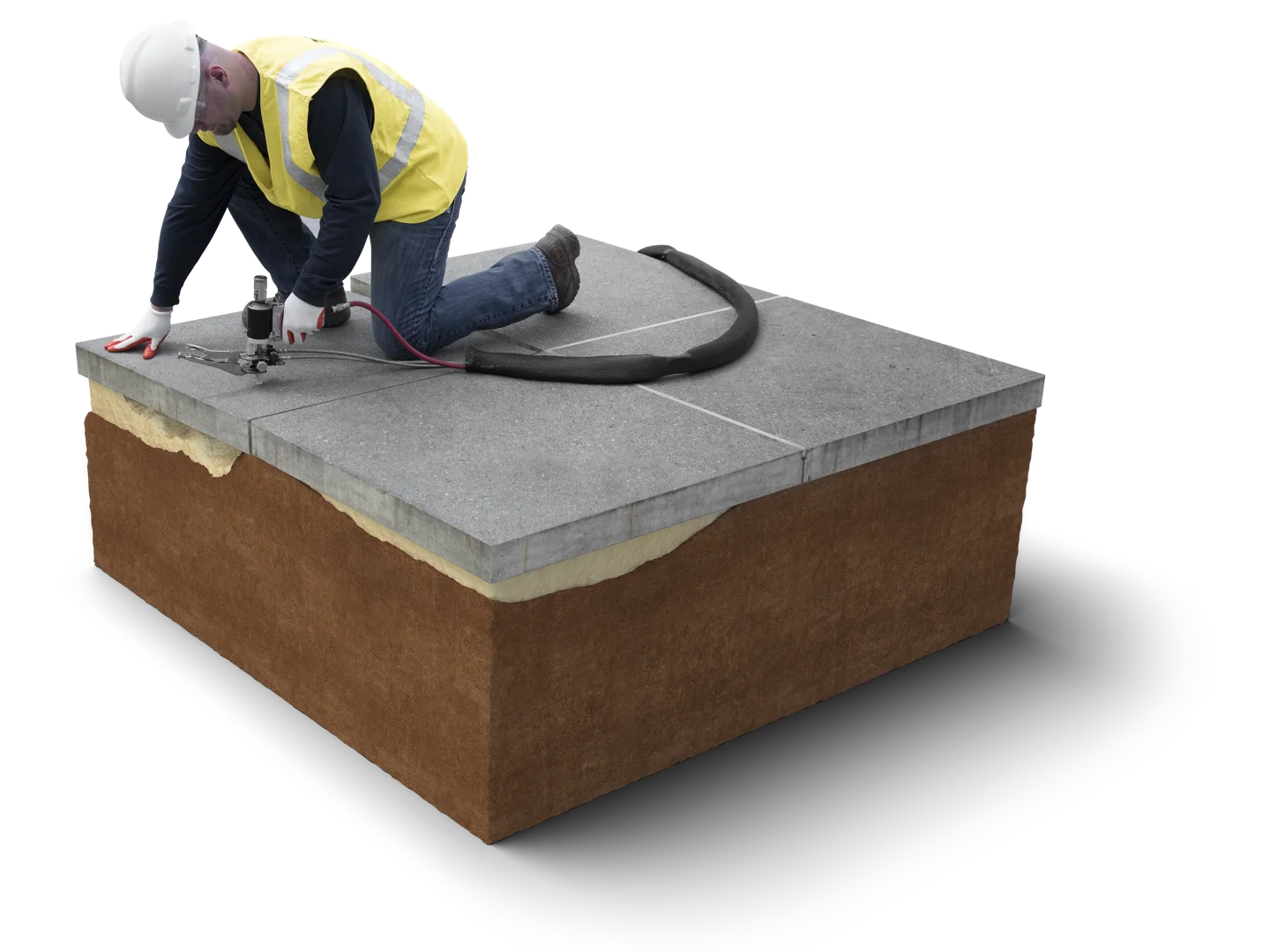
Modern high-density PolyLevel Injection solves the root problem. Instead of removing the slab, technicians drill small, penny-sized holes through the concrete and inject an expanding polyurethane foam.
As the foam flows underneath, it expands in seconds, filling every hidden subterranean void, compressing the loose base soil, and gently raising the heavy slab back into perfect alignment.
At FoamWorks Concrete Leveling, we use polyurethane foam injection to repair sunken or uneven concrete for 30% to 50% less than full tear-out and replacement, helping homeowners save significantly on repair costs. Most repairs are completed in just a few hours, and the surface can be used almost immediately. Because there is no need for heavy excavation, the process eliminates the landscape damage, heavy labor costs, debris removal, and dump fees that come with full replacement.
Seasonal Damage: Why Is My Concrete Sinking After Winter?
It is common to walk out onto your patio or driveway in early spring and suddenly discover brand-new dips and uneven edges.
During the freezing winter months, water trapped under the concrete freezes into ice lenses, lifting the slab slightly. When the spring thaw arrives, all that frozen ground thaws out into a saturated, soupy soil mix. The heavy concrete sinks into the weakened mud base under its own weight. Additionally, spring rains wash away that loosened mud, creating rapid new settlement right as winter ends.
Why You Shouldn’t Ignore Sinking Concrete
It is tempting to put off concrete repairs, treating an uneven sidewalk or dipping patio step as a minor cosmetic annoyance. However, ignoring sunken concrete almost always leads to bigger, more expensive problems down the road.
Escalating Repair Costs and Structural Stress
What starts out as a small quarter-inch drop between two panels will gradually turn into a two-inch drop as rain and weather continue to erode the base. The longer a slab remains suspended over an empty void, the higher the risk that it will snap under load, requiring costly structural crack repair or full slab restoration.
Furthermore, uneven public or residential walkways create immediate trip hazards. Property owners face severe liability risks if family members, delivery drivers, or neighbors trip and injure themselves on a sunken sidewalk. Addressing these issues quickly with prompt Sidewalk Repair eliminates liability while preserving your home’s curb appeal and market value.
Accelerating Soil Erosion and Sub-Base Collapse
A sunken slab acts like a funnel for rainwater. Instead of shedding water away from your home, settled concrete channels water directly into the gaps between slabs and toward foundation walls.
This incoming water washes away even more sub-base dirt, accelerating the underground erosion loop. Over time, what started as a simple soil compaction issue can ruin surrounding landscaping, destabilize adjoining structures, and lead to total sub-base collapse.
Frequently Asked Questions About Sinking Concrete
Can heavy vehicles cause driveway concrete to sink?
Yes, absolutely. Driveways are designed to support typical passenger cars, but parking heavy motorhomes, loaded box trucks, large boats, or heavy construction equipment distributes thousands of extra pounds across localized points. If the soil beneath your driveway was already slightly uncompacted or moist, heavy load stress compresses the underlying dirt rapidly, driving the slab downward.
How much does concrete lifting cost compared to replacement?
Concrete leveling using polyurethane foam injection typically costs between 30% and 50% less than total slab replacement. When you replace concrete, you pay for heavy demolition labor, concrete disposal fees, site grading, new materials, and lawn restoration. Polyurethane lifting avoids all those extra fees while delivering a long-lasting fix in a fraction of the time.
How long does high-density polyurethane foam lifting last?
High-density polyurethane foam is an engineered, waterproof material that does not biodegrade, shrink, or wash away over time. Once injected beneath your concrete, it hardens into a rigid, highly supportive structure that remains stable indefinitely. Because it resists water erosion and seals out subterranean moisture, foam lifting provides a permanent, long-term soil stabilization fix.
Conclusion
If you have been wondering why is my concrete sinking, the concrete slab itself is rarely broken—it is simply losing the subterranean ground support it relies on. Whether caused by uncompacted construction fill, poor gutter drainage, or Midwest freeze-thaw cycles, catching soil settlement early prevents costly structural cracking and dangerous trip hazards.
Don’t wait for minor settlement to become an expensive replacement headache. At FoamWorks Concrete Leveling, our family-owned team brings over 30 years of experience, lifetime warranty protection, and fast, non-invasive foam injection leveling to homeowners across Northwest Ohio, Southeast Michigan, and Northeast Indiana.
Restore your home’s structural stability with interior slab leveling and repair services today! Contact Us or fill out our online form to request your Free Estimate.